Best Airtight Coffee Storage Canisters
Coffee starts losing quality the moment it's roasted, and the two things that speed that decline fastest — oxygen exposure and light — are exactly what a good storage canister is built to fight. A vague "airtight" claim on a canister's packaging doesn't tell you whether it actually does anything about either.
Rather than list five canisters that mostly do the same basic job with different branding, we're going deep on one that does something genuinely different — pulls a real vacuum — and explaining what to actually check on any canister you're considering.
Our top picks
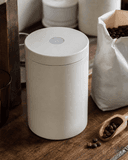 Best OverallFellow Atmos Vacuum Canister
Good
Our score: 76 / 100
Fellow Atmos Vacuum Canister
Good
Our score: 76 / 100
Every twist of the Atmos's lid mechanically pushes air out through a one-way seal, and you can feel and hear it working — a real point of difference from clip-lid canisters that are airtight in name only. The opaque steel version also fully blocks light, a freshness factor most canisters ignore. Its one real limitation is freshly roasted beans still actively releasing CO2, which the Atmos has no valve to vent.
How we chose
We weighted actual mechanism over marketing language — whether a canister does something active to reduce oxygen exposure, versus simply claiming to be airtight because the lid clips down snugly. We also considered light-blocking, since UV and ambient light degrade coffee oils just as oxidation does, and that factor gets ignored in most buying advice.
What to look for
Why oxygen, light, and moisture all matter
Roasted coffee is full of oils and volatile aromatic compounds that react with oxygen over time, which is the primary driver of staling — flavor going flat and stale-tasting over one to three weeks even when beans still look fine. Light, especially UV, accelerates the breakdown of those same oils independently of oxygen exposure, which is why a clear glass jar left on a sunlit counter stales coffee faster than the same beans in a dark cabinet. Moisture is the third factor, mattering less for whole beans stored short-term but more for ground coffee or longer storage, where humidity can introduce off-flavors and, in extreme cases, mold risk.
Vacuum-seal vs. one-way-valve designs
A vacuum-seal canister, like the Atmos, actively removes air already inside the container each time it's closed, slowing new oxidation from that point forward. A one-way-valve bag or canister (the kind built into most specialty roaster bags) works differently — it lets CO2 escape from freshly roasted beans without letting new oxygen back in, which is exactly the right design for the first week or two after roasting, but it doesn't actively remove air the way a vacuum mechanism does. The two solve slightly different problems: valve bags handle fresh-roast degassing safely, vacuum canisters better protect beans that have already rested and are being stored longer-term.
Opaque vs. clear
Opaque, typically steel, containers fully block light and are the better choice if you're optimizing purely for how long coffee stays fresh. Clear glass or acrylic containers let you see fill level and bean condition without opening the lid, which is a real daily convenience, at the cost of some UV exposure unless the container is kept out of direct light regardless.
Capacity — match it to how you actually buy coffee
A 0.7 L canister comfortably holds a standard 12 oz bag; buyers who purchase in bulk (2 lb bags or more, or multiple bags at once) are better served by a 1.2 L or 2 L size than by refilling a small canister repeatedly, which means more frequent opening and more oxygen exposure over time.
The CO2 problem with fresh-roasted beans
Any sealed vacuum container without a pressure-release valve can fight against beans that are still actively degassing right after roasting — the buildup of CO2 works against the vacuum seal and can make the lid harder to close properly. The simple fix is resting beans 3 to 5 days post-roast before transferring them into a true vacuum canister, or using a valved storage bag during that initial window instead.
Frequently asked questions
How long does coffee actually stay fresh in a good canister?
Whole beans in a genuinely airtight, light-blocking container stay reasonably good for 2 to 4 weeks past the roast date, though flavor quality peaks and gradually declines throughout that window rather than falling off a cliff at any specific day. Ground coffee stales much faster — often within days — because grinding exposes far more surface area to oxygen.
Should I refrigerate or freeze coffee to keep it fresher longer?
Freezing in a genuinely airtight container can extend freshness for beans you won't use for weeks, but repeated opening introduces condensation and temperature swings that do more harm than good — portion beans into smaller sealed amounts before freezing if you go this route. Refrigeration is generally not recommended, since it exposes beans to moisture and food odors without meaningfully slowing staling compared to a good countertop canister.
Does a vacuum canister work for ground coffee too, or just whole beans?
It works for both, but the benefit is smaller for ground coffee, since grinding has already exposed far more surface area to oxygen than whole beans ever have — a vacuum canister slows further staling but can't undo the head start grinding gives oxidation.
Is an opaque canister always better than a clear one?
Better for pure freshness, since it blocks all light rather than just reducing UV exposure. It's a real trade-off against convenience, though — a clear canister lets you check fill level and bean condition at a glance, which matters if you're managing more than one bag at a time.