Best Cold Brew Makers (2026)
Cold brew isn't complicated — grounds, cold water, time, a filter. Most of what separates a good cold brew maker from a mediocre one comes down to two things: how clean the filter gets your concentrate, and how much of it you end up with per batch. Everything else — glass versus plastic, a fancy lid versus a plain one — is secondary to those two variables.
I've made cold brew in more kitchens (and campsites) than I can count, and the honest truth is you don't need to spend much to get something good. What you're really choosing between is filtration quality, batch size, and how much maintenance you're willing to put up with between brews. These three picks cover the real range — big-batch clarity, countertop-friendly design, and rock-bottom simplicity.
None of these need electricity, an app, or a subscription. That's kind of the point of cold brew.
Our top picks
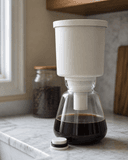 Best OverallToddy Cold Brew System
Good
Our score: 79 / 100
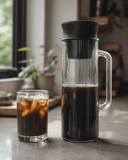 Best for Small KitchensOXO Cold Brew Coffee Maker
Good
Our score: 73 / 100
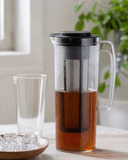 Best Budget PickTakeya Cold Brew Maker
Good
Our score: 79 / 100
Toddy Cold Brew System
Good
Our score: 79 / 100
The felt filter produces the cleanest concentrate of the three, and the large batch size means you're not rebrewing every few days. It's not something you'll leave on the counter, but for anyone who drinks cold brew seriously, it's still the reference point the category gets measured against.
OXO Cold Brew Coffee Maker
Good
Our score: 73 / 100
A glass carafe you don't have to hide, a rainmaker lid that solves the uneven-saturation problem most cold brew makers ignore, and a twist-to-serve mechanism that skips the decanting step entirely. Smaller batches than the Toddy, but genuinely pleasant to use day to day.
Takeya Cold Brew Maker
Good
Our score: 79 / 100
Twenty-some dollars for an airtight plastic pitcher with a fine-mesh filter — no felt to maintain, no glass to baby, minimal cleanup. Not the clearest cup in the category, but the lowest-friction way to find out if you'll actually stick with home cold brew.
How we chose
We looked at three things that actually matter to someone making cold brew at home: filtration quality (how much sediment ends up in your glass), batch size relative to price (how often you're rebrewing), and real-world cleanup — not the marketing description of cleanup, the actual routine of rinsing filters and containers after each batch.
We deliberately didn't chase novelty features. Cold brew is a slow, low-tech process by nature, and the makers that do it best tend to be the ones that don't overcomplicate it. Felt versus mesh filtration was the single biggest differentiator we found between products — it affects taste and texture more than almost anything else in this category, so we weighted it heavily in each pick's brew-quality assessment.
What to look for
Immersion versus drip-tower brewing
Nearly every cold brew maker sold for home use is an immersion design — grounds sit fully submerged in water for 12 to 24 hours, and you filter the whole batch at once at the end. Drip-tower cold brew, where water slowly drips through grounds over several hours (think a Kyoto-style tower), produces a different, often described as cleaner and brighter, flavor profile, but the equipment is bulkier, slower, and pricier, and it's a niche format outside specialty cafes. For nearly everyone shopping at home, immersion is the right category to be looking in — all three picks above are immersion makers.
Filter type: felt, mesh, or paper
This is the single biggest factor in how your concentrate actually tastes and looks. Felt filters (like the Toddy's) catch the most fine sediment and produce the cleanest-looking, least gritty concentrate, but they need rinsing and cold storage between uses to avoid picking up off-flavors or mold. Fine-mesh filters (like Takeya's) are faster to clean and need no special storage, but let more fine particles through, giving a slightly grittier finish. Paper filters give the clearest result of all but are single-use and add an ongoing cost. Pick based on how much you value clarity versus low-maintenance convenience.
Capacity and how often you're willing to rebrew
Cold brew takes 12 to 24 hours to steep, so batch size directly determines how often you're starting a new one. A large-format system like the Toddy can cover a household for the better part of a week; a compact pitcher like the standard Takeya might need rebrewing every two to three days for a regular drinker. Be honest about how much you actually drink before picking a size — an oversized system that goes stale before you finish it isn't actually saving you effort.
Concentrate strength and dilution ratio
Nearly all home cold brew makers produce a strong concentrate meant to be diluted, typically somewhere between 1:1 and 1:2 with water or milk, rather than a ready-to-drink beverage straight out of the container. If you drink it undiluted expecting normal-strength coffee, it'll taste much stronger than you're used to — that's expected, not a sign anything went wrong. Dilution ratio is also where you control caffeine strength and cost per serving, since a little concentrate stretches a long way.
Material: glass, plastic, or both
Glass carafes (OXO) look nicer and don't retain odors or stains the way plastic can over time, but they're breakable and heavier. BPA-free plastic (Toddy, Takeya) is lighter, cheaper, and effectively unbreakable in normal home use, though it can pick up a coffee tint or faint smell after many months of heavy use. Neither materially changes how the coffee tastes — this is really a durability-versus-aesthetics choice.
Frequently asked questions
Is cold brew stronger than regular coffee?
The concentrate is much stronger than regular brewed coffee, but it's meant to be diluted before drinking — typically 1:1 with water or milk. Once diluted to a normal serving, cold brew's actual caffeine content per cup is comparable to or somewhat higher than drip coffee, not dramatically higher, depending on how much concentrate you use.
How long does homemade cold brew concentrate last?
Most concentrate stays good in the fridge for one to two weeks, and up to three weeks in some cases if it's well sealed and your fridge runs cold. It doesn't typically spoil dramatically — it just loses flavor intensity over time, so taste it before assuming it's gone bad.
Can I use pre-ground coffee for cold brew, or do I need to grind it myself?
Pre-ground coffee works fine as long as it's a coarse grind — French press grind is the right target. Finer pre-ground coffee, like what's sold for drip machines, will over-extract and clog filters, so check the bag or grind your own coarse if you're not sure.
Do I need special cold brew coffee beans?
No — any coffee works, though many brands market beans specifically as "cold brew blends" because darker, chocolatey profiles tend to shine in the format. Regular beans, ground coarse, work perfectly well; it's more about grind size and steep time than a special bean.
Why does my cold brew taste weak even after steeping overnight?
Usually one of two things — the grind is too fine coarse ground coffee gives a weak result, or the coffee-to-water ratio was too low. Most cold brew recipes use significantly more coffee relative to water than a hot brew method, since the cold, slow extraction pulls out less per gram of coffee than heat does.