Best Countertop Ice Makers
"Countertop ice maker" covers a wider range of machines than people expect walking in — cube makers, clear-ice makers, and nugget/pellet makers all live under that umbrella, and they solve genuinely different problems. Before you shop on price or brand, it's worth figuring out which ice texture you actually want, because that decision matters more than almost any other spec on the box.
We're leading with one strong pick here rather than padding out a ranked list, because the ice-maker category has a clear standout for anyone chasing the specific chewable "nugget" texture that made this whole appliance category blow up in the first place.
Our top picks
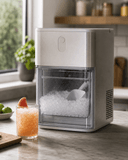 Best OverallGE Opal Nugget Ice Maker
Good
Our score: 70 / 100
GE Opal Nugget Ice Maker
Good
Our score: 70 / 100
The Opal didn't invent nugget ice, but it's the machine that put chewable 'sonic-style' ice on home countertops at scale, and it's still the reference point for the category. It produces genuinely soft, compressed-flake ice roughly every 15-20 minutes once running, with a self-clean cycle most competitors skip. The trade-offs are a small ~3 lb storage bin and a price tag well above basic cube makers — both real, both worth knowing going in.
How we chose
Rather than rank a handful of similar nugget-ice machines against each other, we're using this space to walk through what "countertop" actually trades away compared to built-in or under-counter ice makers, and what actually separates nugget, cube, and clear-ice countertop machines from one another — since that decision matters more to most buyers than picking between two similar nugget makers.
What to look for
Nugget vs. cube vs. clear ice
Nugget (or pellet) ice is made by compressing thin layers of flake ice into small soft cylinders — it's chewable, melts fast, and dilutes drinks quicker than dense ice. Cube ice makers freeze water directly in small molds, producing harder, denser cubes that melt slower and are better for spirits where you don't want fast dilution. Clear-ice makers use a slower freeze process (often directional freezing) to push out trapped air and minerals, producing the fully transparent cubes associated with craft cocktail bars — they're slower to produce ice than either nugget or standard cube machines, but the ice looks and often feels notably different.
None of these is objectively "better" — they're different tools. If you mostly drink water and soda and like a chewable texture, nugget wins. If you make cocktails and care about slow dilution, dense cube or clear ice wins. If you just want backup ice fast for a party, a basic cube maker with high output usually wins on speed.
What "countertop" really means for capacity
Countertop ice makers are, almost without exception, a trade of convenience (no plumbing, no permanent installation, portable) against storage capacity. A built-in or under-counter ice maker can hold many pounds of ice in an insulated bin because it doesn't need to fit on a counter or stay small enough to move. Countertop units — including the Opal's roughly 3 lb bin — are sized to keep a small footprint, which means they lean on continuous production rather than large standing reserves. If your household or event needs a large volume of ice available all at once, a countertop maker of any type will struggle; it's built for steady trickle, not bulk reserve.
Production speed vs. total output
Two numbers matter and they're not the same thing: how fast the first batch appears (relevant if you're impatient or entertaining last-minute) and how much ice it produces over a full day (relevant for sustained daily use). A machine can have a fast first batch and a mediocre daily total, or vice versa — check both if you can find them, not just whichever number is featured in marketing.
Self-cleaning and water line considerations
Standing water in a warm kitchen appliance is a genuine mold and mineral-scale risk, so a self-clean cycle (even a user-initiated one, which is what most "self-cleaning" claims actually mean) matters more than it sounds. If you're in a hard-water area, factor in more frequent cleaning cycles regardless of what the machine claims by default.
Noise and placement
Ice makers run compressors and pumps more or less continuously while producing, which means a low but constant hum — worth considering if the counter space you have in mind is near a bedroom or a home office.
Frequently asked questions
Is nugget ice better than regular cube ice?
Neither is objectively better — nugget ice is softer and more chewable but melts faster and dilutes drinks quicker; cube ice is denser, melts slower, and is generally preferred for spirits.
Why do countertop ice makers have such small storage bins?
It's the core trade-off of the format — a small footprint that avoids plumbing installation leaves little room for an insulated storage compartment, so these machines lean on continuous production instead of a big standing reserve.
Do countertop ice makers need a water line?
Most don't — the majority are manual-fill units with a small reservoir you top off by hand, though some models offer an optional direct water-line connection.
How often do countertop ice makers need cleaning?
Roughly every few weeks under normal use, more often in hard-water areas — mineral scale and occasional mold risk build up faster than people expect in a warm kitchen environment.