Best Drip Coffee Makers (2026): Two Machines Worth the Money
Most drip coffee makers on a store shelf can't actually reach the water temperature specialty coffee needs to extract properly. That's not a knock on any specific budget brand — it's just physics and cost-cutting. A cheap heating element either can't get water hot enough or can't hold it there through a full brew cycle, and the coffee tastes flat no matter how good the beans are.
This guide only covers two machines, on purpose. Both are SCA-certified for brewing temperature, both cost considerably more than a typical drip machine, and both are worth it if you drink coffee daily and actually care what it tastes like. If you're looking for a $40 machine that just gets the job done, this isn't that list — it's the list for people who've already been disappointed by one of those machines.
The two picks here — the Technivorm Moccamaster and the Breville Precision Brewer — represent the two real philosophies in premium drip brewing: mechanical simplicity built to last decades, versus digital flexibility built to let you tinker.
Our top picks
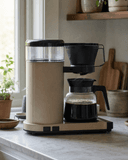 Best OverallTechnivorm Moccamaster
Excellent
Our score: 83 / 100
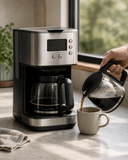 Best for TinkerersBreville Precision Brewer
Excellent
Our score: 84 / 100
Technivorm Moccamaster
Excellent
Our score: 83 / 100
A copper heating element and a mechanical switch that Technivorm backs with a five-year warranty — the longest in the category. No screen, no presets, just a full carafe at SCA-certified temperature in about six minutes. This is the machine coffee professionals actually buy for their own kitchens.
Breville Precision Brewer
Excellent
Our score: 84 / 100
Same SCA-certified temperature range as the Moccamaster, plus a programmable start timer, a manual 'gold cup' mode, and a dedicated single-serve setting. Costs less than the Moccamaster and does more, at the cost of a shorter one-year warranty and a more electronics-heavy build.
How we chose
We started from one non-negotiable filter: SCA certification for brewing temperature, meaning the machine reliably holds water in the 195-205°F range through most of the brew cycle. That single spec explains most of the taste gap between a $35 drip machine and one of these two, and it's the reason this list is short rather than padded with machines that don't clear the bar.
From there, we weighed build quality and long-term reliability (the Moccamaster's copper element and mechanical switch, backed by a five-year warranty) against feature flexibility (the Precision Brewer's programmable timer, manual brew mode, and dual carafe sizes). Both machines brew a genuinely excellent cup — the difference between them is philosophy, not quality, which is why this guide only needs two picks instead of five mediocre ones padded in to hit a round number.
What to look for
Brewing temperature. This is the single most important spec on a drip machine and the one most brands don't advertise clearly. Look for SCA certification specifically, or at minimum a stated brew temperature in the 195-205°F range. Below that, coffee under-extracts and tastes flat regardless of bean quality.
Carafe material. Glass carafes sit on a hot plate, which keeps coffee hot but slowly stews it if left more than 20-30 minutes — fine if you drink the pot quickly, less fine if you nurse cups over a couple hours. Thermal (insulated steel) carafes skip the hot plate and hold heat without continuing to cook the coffee, at the cost of not being able to see how much is left at a glance.
Programmability. A scheduled start timer is either essential or irrelevant depending entirely on your morning routine. If you like coffee ready the moment you're up, it's worth paying for; if you're brewing on demand, it's a feature you'll never touch.
Brew modes. Some machines offer only one fixed profile; others (like the Precision Brewer) let you manually adjust temperature, flow, and bloom time. More control is only valuable if you'll actually use it — otherwise it's just more menu to navigate every morning.
Batch size vs. actual need. A 12-cup carafe brewed for one person means either wasted coffee or a lot of reheated cups later in the day. If you usually drink just one or two cups, look specifically for a single-serve mode rather than assuming you'll scale down a full recipe.
Frequently asked questions
Is it worth spending $250+ on a drip machine at all?
Only if you drink coffee daily and can taste the difference proper extraction makes — the gap between an SCA-certified machine and a budget one is real and consistent, not a placebo effect. If you drink coffee occasionally or add a lot of milk and sugar, a cheaper machine is a reasonable choice.
Do I need SCA certification specifically, or just a good brand name?
Certification matters more than brand reputation alone — it's a specific, testable claim about brewing temperature, not marketing language. A well-known brand without certification can still run cooler than these two machines.
Glass or thermal carafe — which should I actually buy?
Glass if you finish a pot within 20-30 minutes and like being able to see the coffee level at a glance. Thermal if you sip slowly over a couple hours and don't want the hot plate to stew the coffee in the meantime.
Which one should a first-time premium drip buyer choose?
The Precision Brewer if you want a programmable timer and the option to manually tune your brew. The Moccamaster if you'd rather have the simplest possible machine with the strongest warranty and don't mind flipping a switch instead of setting a schedule.