Best Manual Coffee Brewers Overall (2026): Which One Actually Fits Your Morning
"Manual brewer" covers a wider range of actual experiences than any other coffee equipment category — an AeroPress and a Bialetti Moka Express both require you to do the work yourself, and otherwise have almost nothing in common. Brew time, cleanup, technique, even the beverage you end up with, all vary enormously across this category. There's no single "best" manual brewer, only the one that matches the specific thing you actually want out of your morning.
This guide picks four devices out of the broader manual-brewer lineup, each justified by a distinct real-world use case rather than a generic ranking: speed, cleanliness of the cup, portability, and stovetop ritual. If you're trying to pick just one to start with, match yourself to a use case below rather than reading this as a strict 1-through-4 ranking.
Our top picks
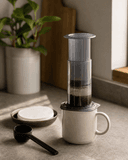 Best for Speed and SimplicityAeroPress Original
Excellent
Our score: 86 / 100
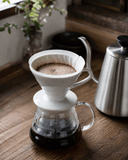 Best for Cup ClarityHario V60 02
Excellent
Our score: 82 / 100
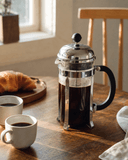 Best for Serving a GroupBodum Chambord French Press
Good
Our score: 77 / 100
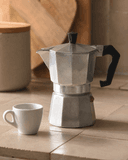 Best for Stovetop Ritual and TravelBialetti Moka Express
Good
Our score: 75 / 100
AeroPress Original
Excellent
Our score: 86 / 100
Under two minutes from kettle to cup, cleanup in about ten seconds, and it's nearly impossible to make genuinely bad coffee with it. The pick if you want good coffee on a weekday morning without turning it into a project.
Hario V60 02
Excellent
Our score: 82 / 100
The cleanest, brightest cup in the manual-brewer lineup once you've put in a couple weeks of pouring practice. Cheap enough that the investment to find out if you like the ritual is basically nothing.
Bodum Chambord French Press
Good
Our score: 77 / 100
Brews a full pot for three or four people with zero pouring technique required — just a stir and a steady four-minute wait. The trade-off is a heavier, sediment-bearing cup and a plunger that needs periodic disassembly to clean properly.
Bialetti Moka Express
Good
Our score: 75 / 100
No electricity, no filters, works on any stovetop including a camp burner, and produces something meaningfully stronger than drip coffee. Ninety seconds of active brewing once it starts gurgling, and the design's barely changed since 1933 because it doesn't need to.
How we chose
We started by mapping out the actual use cases manual brewing serves, rather than trying to rank five devices on a single "best coffee" axis where they're not really competing. Speed and forgiveness (AeroPress), maximum clarity for someone willing to learn a pour (V60), batch size and zero technique (Chambord), and stovetop portability with no power source needed (Bialetti) are four genuinely distinct jobs. We left the Chemex off this particular list only because its main strength — serving a group from one vessel — overlaps heavily with the Chambord's, and we didn't want to include two picks solving the same problem when the Chambord's mesh-brewed cup and lower price make it the more distinct recommendation for that specific use case; the Chemex remains the better pick if you specifically want a cleaner, lighter cup for a group, which our pour-over guide covers directly.
What to look for
What "manual" actually costs you. Every device on this list trades some convenience for either a lower price, a specific flavor profile, or a lack of dependence on electricity. Be honest about how much hands-on process you actually want in your morning before picking one.
Brew time you'll tolerate on a weekday. The AeroPress and Bialetti are both under two minutes of active brewing. The V60 and Chambord both run three to five minutes and, in the V60's case, demand your full attention throughout rather than letting you walk away.
Cup profile. These four devices don't produce the same beverage. The V60 gives you the cleanest, brightest cup. The Chambord gives you the heaviest, most full-bodied one. The AeroPress lands in between. The Bialetti produces something stronger and more concentrated, closer to espresso than to drip coffee.
Cleanup tolerance. The AeroPress and V60 are both rinse-and-done. The Chambord's plunger benefits from periodic full disassembly, and the Bialetti is hand-wash-only with no soap by tradition. If cleanup friction is a dealbreaker for you, weight your decision toward the first two.
Batch size. Only the Chambord here genuinely serves multiple people from one brew cycle. The other three are built around one to two servings at a time.
Frequently asked questions
If I can only buy one manual brewer to start, which should it be?
The AeroPress, for most people — it's the cheapest entry point, the fastest to use, the hardest to mess up, and the easiest to clean. It won't teach you pour-over technique, but it also won't punish you while you're learning anything.
Which of these actually makes the best-tasting coffee?
It depends what you mean by best. The V60 produces the cleanest, brightest cup in skilled hands. The Chambord produces the heaviest and most full-bodied. Neither is objectively better — they're different beverages built from the same bean.
Is the Bialetti Moka Express really a 'manual brewer' like the others?
Yes, in the sense that matters here — no electricity, no automation, you control every variable by hand and stovetop heat. It just produces a different, stronger style of coffee than the immersion and pour-over methods on this list.
Can I own more than one of these and use them for different situations?
That's genuinely how most manual-brew enthusiasts end up using this category — an AeroPress for a rushed weekday, a V60 for an unhurried weekend morning, a Chambord when guests are over, a moka pot when you want something stronger. None of them cost enough individually to make owning several feel wasteful.