Best Manual / Lever Espresso Machines (2026)
Manual lever espresso is a genuinely small niche, and I'd rather be straight about that than pad this guide with weak alternate picks just to look thorough. There's one machine worth recommending without reservation in this category at a mainstream-accessible price, and the more useful thing I can do here is explain the lever mechanism itself — spring versus direct — and who this niche is actually for, so you can decide if you belong in it at all before you spend the money.
Our top picks
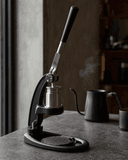 Best Manual / Lever MachineFlair 58
Fair
Our score: 66 / 100
Flair 58
Fair
Our score: 66 / 100
The clearest mainstream entry point into lever espresso — a spring-assisted lever, a real 58mm commercial portafilter, and a design built to be disassembled and packed for travel. No electricity, no boiler, and the entire pressure curve is controlled by your own arm.
How we chose
We considered padding this list with additional picks purely for the sake of having more than one entry, and decided against it — the honest state of the mainstream manual/lever market right now is that the Flair 58 is the clear, well-documented choice for most people entering this niche. Rather than manufacture a false choice between it and lesser-known alternatives most readers can't easily buy or get supported, we're using the rest of this guide to explain the category itself in depth, which is more useful to a genuine buyer than a padded ranking would be.
What to look for
Spring-lever versus direct-lever is the core mechanical distinction in this category. A spring-lever design, like the Flair 58, uses a compressed spring to generate and sustain brewing pressure after you pull the lever down — the spring does some of the work, smoothing out inconsistencies in your own pull. A direct-lever design has no spring; the pressure at the puck is exactly and only what your arm applies in that instant, with no buffer. Direct-lever machines (found on pricier, more specialized equipment) demand more precise technique and reward it with more granular control; spring-lever machines are more forgiving while you're learning and still let you shape a pressure profile.
There's no boiler on a manual lever machine like the Flair 58, which changes your whole routine. You heat water separately — a gooseneck kettle is the natural pairing — and pour it into a thermal brew chamber just before pulling. That means an extra step and an extra piece of equipment compared to any plug-in machine, and it means temperature management is partly on you rather than automated.
This category has no steam wand, full stop. Every manual lever machine on the market skips steaming entirely. If milk drinks are part of your daily routine, budget for a separate frother or milk-steaming device, or accept that this category isn't your daily driver — maybe a second machine for weekend single-origin shots instead.
Who this niche is actually for: someone who already understands espresso fundamentals — grind, dose, distribution — and specifically wants to feel and control the pressure curve rather than have a pump apply one automatically. It's a poor fit for someone who wants espresso to be fast or low-effort; every shot takes active, standing-at-the-machine attention, and there's no walking away mid-brew.
Portability is a real, underrated feature of this category. Because there's no boiler and often no permanent plumbing, lever machines like the Flair 58 disassemble into a case. That's genuinely unique among machines capable of real 9-bar-plus pressure — nothing electric packs down the same way.
Frequently asked questions
Why is there only one pick in this guide?
Because the mainstream, well-supported manual lever market genuinely centers on one clear option right now. We'd rather tell you that plainly than manufacture a false choice between it and harder-to-find alternatives.
What's the real difference between spring-lever and direct-lever machines?
A spring-lever design uses a compressed spring to help sustain pressure after your pull, smoothing out some of your own inconsistency. A direct-lever design has no spring buffer at all — pressure is exactly what your arm delivers in that moment, which demands more precision but offers finer control.
Do I need any other equipment to use a manual lever machine?
Yes — at minimum a kettle to heat water separately, and a grinder, since none of these machines grind coffee. Most owners also want a milk frother if they drink milk-based drinks, since there's no steam wand.
Is manual lever espresso actually better than pump-driven espresso?
Not objectively better — it's a different kind of control. A skilled hand on a lever machine can shape a pressure curve a pump machine's fixed profile can't replicate, but a pump machine is far more consistent for someone who hasn't developed that skill yet.
How long does the whole process take compared to a regular machine?
Expect two to three extra minutes per shot once you account for heating water separately and the more deliberate lever pull — this category rewards patience, not speed.