Best Mid-Range Coffee Gear (2026)
Mid-range coffee gear is the most crowded, most confusing price bracket in the whole hobby. Under $50 you know what you're getting — the basics, no more. North of $500 you're buying flagship performance and paying for it. The middle is where marketing works hardest to convince you a feature you don't need is essential, and where genuinely well-designed, honestly priced tools sit right next to overpriced ones dressed up to look premium.
This list skips full espresso machines and grinders — those deserve their own dedicated roundups — and focuses on the smaller pieces of gear that actually change your daily routine: how you pull a shot away from home, how you froth milk, how you weigh a dose, and how you keep beans from staling on the counter. Every pick here has already been reviewed in full on this site, so you can go deeper on any one of them before buying.
None of these are the only good option in their category. They're the ones that, at this specific price point, get the fundamentals right without asking you to pay for a feature you'll never touch.
Our top picks
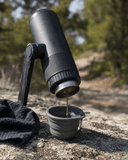 Best Portable Espresso ControlWacaco Picopresso
Good
Our score: 71 / 100
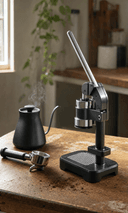 Best Countertop Manual EspressoFlair Neo Flex
Fair
Our score: 69 / 100
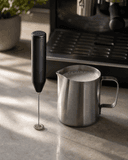 Best Milk FoamSubminimal NanoFoamer
Good
Our score: 70 / 100
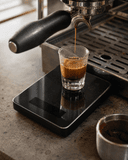 Best Scale ValueTimemore Black Mirror Basic 3
Good
Our score: 77 / 100
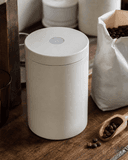 Best Storage DesignFellow Atmos Vacuum Canister
Good
Our score: 76 / 100
Wacaco Picopresso
Good
Our score: 71 / 100
The Picopresso's naked basket shows you exactly what your tamp and grind are doing, mid-shot, which makes it the most honest way to keep pulling real espresso on the road. It asks more of your technique than a simpler travel maker, and rewards you for it.
Flair Neo Flex
Fair
Our score: 69 / 100
A stable, lever-driven alternative to pump machines that costs a fraction of what most 58 mm-portafilter machines run. No steam wand, no electronics — just direct hand control over pressure on a base that doesn't wobble mid-pull.
Subminimal NanoFoamer
Good
Our score: 70 / 100
A handheld frothing wand that whips genuinely fine, glossy microfoam in under 30 seconds. It has no built-in heater, so you need to warm your milk separately first — pair it with a kettle or a stovetop pour and it turns any setup into a latte-capable one.
Timemore Black Mirror Basic 3
Good
Our score: 77 / 100
Fast, accurate, and low-profile enough to clear an espresso portafilter without a second thought — for well under $50, it covers everything most people actually need from a coffee scale.
Fellow Atmos Vacuum Canister
Good
Our score: 76 / 100
The most effective seal in this list for whole beans stored over several weeks, in a design polished enough to leave out on the counter. Best paired with whole beans rather than pre-ground, since the vacuum mechanism is fussier to clean with fine grounds.
How we chose
Every pick here already has a full review on this site, and we leaned on those reviews' honest scoring rather than marketing copy — no product made this list because of a press release. We specifically looked for gear in the realistic middle of its category's price range that performs close to flagship level on the one or two things that actually matter for its job, rather than gear that spreads a mid-range budget thin across a long feature list.
We also cross-checked owner-reported patterns across each product, not just a single test session, since a tool that performs well once and inconsistently over months isn't actually a good buy. Where a product has a real limitation — no steam wand, no vacuum seal, a learning curve — we say so directly in the blurb rather than burying it.
What to look for
Match the tool to your actual routine, not your aspirational one. A portable espresso maker is wasted if you don't actually travel with coffee gear. A guided pour-over scale is wasted if you only ever pull espresso. Buy for the coffee you make most weeks, not the coffee setup you imagine having.
Understand what "manual" costs you in convenience, not just money. Lever machines and hand-pump portable makers trade automation for control and durability — no boiler or pump to fail, but every shot takes active involvement from grind to pull. That's a real trade, not a downgrade, but it's worth being honest with yourself about whether you want that involvement daily.
Check physical fit before you buy, especially for scales. A scale's accuracy spec rarely varies much in this price range — what does vary is whether it physically clears your portafilter or dripper. A tall, wide scale that reads perfectly accurate numbers is still the wrong scale if it doesn't fit your actual counter setup.
Don't buy a vacuum-sealing canister for coffee you grind ahead of time. Vacuum and CO2-valve mechanisms are built with whole beans in mind, and get harder to keep clean with fine grounds working into the seal. If you buy pre-ground coffee, a simple gasket-sealed canister will serve you just as well for a lot less money and a lot less cleaning.
No storage container stops staling — it only slows it. Roast date, light exposure, and how often you open the container matter more than the container's mechanism. Buy fresh, buy only as much as you'll finish in a few weeks, and the cheapest airtight container will outperform an expensive one holding month-old beans.
Frequently asked questions
What's the single best upgrade for someone making espresso at home on a budget?
A decent scale is usually the highest-value upgrade before spending on a new machine — dialing in dose and yield by weight fixes more inconsistent shots than almost any hardware change, and a solid one costs under $50.
Do I need a vacuum canister, or is a simple airtight one enough?
For most people finishing a bag of beans within a few weeks, a simple gasket-sealed canister is enough — a vacuum canister earns its price mainly if you're storing whole beans for a month or longer and want to slow staling as much as possible.
Is a portable espresso maker worth it if I already have a machine at home?
It depends on how often you're actually away from that machine — if travel, camping, or an office desk without an espresso setup is a regular part of your week, a portable maker like the Picopresso pays for itself in avoided coffee-shop trips fairly quickly.
Can a handheld milk frother replace a steam wand?
For microfoam texture, a good handheld frother like the NanoFoamer gets close — but it doesn't heat the milk, so you still need a separate way to warm it, unlike a steam wand that heats and froths in one step.
Why isn't a full espresso machine or grinder on this list?
Those deserve dedicated comparisons of their own given how much they vary in price and mechanism — this list focuses specifically on the smaller accessories that round out a mid-range coffee setup once the machine and grinder are already sorted.