Explainer
Cold Brew Concentrate vs Ready-to-Drink: What's the Difference?
On this page
Cold brew concentrate is a strong, undiluted coffee extract meant to be cut with water, milk, or ice before drinking, while ready-to-drink (RTD) cold brew is already diluted to normal drinking strength straight out of the bottle. That single distinction — diluted versus not — explains almost every other difference between the two, from cost per serving to how long a container actually lasts you.
What concentrate actually is
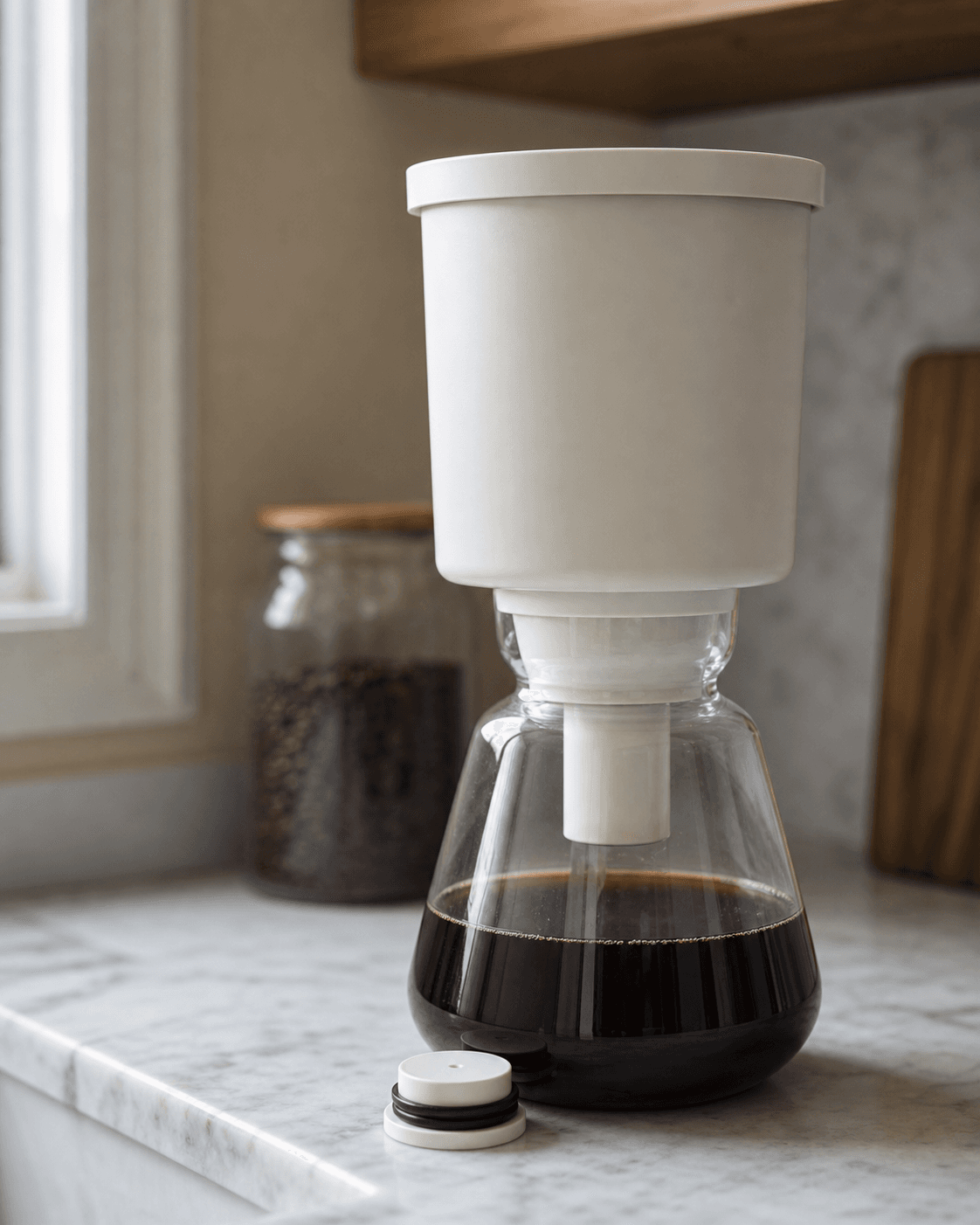
When you brew in something like a Toddy Cold Brew System, you're using a higher ratio of coffee to water than you would for a drinkable cup — intentionally, because the result is meant to be a base you dilute later, not a finished drink. Straight from the decanter, concentrate tastes intensely strong, often bitter or overwhelming if you're expecting normal coffee. That's not a flaw. It's the format working as designed — a small amount of concentrate stretches into several servings once you add water, milk, or pour it over ice.
What ready-to-drink cold brew is
RTD cold brew — the bottles and cans sold in grocery stores and coffee shops — skips the dilution step for you. What's in the bottle is already at drinking strength, brewed and packaged that way so you can open it and drink it with no further preparation. It's convenient, but you're paying for that convenience: a single RTD bottle typically costs close to what a whole batch of homemade concentrate costs in beans, and that batch of concentrate dilutes into far more than one serving.
Why the distinction matters for strength
Because concentrate is engineered to be cut, you control the final strength yourself — 1:1 for a normal cup, 1:2 for something milder, straight over ice with a splash of milk for something closer to a latte. RTD removes that control; the brewer decided the dilution ratio for you, and if you want it stronger, you're adding more bottles rather than adjusting a ratio. Neither approach is wrong, but they serve different habits — concentrate rewards people who want to customize each glass, RTD rewards people who want zero decisions between opening the fridge and drinking.
Why the distinction matters for cost
This is where the gap is largest. A pound of coffee brewed into concentrate at home, then diluted, can realistically produce a dozen or more full servings for a few dollars in beans. A single RTD bottle at retail often costs several dollars on its own, for one serving, because you're paying for packaging, distribution, refrigeration, and retail margin on top of the coffee itself. If you drink cold brew daily, making concentrate at home and diluting it yourself is dramatically cheaper over a month than buying bottles.
Which one should you actually use?
If you drink cold brew often enough to notice the cost difference, or you like adjusting strength to match your mood or the drink you're making, concentrate is the better long-term habit — a batch from something like a Toddy covers most households for the better part of a week. If you want zero prep, don't drink cold brew often enough to justify equipment, or need something grab-and-go for travel, RTD bottles fill that gap fine, at a real price premium for the convenience.
The bottom line
Concentrate versus RTD isn't a quality question — it's a convenience-versus-cost tradeoff. Concentrate asks a little more of you up front (brewing, then diluting each glass) and pays it back in flexibility and a much lower cost per serving. RTD asks nothing of you and charges accordingly. Most regular cold brew drinkers land on concentrate once they do the math on what a month of RTD bottles actually costs compared to a bag of beans and a pitcher.
Frequently asked questions
Can I drink cold brew concentrate straight, without diluting it?
You can, but most people find it overwhelmingly strong — concentrate is brewed specifically to be cut with water, milk, or ice, and drinking it undiluted tastes closer to a shot of espresso than a normal cup of coffee.
Is ready-to-drink cold brew weaker than homemade concentrate?
Per ounce, usually yes — RTD bottles are already diluted to drinking strength, where homemade concentrate from something like a Toddy is deliberately brewed strong so you can stretch it further with your own dilution.
Why is homemade cold brew concentrate so much cheaper per cup than store-bought RTD?
Because you're paying mostly for beans and time instead of packaging, distribution, and retail markup — a batch of concentrate that costs a few dollars in beans can dilute into a dozen servings, where a single RTD bottle at the store often costs close to that for one serving.
Does concentrate last longer than ready-to-drink cold brew?
Homemade concentrate typically lasts one to two weeks refrigerated, similar to or a bit shorter than sealed RTD bottles, which often carry longer shelf stability before opening thanks to commercial processing — but once either one is opened, drink it within about a week for the best flavor.