How-To
How to Make a Latte at Home Without a Café Machine
On this page
The short answer
You don't need a $2,000 setup. An entry-level auto-steam machine like the Breville Bambino Plus gets you real espresso and real steamed milk for well under a café's monthly bill in lattes. If you don't want a machine at all, a moka pot plus a handheld milk frother gets you 80% of the way there for about $40.
There's a wide gap between "no equipment" and "commercial-grade setup," and most people don't realize how much of that middle ground is actually good.
Option 1: an auto-steam machine
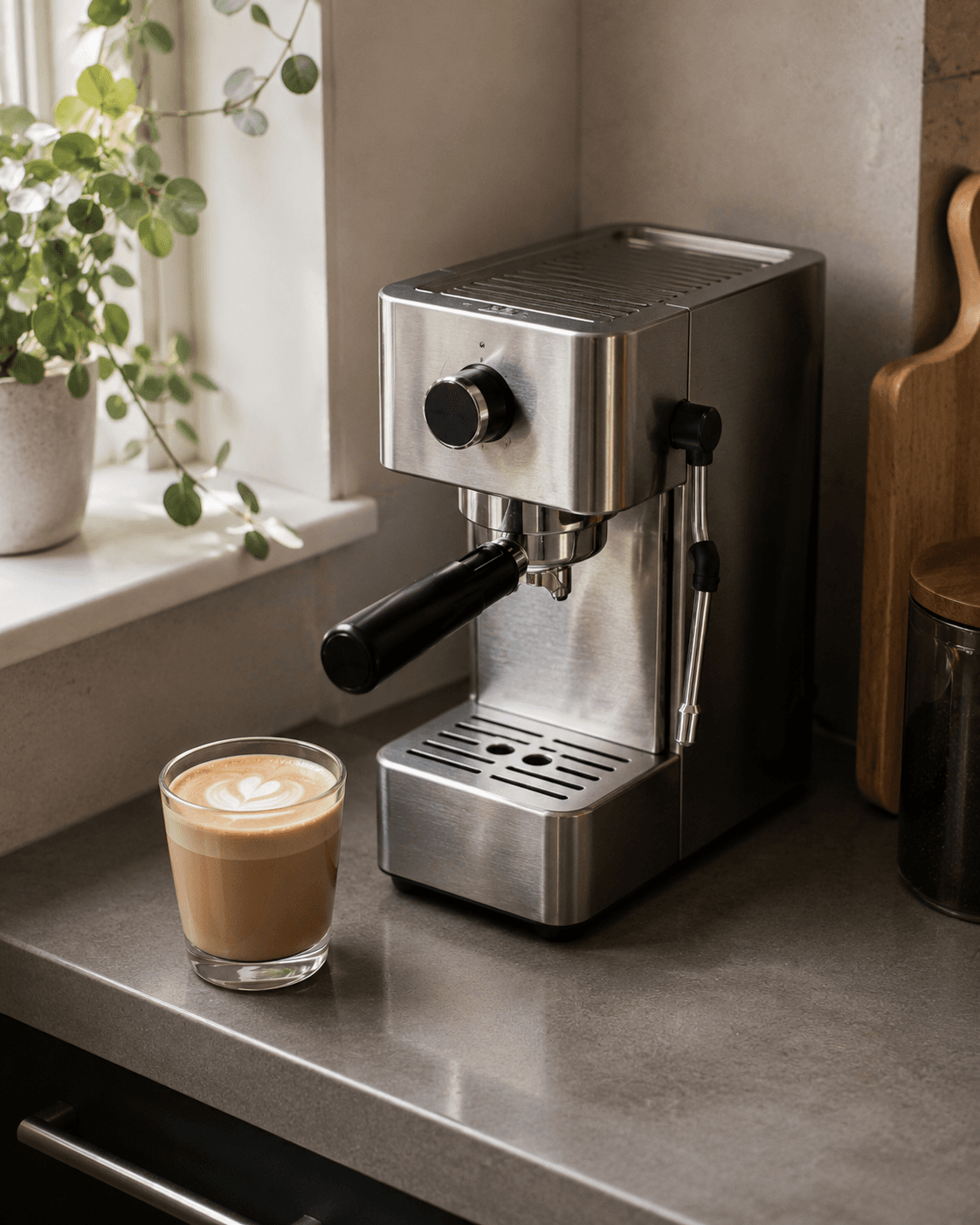
Something like the Bambino Plus automates the two hardest parts of espresso — dose consistency and milk texturing — while still using real pressure and a real steam wand. You get a pump-driven shot (not the low-pressure moka substitute) and an auto-steam wand that pre-programs texture presets so you don't need to learn manual steaming technique from scratch.
This is the realistic option if you're drinking lattes daily and want them to actually taste like the café version — good extraction, proper microfoam, consistent results without years of practice. The tradeoff is cost and counter space, but it's the only option here that gives you genuine espresso pressure.
Option 2: moka pot + manual milk frothing
If a machine's not in the budget, a moka pot brews a strong, concentrated coffee at roughly 1-2 bars of pressure — not true espresso, but close enough in strength and body to work as a latte base. Brew it strong (use less water relative to grounds than you would for straight drinking coffee) and pour it over steamed or frothed milk.
For the milk, a handheld battery frother (a small whisk on a stick, a few dollars) works better than people expect. Heat milk on the stove or in the microwave to about 150°F, then froth for 15-20 seconds until you get a thicker, silkier texture. It won't have the tight, glossy microfoam of a steam wand, but it's genuinely drinkable and costs almost nothing.
Milk texturing basics — what you're actually doing
Whether you're using a wand or a handheld frother, the goal is the same: incorporate air into cold milk while heating it, breaking large bubbles into a fine, uniform microfoam rather than large bubbly foam.
With a steam wand: start with the tip just under the milk's surface, angled to create a whirlpool. Keep it there only during the "stretching" phase (the first several seconds, when you hear a light hissing/tearing sound as air gets pulled in) — then submerge the tip deeper to keep the vortex spinning without adding more air, heating the milk to about 140-150°F. Too much air the whole time gives you dry, bubbly foam instead of the silky microfoam a latte needs.
With a handheld frother: there's less control, but the principle holds — froth cold milk first to build the texture, then gently warm it (frothing hot milk directly tends to produce bigger, less stable bubbles).
Practical steps
- With a machine: pull a shot, steam milk to 140-150°F using the wand's texture preset, pour.
- Without a machine: brew a strong moka pot shot, froth cold milk with a handheld frother, then gently warm it, combine.
- Either way — whole milk or barista-blend oat milk gives the most stable foam.
- Pour slowly, holding back the foam with a spoon if you want a clean latte layer rather than a full pour-through.
Frequently asked questions
Can I make a decent latte with no machine at all?
Yes, with a moka pot for the base and a handheld milk frother or a jar-shake method for the milk — it won't have the same body as a pump espresso shot, but it's a legitimate everyday option.
What milk froths best for a latte?
Whole milk gives the most stable, sweet microfoam because of its fat content — oat milk (barista blend specifically) is the best non-dairy option since it's formulated to froth similarly.
Why does my milk froth turn out bubbly instead of smooth microfoam?
The wand is likely too close to the surface for too long, or the milk is too warm going in — keep the tip just under the surface so it draws air in a tight, controlled way, and start with cold milk.