On this page
The short answer
Use a 1:16 ratio (so 20g coffee to 320g water), grind medium-fine, bloom for 30-45 seconds with 2x the coffee weight in water, then pour the rest in 2-3 stages in a slow spiral. Total brew time should land between 2:30 and 3:30. If you're outside that window, your grind size is the first thing to adjust.
I've made this cone way more complicated in my head than it needed to be for the first year I owned one. It's a filter, a cone, and gravity. The technique matters, but not as much as the coffee forums want you to believe.
Setting up: ratio, grind, water temp
Start with 20g of coffee to 320g of water — a 1:16 ratio. That's a good middle ground; go to 1:15 if you want it stronger, 1:17 if you want something lighter and more tea-like. Weigh both. Eyeballing water is where most bad V60 cups start.
Grind medium-fine — finer than drip, coarser than espresso, somewhere around the texture of coarse sand or table salt. Water temp should sit between 195-205°F (90-96°C). If you don't have a temperature-controlled kettle, boil and let it sit off the heat for 30 seconds — that gets you close enough.
Rinse the paper filter with hot water before adding coffee. This does two things: it washes out the papery taste and it preheats the dripper and mug. Dump the rinse water out before adding your grounds.
The bloom
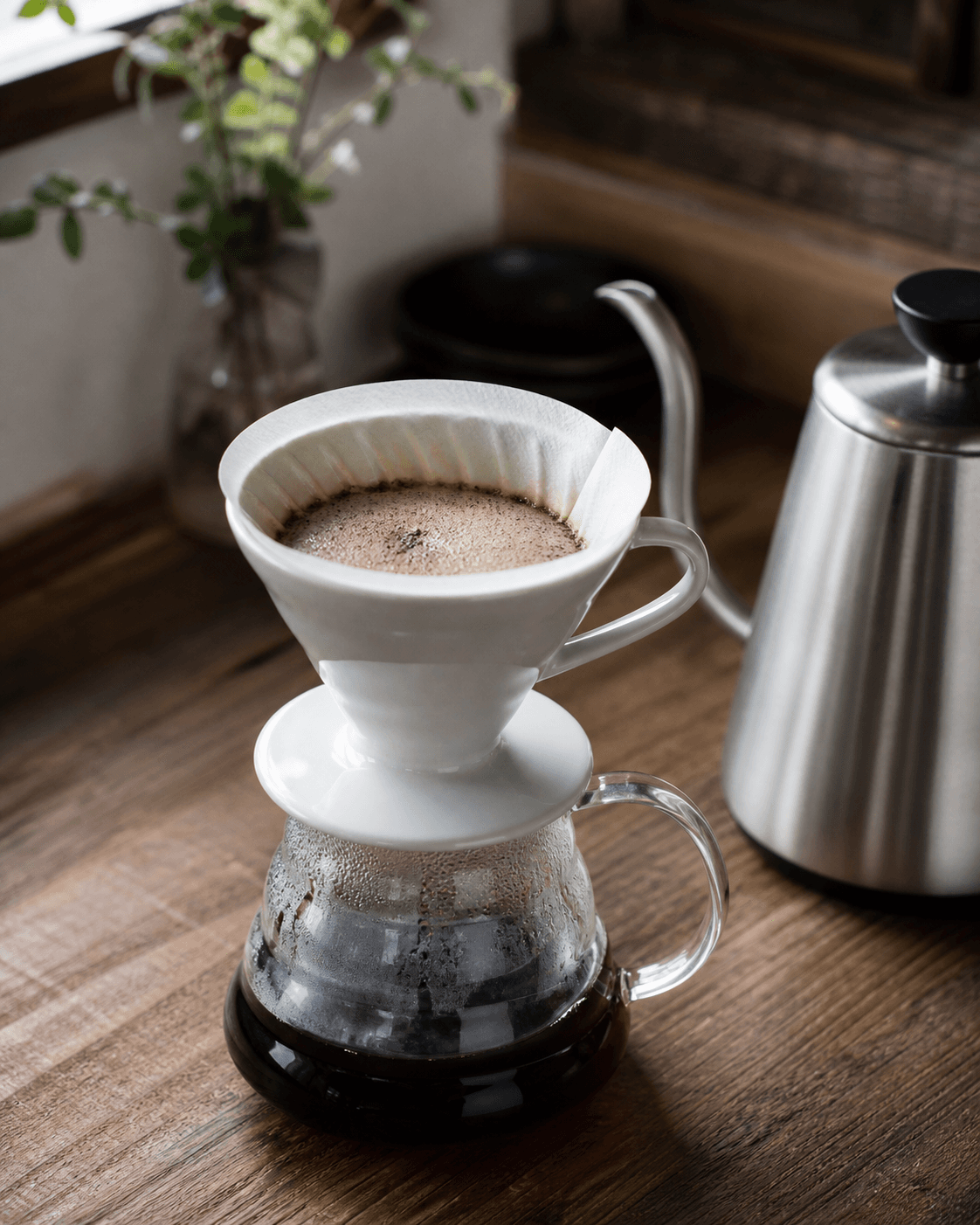
Pour twice your coffee weight in water — so 40g for our 20g dose — directly onto the grounds, saturating them evenly. Give it a gentle swirl if the dry grounds on the edges aren't wetting. Let it sit for 30-45 seconds. You'll see it puff up and bubble — that's CO2 escaping, a sign of fresh beans. If it barely blooms at all, your coffee is probably stale.
Skipping the bloom is the single most common shortcut that ruins a V60. Without it, water channels through unevenly saturated grounds and you get a patchy, inconsistent extraction — sour in some sips, flat in others.
The pour pattern
After the bloom, pour the remaining water in slow, deliberate stages — I do mine in 2 additional pours, but 3 works fine too if you want more control. Pour in a tight spiral starting from the center, moving outward toward the edge of the filter, then back in — never directly onto the paper itself, and avoid the dead center for too long or you'll drill a hole through the bed.
Keep the water level fairly consistent, don't let it drain all the way down between pours. A slow, thin stream matters more than people think — dumping water fast agitates the bed and pulls out bitter, over-extracted compounds along with the good stuff.
Total time and troubleshooting
Aim for the whole brew, bloom included, to finish between 2:30 and 3:30. Faster than that and you're likely under-extracting (sour, thin, sharp). Slower than that and you're into over-extraction territory (bitter, dry, astringent finish).
- Draining too fast (under 2:00): grind finer.
- Draining too slow (past 4:00): grind coarser, or check that your pours aren't too gentle/infrequent.
- Tastes sour: grind finer, or raise water temp slightly.
- Tastes bitter/harsh: grind coarser, cut brew time, or use a touch less coffee.
Practical steps, start to finish
- Rinse filter, discard rinse water.
- Add 20g medium-fine ground coffee.
- Pour 40g water, bloom 30-45 seconds.
- Pour to 200g total, let drain partway.
- Pour to 320g total in a slow spiral.
- Total time should land 2:30-3:30. Done when water fully drains through.
Dial in the grind before you touch anything else. It's genuinely 80% of what separates a good cup from a mediocre one on this brewer.
Frequently asked questions
Why does my coffee taste sour with the V60?
Under-extraction, almost always — your grind is too coarse, your water isn't hot enough, or your total brew time is running short of 2:30. Grind slightly finer first, it's the cheapest fix.
Can I use a metal filter instead of paper?
Yes, but expect more body and some sediment in the cup — paper gives you the cleaner, brighter V60 profile most people are chasing.
Do I need a gooseneck kettle?
You don't need one, but you'll fight your pours without it — a regular kettle dumps water in a blob instead of a controlled stream, and your extraction gets uneven.