Care
How to Season a Cast Iron Skillet (and Keep It That Way)
On this page
The short answer
Coat the pan in a very thin layer of a high-smoke-point oil, bake it upside down in a 450-475F oven for an hour, let it cool in the oven, and repeat that two or three times before regular use. After that, the habit that actually keeps a cast iron pan in good shape is simpler than the internet makes it sound: cook with enough fat, dry it immediately after washing, and don't let it sit wet or soak in a sink.
Why seasoning works the way it does
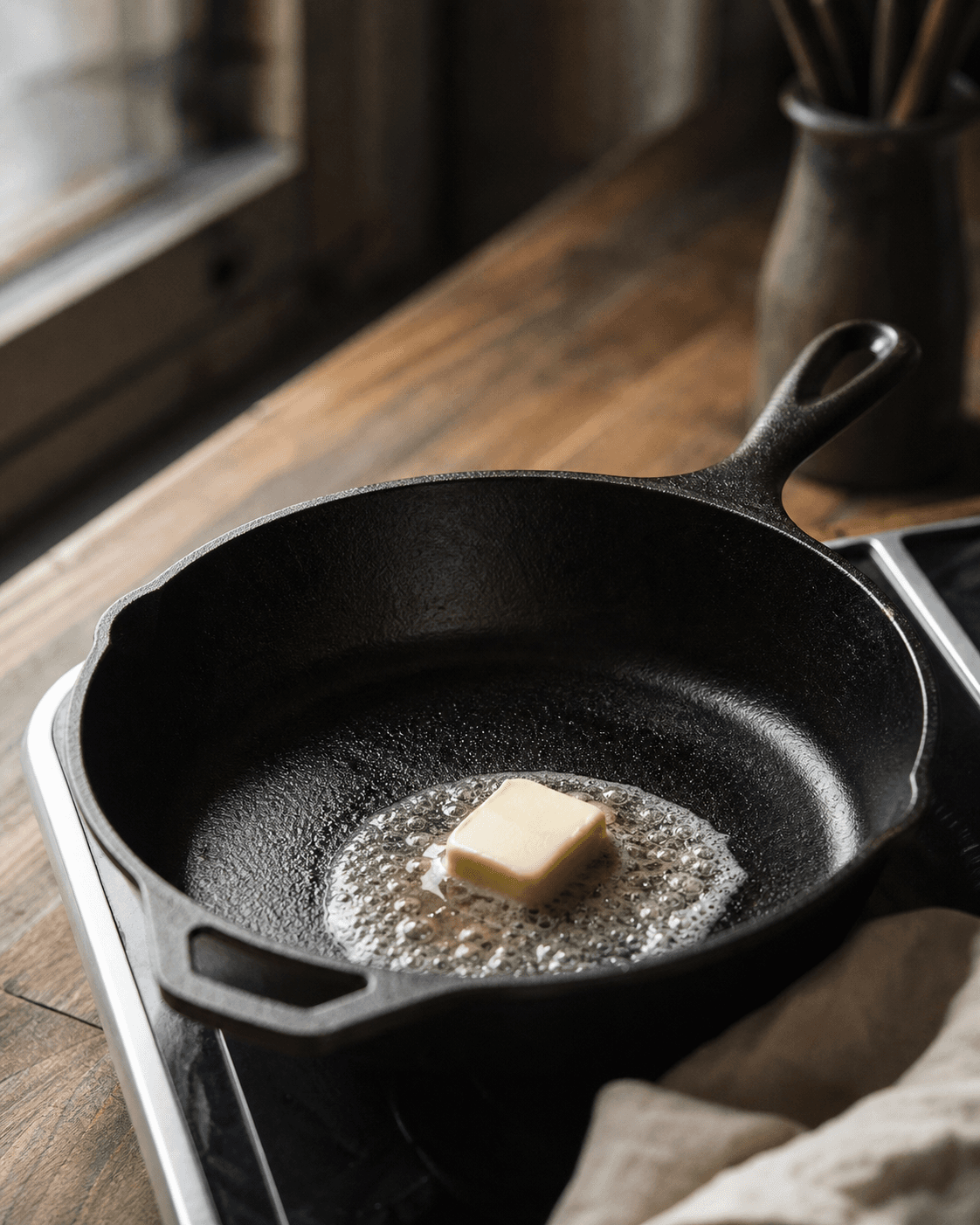
Seasoning is polymerized oil — fat that's been heated past its smoke point until it chemically bonds to the iron surface and hardens into a thin, plastic-like layer. That layer is what makes cast iron release food cleanly and resist rust; it's not a coating applied at the factory that you're preserving, it's a living surface you build and rebuild through use. Every time you cook with oil or butter in the pan and it gets hot, you're adding a microscopically thin layer to what's already there — which is why a cast iron pan used weekly for years develops a genuinely glassy, dark, effectively nonstick surface, while a new one straight from the store doesn't.
Oil type and why it matters
A high-smoke-point, neutral oil — vegetable oil, canola oil, or flaxseed oil are the most commonly recommended — polymerizes more completely and evenly at the temperatures seasoning requires than oils with lower smoke points, like olive oil or butter, which can scorch or leave a slightly stickier residue before fully hardening. Flaxseed oil has a reputation online for producing an especially hard, durable seasoning layer, though it's also more prone to flaking if applied too thickly — a thin, even coat matters more than which specific oil you choose.
Oven temperature and timing
450-475F for about an hour is the range most manufacturers, including Lodge, recommend for building seasoning — hot enough to fully polymerize the oil, not so hot that it scorches and flakes instead of bonding smoothly. Placing the pan upside down (with foil or a baking sheet underneath to catch drips) prevents oil from pooling in the bottom and curing unevenly. Letting the pan cool fully in the oven, rather than pulling it out hot, reduces the risk of the still-soft coating being disturbed before it's fully hardened.
Why one round of seasoning isn't enough
A single application produces a thin, patchy layer — usable, but not the deep, even, dark surface people associate with a well-seasoned pan. Repeating the oil-and-bake cycle two to three times before regular cooking builds enough layers to get a genuinely functional starting point; from there, regular cooking with fat continues building it over months.
Keeping it that way — the ongoing habits
Never let it soak
Standing water is the fastest way to rust cast iron, and soaking in a sink — even briefly, even with good intentions about "getting it really clean" — is the single most common mistake. Wash promptly after cooking, not hours later.
Dry immediately, then heat briefly
Towel-dry right after washing, then set the pan on a burner on low heat for a minute or two to fully evaporate any remaining moisture in the pores of the iron before it goes on a shelf. Air-drying alone often leaves enough residual moisture to start surface rust, especially in humid climates.
A light oil wipe before storage
After the pan is fully dry, a very thin wipe of oil on the cooking surface (and the exterior, if you want to be thorough) helps maintain the seasoning between uses and protects against humidity in storage.
Re-season after acidic or aggressive cooking
Tomato sauce, wine reductions, vinegar-based braises — acidic ingredients can slowly break down seasoning if cooked in the pan for extended periods regularly. It's not a reason to avoid cooking acidic food in cast iron entirely, but if you notice the surface looking duller or food starting to stick more than usual after a run of acidic cooking, a round of the oven re-seasoning process restores it.
Mild soap is fine — a full soak or the dishwasher isn't
A small amount of dish soap and a sponge won't strip a healthy, well-built seasoning layer, despite the old rule that soap is forbidden. What actually strips seasoning is prolonged soaking, harsh abrasive scrubbing on a well-seasoned surface, or a dishwasher cycle, which combines both extended water exposure and detergent.
Common mistakes that undo good seasoning
Using too much oil during the seasoning bake is the most frequent error — it produces a sticky, tacky surface instead of a hard one, because a thick layer of oil doesn't fully polymerize evenly. Storing the pan with a lid on before it's completely dry traps moisture against the surface and invites rust. And scrubbing off dark, cooked-on residue that people mistake for "dirt" when it's actually part of the seasoning layer strips away progress you've spent months building.
The bottom line
Seasoning cast iron isn't a one-time ritual — it's an ongoing relationship between the pan and how you cook with and clean it. Get the oven-based build-up right the first few times, then keep it going with fat in your cooking, prompt drying, and avoiding standing water, and the pan gets better, not worse, every year you own it.
Frequently asked questions
Can I use olive oil to season cast iron?
You can, but it has a lower smoke point than options like vegetable, canola, or flaxseed oil, and can leave a slightly stickier finish. Most experienced cast iron cooks prefer a neutral, high-smoke-point oil for the actual seasoning process, saving olive oil for cooking afterward.
My skillet is sticky after seasoning — what went wrong?
Almost always too much oil was applied before baking. The goal is a layer so thin it looks almost dry on the pan before it goes in the oven — a thick layer polymerizes unevenly and turns gummy or tacky instead of hard and smooth.
Do I need to re-season after every use?
No — normal cooking with a reasonable amount of fat actually builds seasoning over time rather than removing it. Re-seasoning from scratch is only needed after rust, major sticking, or an aggressive scrub-down that strips the surface back to bare metal.
Is it true you can never use soap on cast iron?
That's an exaggeration — a small amount of mild soap won't ruin a well-seasoned pan. What actually damages seasoning is prolonged soaking, harsh scrubbing with steel wool on a healthy surface, or the dishwasher, not an occasional light soap wash.