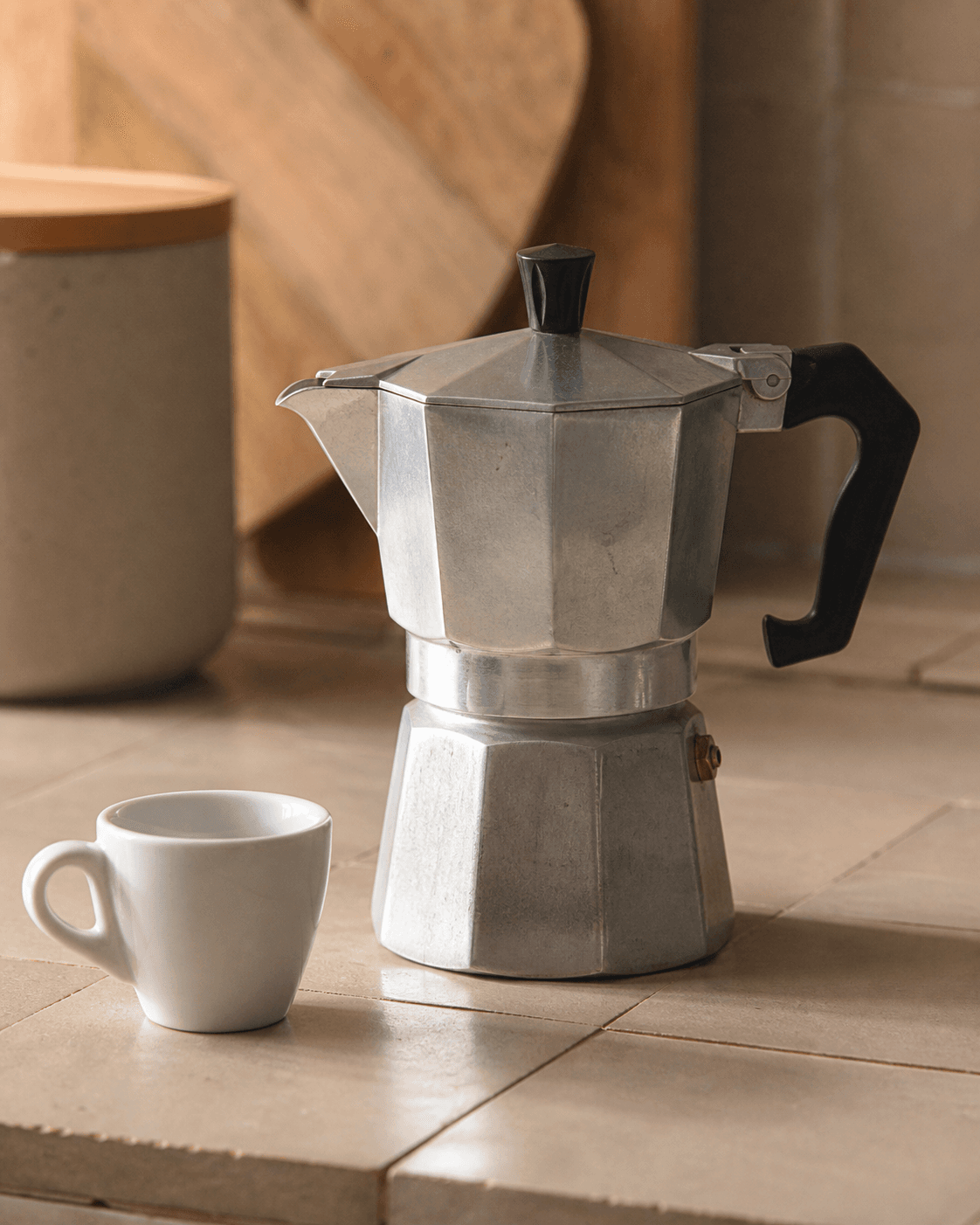
How-To
How to Use a Moka Pot (Stovetop Espresso, Basically)
On this page
The short answer
Fill the bottom chamber with hot water up to just below the pressure valve, fill the basket with medium-fine grounds leveled off (don't tamp), assemble, and brew on medium-low heat with the lid open. Pull it off the heat the moment you hear a hissing, sputtering sound — that's the signal it's basically done, and letting it keep going past that point is what burns it.
A moka pot is closer to stovetop espresso than to drip coffee, but it's really its own thing. Treat it like drip and you'll scorch it. Treat it like espresso and you'll over-tamp it. It wants its own rules.
Filling the water chamber
Fill the bottom chamber with water up to (but not above) the little pressure release valve on the side — that valve is a safety feature, and covering it with water is a real risk, not just bad form. Use hot water from the kettle rather than cold from the tap. Starting with hot water means the coffee spends less time sitting over heat before brewing starts, which noticeably reduces the burnt, metallic taste people associate with moka pots.
Grind size and the basket
Grind medium-fine — finer than drip, coarser than a true espresso grind, similar texture to what you'd use in an AeroPress. Too fine and you'll choke the pot, causing pressure to build dangerously high and the safety valve to blow steam and water out the side instead of through the coffee. Too coarse and water rushes through too fast, giving you a thin, weak, under-extracted cup.
Fill the funnel-shaped basket with grounds and level the top off — a light shake or a swipe of your finger across the top is enough. Do not tamp. Moka pots rely on steam pressure that's much lower than an espresso machine's pump, and a tamped puck simply won't let enough water through — you'll get a stalled brew or, worse, a valve release.
Heat level
Medium-low heat, lid open so you can watch and hear what's happening. High heat feels faster but it isn't actually better — it makes the water boil too aggressively, pushing steam and water through the grounds faster than they can properly extract, and it's the single biggest cause of burnt-tasting moka pot coffee. Slow and steady gets you a fuller extraction with less bitterness.
The over-extraction problem — and how to actually stop it
The classic mistake is leaving the pot on the burner until it's completely silent and empty of liquid movement. By the time you hear that continuous hissing, sputtering noise (often described as sounding like a percolator gurgling angrily), the good coffee has already come through — what's left coming up is mostly steam pushing through spent grounds, and it tastes burnt and bitter.
The fix: pull the pot off the heat as soon as you hear that sputter start, even if there's a little more liquid visibly moving. Residual heat in the metal will finish the job without scorching anything further. Some people also wrap the bottom chamber briefly in a cold, damp towel the instant they take it off heat — that stops extraction dead and locks in a cleaner flavor.
Practical steps
- Fill bottom chamber with hot water to just below the safety valve.
- Fill basket with medium-fine grounds, level, don't tamp.
- Assemble, place on medium-low heat, lid open.
- Listen — pull off heat the instant it starts hissing/sputtering.
- Optional — cool the base briefly with a damp towel to stop extraction.
Frequently asked questions
Is moka pot coffee the same as espresso?
No — it's brewed at roughly 1-2 bars of pressure from steam, far below the 9 bars a real espresso machine produces. You get a strong, concentrated cup with some crema-like foam, but not true espresso.
Should I tamp the grounds in the basket?
No — just level them off with a light shake or a finger swipe. Tamping restricts water flow too much for the pressure a moka pot generates and can stall the brew or cause the safety valve to release.
Why does my moka pot coffee taste burnt?
Almost always heat that's too high, left on the burner too long after the brewing sound changes — pull it off the heat the moment you hear the sputtering, hissing sound, don't wait for it to fully finish.