On this page
The short answer
Standard method: 17g coffee, 250g water at 175-185°F, stir once, steep 1:30-2:00, press over 20-30 seconds using steady (not maximum) pressure. That's a solid 1:15 ratio that works for most palates. The inverted method flips the AeroPress upside down before brewing, which just buys you a longer steep without early drip-through — it's a variant, not a fundamentally different drink.
People treat the AeroPress like it needs a PhD. It's a syringe. A very good syringe, but a syringe.
Standard method, step by step
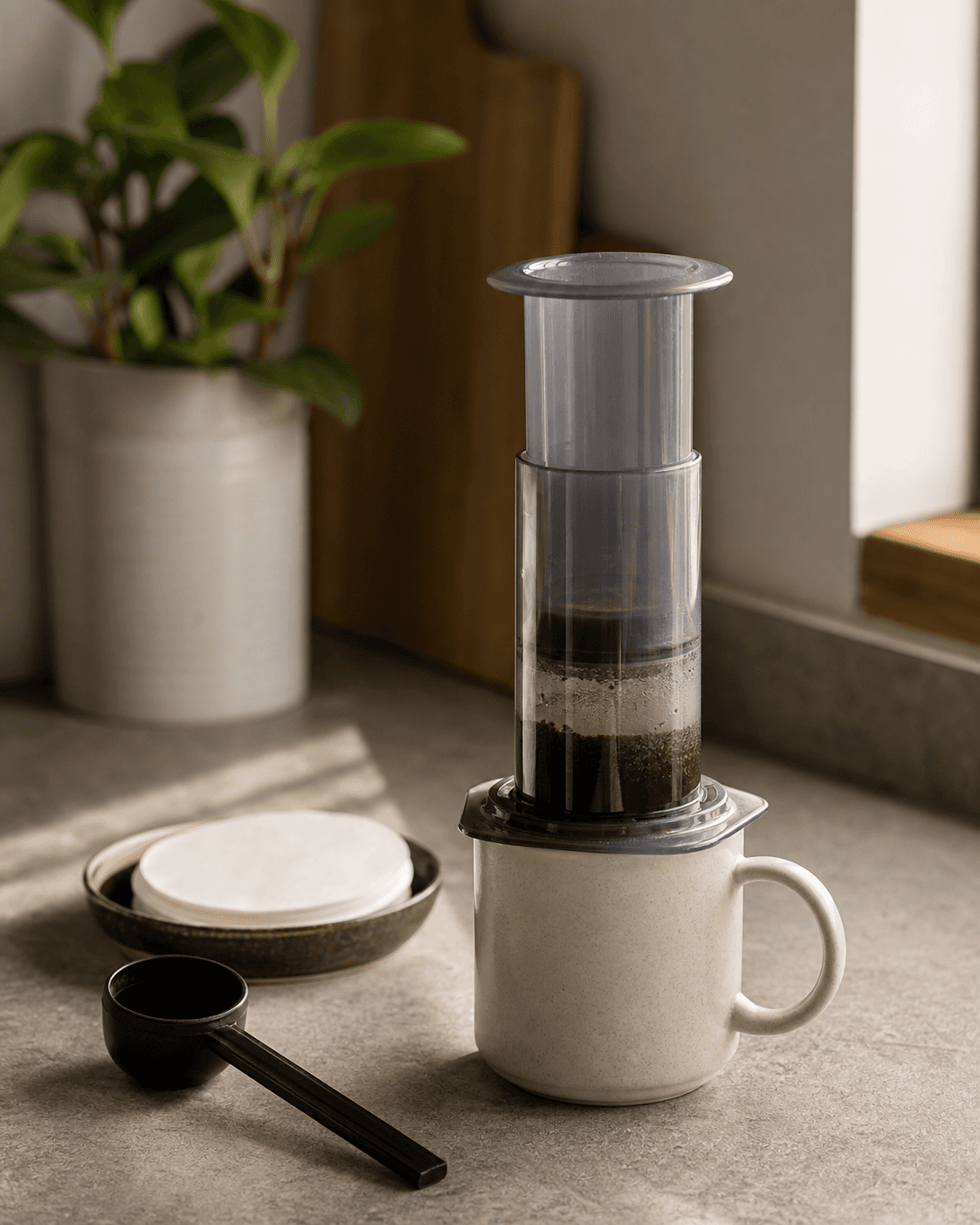
Rinse a paper filter in the cap, hot water, set aside. Assemble the AeroPress right-side up on your mug, plunger pulled out to the top of the chamber. Add 17g medium-fine ground coffee (a little finer than drip). Pour 250g of water at 175-185°F — a touch cooler than V60 temps, since the AeroPress's total contact time is shorter and it's less forgiving of a scorching pour.
Stir once, about 10 seconds' worth, enough to knock loose any dry clumps. Let it steep 1:30-2:00 total. Attach the rinsed filter cap. Press down slowly and steadily over 20-30 seconds — you're aiming for a soft hiss of air at the very end, not a violent last shove. If you're straining against real resistance the whole way, your grind is too fine.
The inverted method — what's actually different
Flip the whole unit upside down before brewing: plunger in a few centimeters, chamber on top, no filter cap attached yet. Add coffee and water the same way. The advantage is that nothing drips through during the steep, since there's no filter at the bottom yet — so you get a truer, fuller steep time with zero early extraction sneaking out.
Once your steep time is up, attach the rinsed filter cap, then carefully flip the entire assembly right-side up onto your mug in one motion, and press as normal. The risk is exactly what it sounds like — flip it wrong or slow and you'll spill hot coffee grounds everywhere. I don't think it makes dramatically better coffee than standard, it just gives you more steep-time control if you're experimenting.
Ratio and grind — dial it your way
The AeroPress is forgiving on ratio in a way pour-over isn't, because you can dilute after pressing. A few starting points:
- 1:15 (17g : 250g) — balanced, everyday cup, drink as-is.
- 1:12 (17g : 200g) — stronger, still drinkable straight.
- 1:8-1:10 (17g : 150g) — concentrate, meant to be topped up with hot water or poured over ice.
Grind medium-fine for the 1:15 range. Go finer as you concentrate the ratio down, since less water needs more surface area to extract enough flavor in the same short steep window.
Common mistakes
Pressing too hard, too fast — that's what produces the bitter, slightly gritty cup people blame on the AeroPress itself. It's almost always technique. Slow, steady pressure, and stop the second you hear that hiss; don't force out the last few drops, that's where the bitterness concentrates.
Water too hot is the other one — AeroPress's short contact time means near-boiling water pulls harsh, sharp notes fast. Let your kettle rest 30-45 seconds after boiling.
Practical steps
- Rinse filter, assemble upright (or inverted).
- 17g medium-fine coffee, 250g water at ~180°F.
- Stir, steep 1:30-2:00.
- Attach cap, press 20-30 seconds until you hear a hiss.
- Dilute to taste if you brewed concentrated.
Frequently asked questions
Is the inverted method actually better?
Not objectively better — it gives you a longer, more controlled steep since nothing can drip through early, which suits people who want to experiment with steep time. The standard method is faster and has zero risk of a spill when you flip it.
Why does my AeroPress coffee taste weak?
Most likely your ratio is too thin for your taste, or you're not pressing hard enough to fully clear the grounds — try 1:13 instead of 1:17 and press until you hear the hiss.
Can I make espresso-style coffee with an AeroPress?
Not real espresso — you can't hit 9 bars of pressure by hand — but a concentrated, low-water pour (as low as 1:8) gets you a strong, syrupy shot that works fine over ice or with milk.