Troubleshooting
Why Does My Coffee Grinder Make a Mess (Static and Clumping)?
On this page
Coffee grinder static and clumping happen because dry ground coffee particles build up an electric charge from friction against the burrs and grind chute, and that charge makes fine particles cling to surfaces and to each other instead of falling cleanly into your container. It's a physics problem, not a defect, and it affects nearly every burr grinder on the market to some degree — the differences are in how much and how well the design manages it.
Static from dry beans and low humidity
Dry coffee, and dry air generally, hold static charge far more readily than anything with a bit of moisture in it. This is why grinder static tends to get noticeably worse in winter, when indoor heating drops relative humidity, and better in humid summer months without you changing anything about your routine.
What's happening: Friction inside the grinder strips electrons unevenly across particles, and in low humidity that charge has nowhere to go, so grounds stick to the chute walls, the collection bin, and each other via static attraction rather than settling by gravity.
The RDT fix (Ricocheting Droplet Technique)
RDT is the single most effective fix for grinder static, and it's nearly free. The technique is simple: add a small amount of water to your beans immediately before grinding, then grind as normal.
How to do it: Add 2–3 drops of water per 18-gram dose directly onto the beans in the hopper or single-dose funnel, give them a light shake or stir so the moisture spreads roughly evenly, and grind right away. That tiny bit of surface moisture is enough to dissipate the static charge before it builds up, and most people notice a dramatic drop in mess on the very first try. It has no meaningful effect on flavor at that dose.
Retention and clumping from bean oils and fines
Clumping is a related but distinct problem from static — it's grounds sticking to each other rather than to surfaces, and it's driven mostly by oils on the bean surface (more pronounced in darker roasts) and by very fine particles that pack together under light pressure. A grinder with a longer or more convoluted grind path, like many flat-burr conical designs, also retains more old grounds between doses, which can mix with a fresh dose and contribute to clumping and staling.
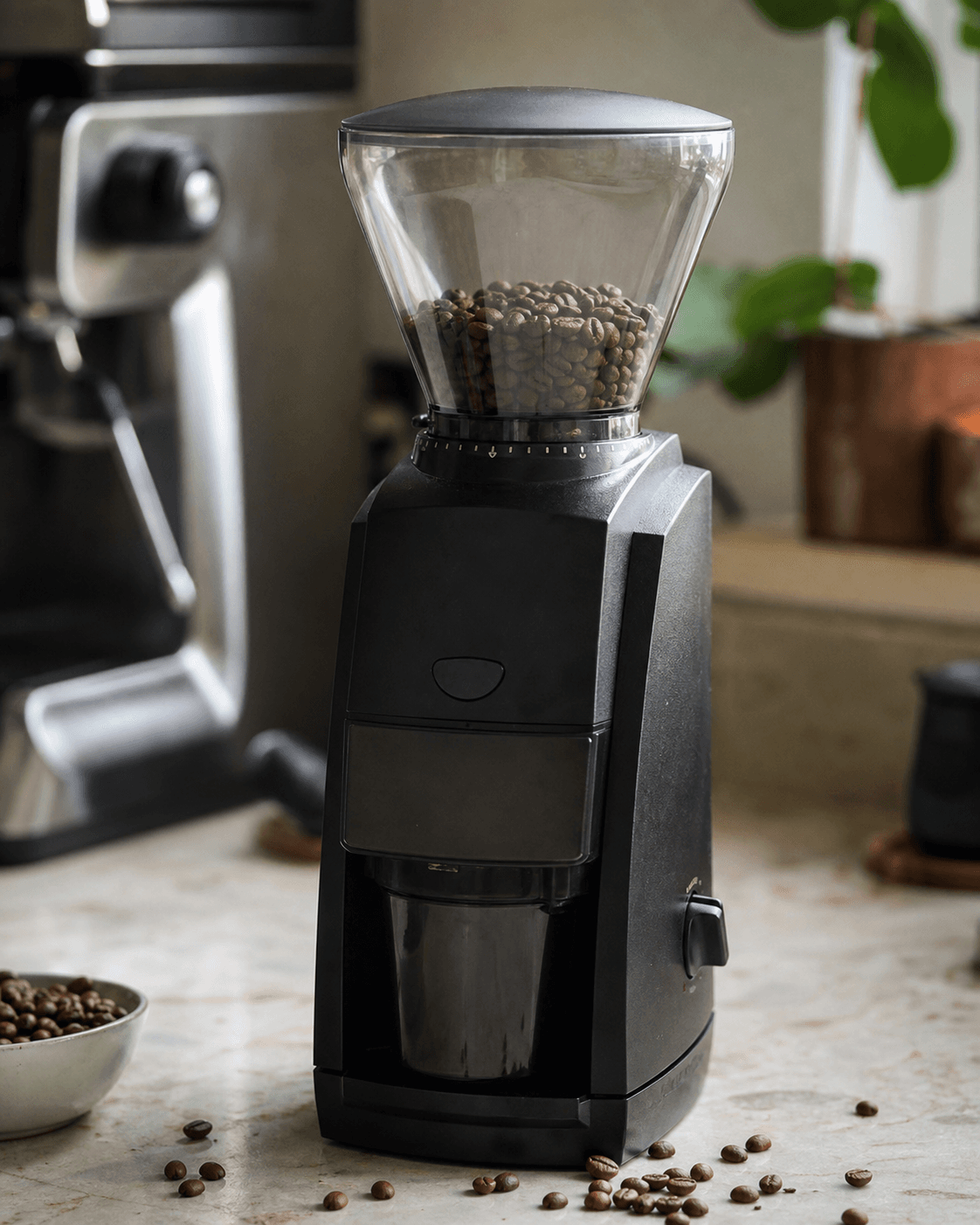
What helps: RDT reduces clumping from static-driven fines sticking together, but oil-based clumping from dark roasts is more about the beans than the grinder — expect more clumping with an oily dark roast than a drier medium roast regardless of technique. For retention specifically, single-dose grinders like the Baratza Encore ESP are designed to minimize leftover grounds between uses, and periodically running a few grams of rice or a dedicated grinder-cleaning pellet through the burrs helps clear built-up oils that contribute to clumping over time.
Realistic expectations
Even with RDT and good habits, expect some mess — a few stray grounds around the chute, a bit of static cling to the portafilter or dosing cup. That's normal and not a sign anything is wrong with the grinder. The goal of these fixes is meaningfully less mess and easier cleanup, not a completely static-free, clump-free grind every single time. If you're getting a workable, mostly-clean grind with the occasional stray particle, that's a grinder working as expected, not one that needs troubleshooting further.
Putting it together
Start with RDT — it's free, takes five seconds, and solves the majority of static complaints outright. If clumping persists after that, look at your bean oiliness and roast level before assuming the grinder itself is at fault, since darker, oilier beans clump more on any grinder. For chronic retention between doses, a quick brush-out of the chute and burr chamber every week or two, plus an occasional cleaning pellet run, keeps old oils from compounding the problem.
Frequently asked questions
Why does my coffee grinder produce so much static?
Grinder static comes from friction between dry coffee particles and the burrs and chute during grinding, and it's worse with very dry beans or in low-humidity conditions, since dry air holds a static charge much longer.
What is RDT and does it actually work for grinder static?
RDT (Ricocheting Droplet Technique) means adding a tiny amount of water to your beans before grinding — a few drops per dose — and it works because that moisture dissipates the static charge before it has a chance to build up.
Why does ground coffee clump instead of flowing freely?
Clumping usually comes from oils on the bean surface, especially with darker roasts, or from moisture and static causing fine particles to stick together instead of falling freely through the chute.
Is some static and mess normal with any coffee grinder?
Yes. Even well-designed grinders produce some static and a small amount of retained grounds — the goal with RDT and cleaning habits is minimizing the mess, not eliminating it completely.