On this page
No crema on your espresso almost always means your beans are past their prime — crema is trapped CO2 released during roasting, and that gas dissipates steadily over the weeks after roast, so beans a month or more old simply have less of it left to release into the cup. I've had this conversation with more people convinced their machine was broken than I can count, and the fix was a fresh bag of coffee, not a repair.
Here's the full breakdown, from most to least likely.
Stale beans (the biggest cause, by far)
Roasting coffee produces CO2 that gets trapped inside the bean structure. When hot water and pressure hit freshly roasted grounds, that gas escapes as tiny bubbles, which is what forms crema — the tan-to-golden foam on top of a shot. As beans sit, the CO2 slowly off-gasses even in a sealed bag, so a bean that's four, six, eight weeks old has measurably less gas left to contribute.
Fix: Buy beans with a printed roast date and use them within two to four weeks of that date for espresso. If your current bag has no roast date at all — just a "best by" stamped a year out — that's a strong sign it's been sitting for a while before it even reached you.
Grind or dose isn't matched to the beans
An overly coarse grind lets gas escape too quickly during extraction instead of building pressure evenly through the puck, which thins out the crema even on decent beans. A dose that's too low creates a puck too shallow to build the resistance crema formation benefits from.
Fix: Dial the grind so shot time lands in the 25–32 second range for a standard 1:2 ratio, and weigh your dose to the basket's rated capacity. This won't rescue genuinely stale beans, but it maximizes what freshness you do have.
Water temperature is off
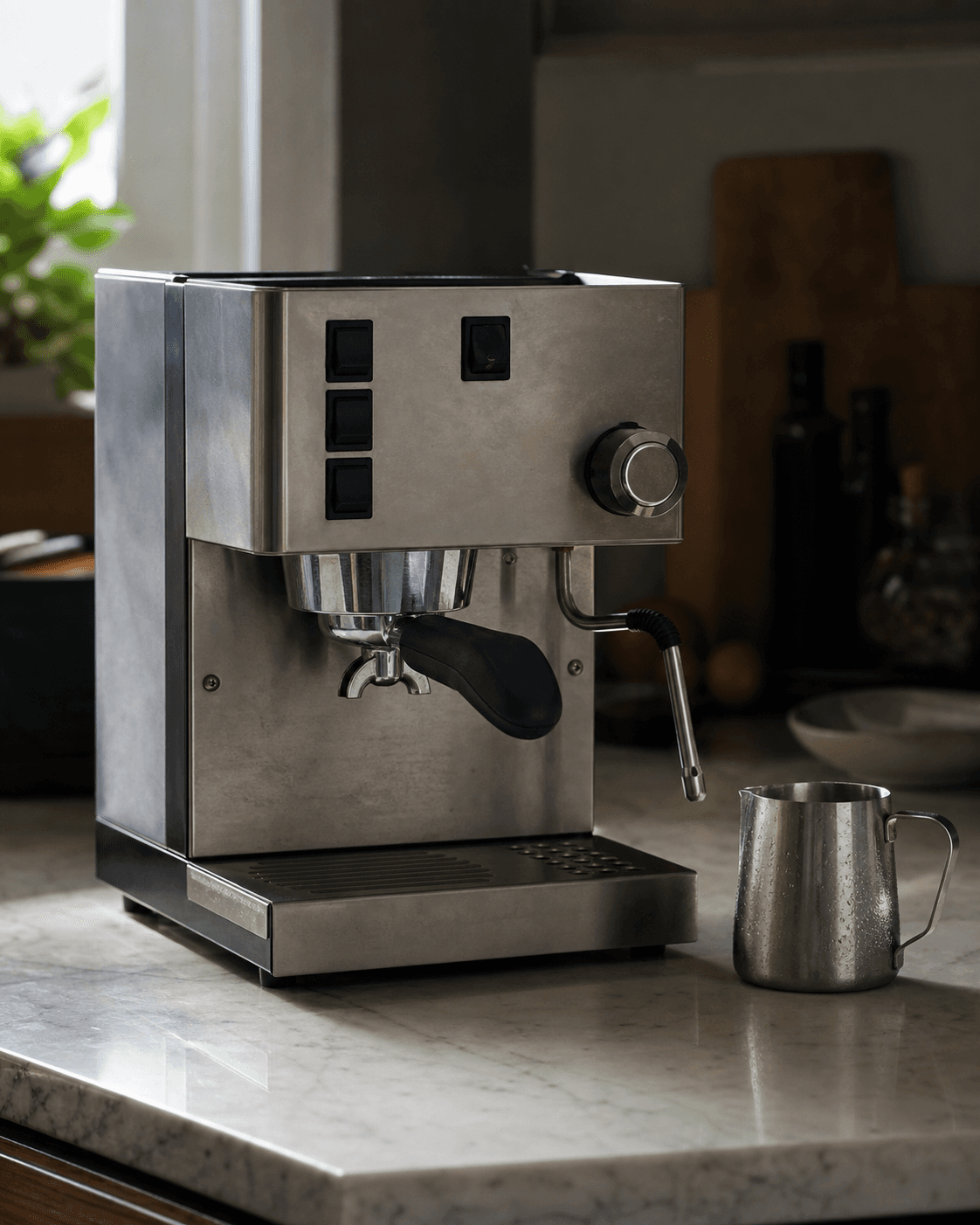
Water that's too cool, generally below about 195°F, extracts less efficiently across the board, and a less complete extraction tends to produce thinner, less persistent crema even when the beans themselves are reasonably fresh. This matters more on machines without precise temperature control — a machine like the Rancilio Silvia ships without a PID from the factory, and many owners add one specifically to stabilize this variable.
Fix: Confirm your machine is fully up to temperature before pulling — don't brew the moment the ready light comes on if you know your unit runs cool at start-up — and consider a PID upgrade if temperature swings are a recurring issue.
Sometimes there's just supposed to be less crema
This is the point that gets skipped in most crema advice, and it shouldn't be. Very light roasts, naturally processed coffees, and some single-origin espressos genuinely produce thin, pale, or fast-fading crema even at peak freshness and a well-dialed shot — the roast profile and processing method simply don't generate as much CO2 or the same crema structure as a darker, washed espresso blend does. A thin crema on a light-roast natural doesn't mean something's wrong; it can mean the coffee is excellent and just built differently.
Fix: None needed. If the shot tastes balanced, sweet, and has good body despite a modest crema layer, trust the cup over the visual. Crema is a rough freshness indicator, not a scorecard.
The short version
Check the roast date first — it explains the overwhelming majority of no-crema complaints. If beans are fresh and crema is still thin, check grind, dose, and water temperature in that order. And if you're pulling a light-roast natural with barely any crema but the shot tastes bright, sweet, and clean, that's not a problem to fix.
Frequently asked questions
Why is there no crema on my espresso shot?
The most common cause is stale beans — coffee loses the trapped CO2 that forms crema within a few weeks of roasting, and no amount of technique brings back gas that's already escaped.
Do darker roasts have more crema than lighter roasts?
Generally yes, since the roasting process itself produces more CO2 in darker roasts, but roast level is a secondary factor compared to how fresh the beans are.
Does no crema mean the espresso is bad?
Not necessarily. Some very light roasts and naturally processed beans produce genuinely excellent espresso with thin, pale crema — crema thickness is a rough freshness indicator, not a direct quality score.
Can water temperature affect crema on espresso?
Yes, to a smaller degree than staleness — water that's too cool extracts less efficiently overall, which can produce a thinner, less persistent crema layer even with reasonably fresh beans.