Researched
Lodge Cast Iron Skillet Review: The $25 Pan You'll Own Longer Than Your Car
One flagship skillet, not a boxed set — and that's the point. For $25 you get a pan that will outlive the rest of your cookware combined, provided you actually take care of it.
On this page
The short version
Somebody always tells you cast iron gets "basically nonstick" once it's seasoned right. That's optimistic, at least at first. What's true is that a $25 pan, seasoned and cared for properly, will still be cooking dinner in your household in thirty years, and that's a claim almost nothing else in your kitchen can make. The Lodge skillet isn't fancy. It's a slab of cast iron with a handle, pre-coated in baked-on vegetable oil at the factory. That's the whole product, and it's exactly why it's stuck around basically unchanged for over a century.
One thing worth being upfront about: this review covers the single 10.25-inch skillet, Lodge's flagship and the piece almost everyone starts with — not one of the boxed multi-piece cast iron sets Lodge also sells. If you're looking at a bundled set, the skillet is usually the standout piece in it anyway.
Who it's for — and who should skip it
This is for anyone who wants one genuinely versatile pan that goes from stovetop to oven to broiler without a second thought, and who's willing to spend thirty seconds drying and lightly oiling it after each use. It's especially good for high-heat searing — steaks, cornbread, roasted vegetables — where cast iron's heat retention actually outperforms most nonstick and stainless options.
Skip it if you're not willing to hand wash and dry it promptly every time, or if you're cooking a lot of delicate, high-acid foods like tomato sauce reductions — acidic cooking can strip seasoning over time and, done frequently, will leave you re-seasoning more than you'd like. If your hands or wrists struggle with weight, also consider that this pan is heavy — close to 5 pounds empty — which matters more than people expect when you're lifting it one-handed off a stove.
Build & materials
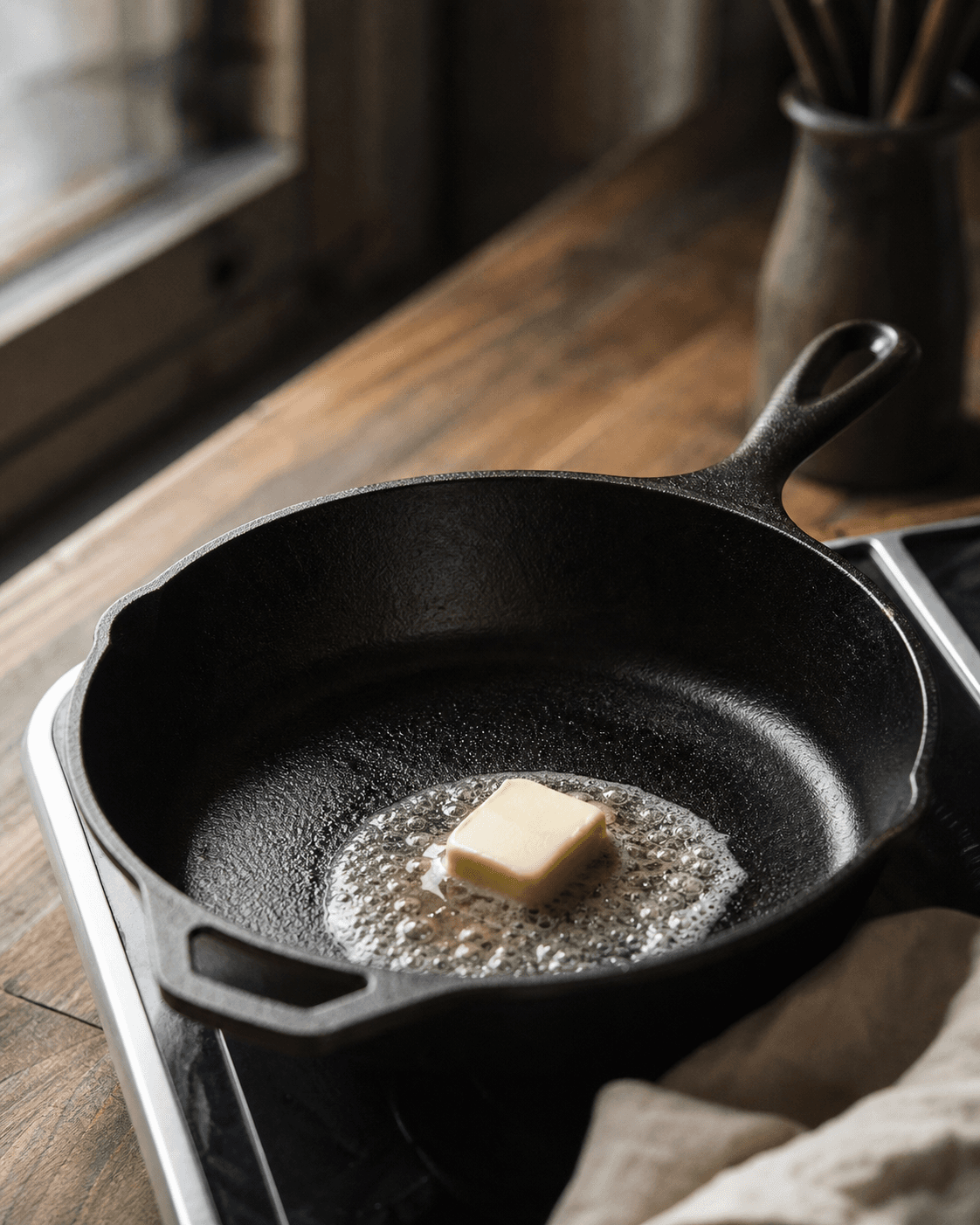
It's cast, not stamped or pressed — molten iron poured into a mold, which is why the walls are thick and heavy rather than thin and light like stamped steel cookware. The cooking surface has Lodge's signature slightly pebbled texture (rather than the mirror-polished interior of premium vintage cast iron or some higher-end modern brands), a byproduct of their casting process. It doesn't affect cooking performance meaningfully, though some cast iron enthusiasts prefer the smoother surface of polished alternatives for slightly easier food release.
The handle is cast as one piece with the pan body — no rivets, no seams, nothing to work loose over decades of use. A small helper handle on the opposite side makes lifting a full pan with both hands more manageable, which matters given the weight.
Core performance
Heat retention and even cooking
This is cast iron's actual superpower, and it's not subtle. Once a cast iron skillet is hot, it holds that heat and radiates it evenly across the cooking surface far better than thin stainless or aluminum pans, which cool down quickly wherever a cold ingredient touches them. That's why a Lodge skillet sears a steak with a genuinely deep, even crust — the pan doesn't lose enough surface temperature when the meat hits it to steam instead of sear.
Seasoning quality out of the box vs. built-up
The factory seasoning is a thin, functional layer of polymerized vegetable oil — good enough to cook with immediately, but thin enough that eggs or delicate fish will stick more than you'd expect from something billed as nonstick-adjacent. What actually makes cast iron cook well is repeated use: cooking with a reasonable amount of fat, letting the pan build up additional seasoning layers over weeks and months of regular cooking. A well-seasoned, multi-year-old Lodge skillet genuinely does release eggs and pancakes cleanly; a brand new one does not, yet.
High-heat and oven versatility
Broiler-safe, oven-safe well past what most nonstick cookware can handle without degrading, and fine directly over an open flame or on a campfire grate. This versatility — one pan doing stovetop searing, oven roasting, and broiling — is a real practical advantage over most cookware sets that split those jobs across specialized pieces.
Secondary performance: weight and handle heat
The weight that makes it such a good heat retainer also makes it a genuine ergonomic downside — at close to 5 pounds empty, it's noticeably heavier than a comparable stainless or nonstick skillet, and that matters for anyone with wrist or shoulder issues, or for one-handed maneuvers like flipping food in the pan. The handle, being solid cast iron with no insulation, gets exactly as hot as the rest of the pan whenever it's on the stove or in the oven — there is no version of using this pan without a proper pot holder, and forgetting that even once results in a real burn.
Daily use & ergonomics
Living with a cast iron skillet day to day means a different rhythm than nonstick cookware: cook, wipe out excess food with a paper towel or scraper while it's still warm, wash with hot water and minimal or no soap, dry immediately and thoroughly (residual moisture is the enemy — it causes rust), and give it a light wipe of oil before storing. It sounds like more steps than it is; after a few weeks it becomes a 60-second habit rather than a chore.
Maintenance, longevity & repairability
This is genuinely the category where cast iron wins outright. Rust, stuck-on gunk, even a badly neglected pan someone finds at a garage sale — nearly all of it is fixable with steel wool, a re-season in the oven, and time. There's no coating to wear through and no motor to fail. A Lodge skillet bought today can realistically be handed down, and if it does rust from neglect, restoring it is a weekend project, not a reason to throw it out.
How it compares
Enameled cast iron (e.g., Le Creuset, ~$200-350): Same heat retention benefits, but with a glass-like enamel coating that eliminates the seasoning/rust maintenance entirely and is dishwasher-friendlier — at 10x-plus the price and less forgiving of high, dry heat searing without the enamel eventually showing wear.
Carbon steel skillet (e.g., Matfer Bourgeat, ~$60-90): Similar seasoning-based nonstick behavior, notably lighter weight, heats up faster — a common choice for people who want cast iron's cooking properties without the weight, at a real price premium over Lodge specifically.
Stainless steel skillet (e.g., All-Clad, ~$100-150 per piece): No seasoning maintenance at all, dishwasher-safe, but doesn't sear or retain heat quite as dramatically, and browning fond for pan sauces behaves differently than on cast iron.
Value analysis
At roughly $20-30, this might be the single best value-per-dollar item in an entire kitchen. There is functionally no cheaper way to get a pan this durable and this capable across searing, roasting, and broiling. The only real "cost" is the maintenance discipline it demands — which is free, just habitual — and the weight, which is a fixed physical trade-off no amount of money changes.
Known issues
The most common new-owner complaint is sticking, almost always traced back to under-seasoning (expecting factory seasoning to perform like a mature, years-old seasoning layer) or cooking acidic foods too soon before the seasoning has built up. A second recurring issue is rust from inadequate drying — leaving the pan wet, air-drying instead of towel-drying and heating briefly on the stove to fully evaporate moisture, or storing it with a lid on while any moisture remains. Neither is a defect in the pan; both are maintenance habit issues, and both are fixable.
Verdict
A 10 on value reflects a genuine, rare thing in cookware — a $25 pan that performs at a level cookware costing ten times more can't fully replicate in heat retention and searing. It demands more hands-on care than a nonstick pan and it's heavier than most people expect, but if you're willing to give it the thirty seconds of attention it needs after each use, it will outlast nearly everything else in your kitchen.
What we like
- Nearly indestructible — a well-cared-for one outlasts the person who bought it
- Cheap enough that "buying it wrong" barely costs you anything
- Comes pre-seasoned and usable straight out of the box
- Retains and radiates heat better than almost any other home cookware material
What we don't
- Heavy — the 10.25-inch pan alone is close to 5 pounds before food goes in
- Handle has no insulation and will burn you if you forget, every single time
- Factory seasoning is thin and needs building up with real use before it's genuinely nonstick
- Requires actual maintenance discipline — no soap-heavy dishwasher runs, dry immediately, occasional re-oiling
Specifications
| Material | Cast iron, pre-seasoned with vegetable oil |
|---|---|
| Pieces | 1 (single 10.25-inch skillet — not a boxed set) |
| Induction ready | Yes |
| Oven safe temp (F) | 500+ (broiler-safe) |
| Handle | Integrated cast iron handle with helper handle |
| Dishwasher safe | No |
| Warranty (yr) | Limited lifetime |
Frequently asked questions
Is this a full cookware set?
No — this review covers Lodge's classic single 10.25-inch skillet, the flagship product and the entry point into their cast iron line. Lodge also sells multi-piece boxed sets, but the single skillet is the one nearly every recommendation starts with.
Can I put it in the dishwasher?
No — dishwasher detergent and prolonged water exposure strip the seasoning and invite rust. Hand wash, dry immediately, and it'll outlast anything you do put in the dishwasher.
Is the factory seasoning good enough to cook eggs right away?
It's usable right away, but the factory layer is thin — expect some sticking with delicate foods like eggs until you've built up several more layers of seasoning through regular cooking with fats.
Does it work on an induction stovetop?
Yes — cast iron is naturally magnetic and works on induction, gas, electric, and even open flame or in the oven, which is part of why it's so versatile.
Keep reading
- GreenPan Valencia Pro 11-Piece Review: PFAS-Free Nonstick, With Real Trade-Offs
Good
Our score: 70 / 100
- Tramontina Tri-Ply Clad 12-Piece Review: The Best Value in Stainless Cookware
Excellent
Our score: 80 / 100
- Calphalon Premier Space-Saving 10-Piece Review: Smart Storage, Real Nonstick Trade-Offs
Good
Our score: 75 / 100
- Cuisinart MultiClad Pro 12-Piece Review: The All-Clad Alternative That Mostly Delivers
Good
Our score: 76 / 100