Researched
Technivorm Moccamaster Review: $329 for a Drip Machine With No Screen, and It's Worth It
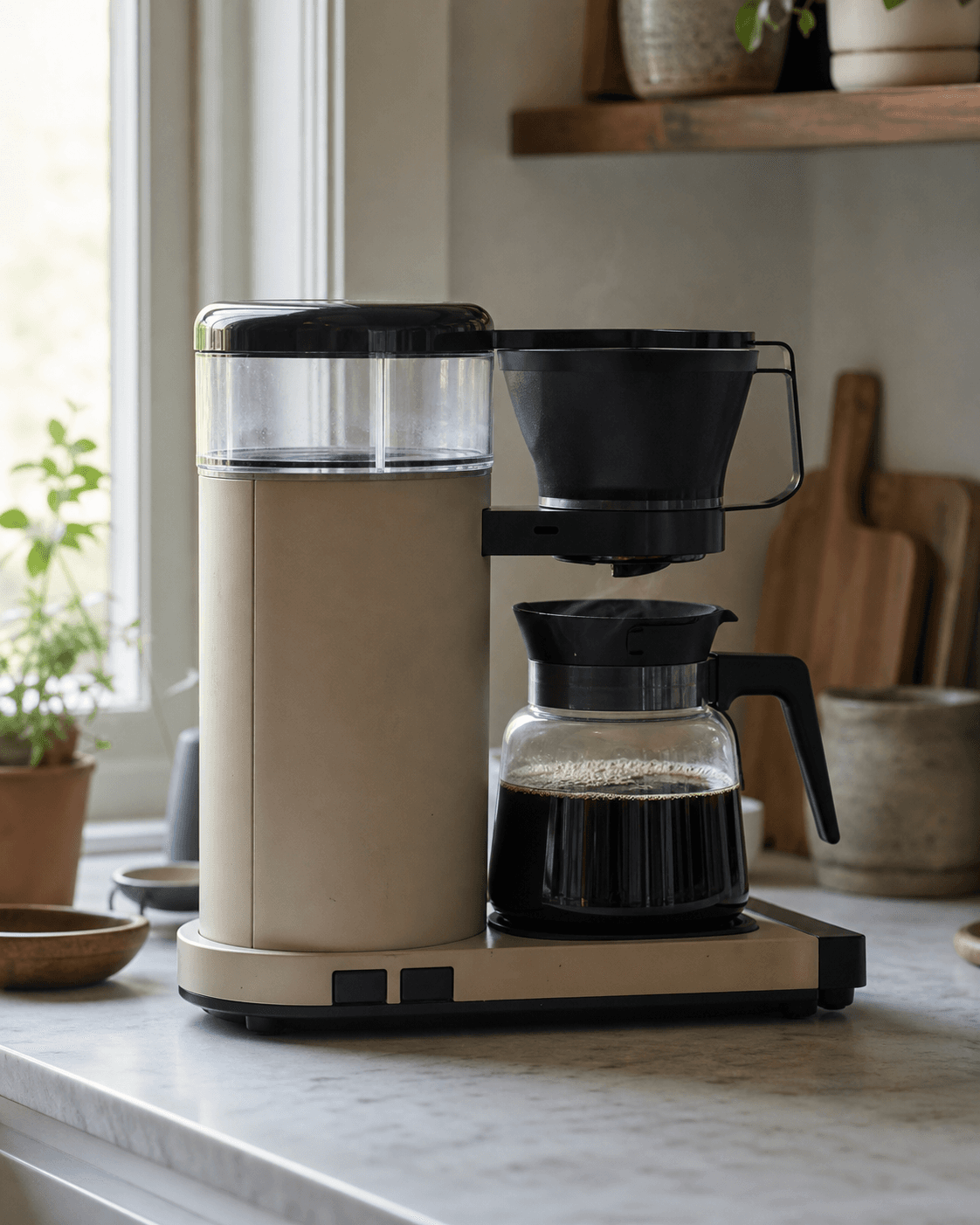
No touchscreen, no presets, no app — just a copper element that hits SCA brewing temperature every time. The enthusiast's drip machine because it does the one job that matters better than anything else.
On this page
No screen, no app, no presets — and it still costs $329
That's usually the first reaction to the Moccamaster's price tag, and it's a fair one until you understand what the money actually buys. This isn't a feature machine. It's a temperature machine. Technivorm built the Moccamaster around one core problem with cheap drip coffee makers: most of them can't reach, or can't hold, the water temperature specialty coffee actually needs to extract properly. The Moccamaster has been solving that problem, largely unchanged, since 1968.
Who it's for
Buy this if you care more about what's in the cup than what's on the machine — no touchscreen, no scheduling app, no bean-to-brew automation. It's built for someone who already knows their preferred grind and ratio and just wants a machine that executes the brew correctly, every single time, for years.
Skip it if programmable scheduling matters to you (waking up to a pot that started brewing itself), or if $329 for a coffee maker without a digital display feels hard to justify next to a $30 drip machine that "works fine." It's also not the pick if you want a machine with brew-mode presets — the standard Moccamaster does one thing, and does it the same way every time by design.
Borderline: if you're on the fence between this and a machine like the Breville Precision Brewer, the decision mostly comes down to whether you want more brewing modes and a display (Breville) or maximum mechanical simplicity and Technivorm's build reputation (Moccamaster).
Build and materials
Hand-assembled in the Netherlands, with a copper heating element instead of the aluminum or steel elements most drip machines use. Copper conducts heat more efficiently and evenly, which is a meaningful part of why the Moccamaster reaches proper brewing temperature faster and holds it more consistently than cheaper machines. The switch mechanism is mechanical rather than a soft-touch electronic button, which sounds like a small detail until you consider it as one less electronic failure point over a decade of daily use.
The plastic housing is the one component that draws mixed reactions — for $329, some buyers expect a more premium-feeling exterior. Technivorm's answer, implicitly, is that the housing doesn't touch the coffee and doesn't affect brew quality, so they spent the money on the parts that do.
How it brews
Core brewing mechanics
Water heats via the copper element and is dispersed over the grounds through a spray-style showerhead in the brew basket, which promotes more even saturation than the single stream some cheaper machines use. The whole cycle for a full 10-cup carafe takes around six minutes — genuinely fast for the batch size, largely because the copper element brings water up to temperature quickly and keeps it there rather than sagging mid-brew the way underpowered heating elements do.
Temperature control
This is the headline feature. SCA certification means the Moccamaster's water temperature sits in the 196-205°F range for the majority of the brew cycle — the range coffee professionals consider necessary for proper extraction without scorching. Most budget drip machines run cooler than this, which is the single biggest reason cheap drip coffee often tastes flat or under-extracted no matter how good the beans are.
Pre-infusion and even saturation
The showerhead-style dispersal isn't a bloom in the pour-over sense (no built-in pause), but it does distribute water more evenly across the grounds bed than a simple single-stream drip, reducing the channeling that leads to uneven extraction in cheaper machines.
Living with it day to day
It's about as close to "flip a switch and walk away" as drip coffee gets — no menu to navigate, no settings to remember, no screen to squint at before your first coffee of the day. The trade-off, addressed honestly, is that there's no way to schedule a brew to start automatically before you wake up on the base model; some Technivorm models do add a timer, so it's worth checking which specific configuration you're buying if that matters to you.
Maintenance, longevity & repairability
Standard descaling on a schedule based on your water hardness (monthly to quarterly depending on how hard your tap water is) keeps the copper element performing at its rated temperature. Technivorm's five-year warranty is genuinely one of the longest in the category, and it reflects a broader reputation — these machines routinely get reported running for a decade or more with basic maintenance, which is unusual in an appliance category where most machines are expected to be replaced every few years.
How it compares
Vs. the Breville Precision Brewer: Breville brings a digital display, multiple brew modes (including a manual "gold cup" setting), and a programmable timer — genuinely more features for less money. The Moccamaster counters with the copper element, the mechanical switch, and a longer track record for longevity. If features and programmability matter more, Breville; if maximum brewing simplicity and a longer warranty matter more, Moccamaster.
Vs. a basic $40 drip machine: no contest on cup quality — most budget machines simply can't reach the brewing temperature the Moccamaster hits consistently, and it shows in the cup as flatter, less developed flavor. The gap justifies a meaningful chunk of the price difference on its own.
Vs. manual pour-over (V60, Chemex): manual methods can match or exceed the Moccamaster's clarity in skilled hands, but they don't scale to a full carafe as fast or as consistently. The Moccamaster is the automated middle ground between manual pour-over quality and drip machine convenience.
Value
$329 is genuinely steep next to a $30-40 drip machine, and the honest answer is you're paying for temperature precision, copper construction, and a five-year warranty rather than any convenience feature. If you brew daily and plan to keep the machine for most of a decade, the cost amortizes into something reasonable. If you brew occasionally or don't care about the temperature difference, it's hard to justify over a cheaper machine.
Known issues
The lack of a programmable timer on the standard model is the most common gripe in owner reviews, especially from buyers used to setting up a coffee maker the night before. A smaller number of owners in hard-water areas report needing more frequent descaling than expected to keep the copper element performing at spec. The plastic housing, while not a functional problem, draws recurring comments about not matching the internal build quality.
Verdict
Coffee quality earns a 9, driven almost entirely by that SCA-certified temperature consistency — this is genuinely one of the best-tasting cups a drip machine can produce. Build quality is a 10, reflecting the copper element, mechanical switch, and five-year warranty. Value takes a hit purely on sticker price, and features lag behind machines like the Breville that add a display and multiple brew modes. If cup quality and long-term reliability matter more to you than a screen full of settings, this is still the drip machine coffee enthusiasts actually buy for themselves.
What we like
- Reaches and holds SCA-certified brew temperature far more precisely than most drip machines
- Copper heating element and hand-assembled build back up a genuinely long five-year warranty
- Brews a full carafe in around six minutes, faster than most drip makers its size
- Simple, mechanical switch means fewer electronic parts to eventually fail
What we don't
- No programmable start timer on the standard model — you flip a switch, you don't schedule a wake-up brew
- $329 is a steep price for a machine with no display, no presets, no app
- Plastic housing (despite the premium internals) feels like an odd match for the price tag to some buyers
Specifications
| Carafe type | Glass (thermal carafe versions also available) |
|---|---|
| Capacity (cups) | 10-cup (40 oz) |
| Brew temperature (F) | 196-205°F |
| SCA certified | Yes |
| Programmable | No (manual switch, no digital timer on base model) |
| Bloom/pre-infusion | Yes — built-in pre-brew pause via the drip basket design |
| Footprint | Compact — narrower than most drip machines despite the tall profile |
| Warranty (yr) | 5 yr |
Frequently asked questions
What does "SCA certified" actually mean for a drip machine?
The Specialty Coffee Association tests brewers against a golden cup standard — mainly that water reaches and holds 196-205°F during the brew cycle and the coffee-to-water ratio produces proper extraction. Most cheap drip machines never get close to that temperature range, which is the main reason they taste flat.
Why doesn't a $329 machine have a programmable timer?
Technivorm's design philosophy prioritizes brew mechanics — the copper heating element, precise temperature, and hand-built switch assembly — over convenience electronics. Some models in their lineup do add a timer, but the classic version keeps things mechanical on purpose, on the theory that fewer electronic parts means fewer things to eventually break.
Glass carafe or thermal carafe — which should I get?
Glass keeps the coffee on a hot plate, which can slowly stew it if left sitting for over 20-30 minutes. Thermal carafe versions skip the hot plate entirely and hold heat in an insulated steel vessel — better if you don't finish the pot right away.
Is the five-year warranty actually meaningful?
It's one of the longest warranties in the category, and it reflects genuine confidence in the copper element and mechanical switch — most drip machines in this price range top out around one or two years.