Baratza Encore ESP vs Fellow Ode Gen 2
Buy the Baratza Encore ESP if…
Espresso is your main or only use case, you want a lower price, and you value Baratza's long-running parts and reliability reputation over industrial design.
Buy the Fellow Ode Gen 2 if…
Filter coffee and pour-over are your main habit, near-zero retention matters to you, and you're willing to pay extra — including for the optional espresso burr set — if espresso comes up occasionally.
Side by side
| Specification | 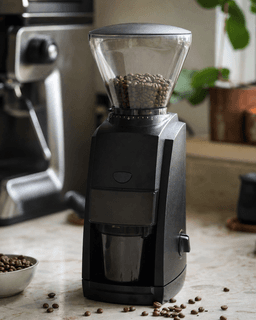 | 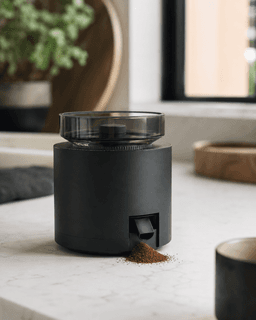 |
|---|---|---|
| Our score | 71 | 75Best |
| Burr type | Conical | Flat |
| Burr size | 40 mm | 64 mm |
| Burr material | Steel | Steel (stock); ceramic-coated espresso burr set sold separately |
| Grind settings | 40 stepped positions | 31 stepped macro settings with fine sub-adjustment |
| Adjustment | Stepped | Stepped |
| Single-dose | No — hopper-fed with a small transition chute | Yes |
| Hopper capacity | 8 oz (227 g) | N/A — single-dose catch cup, ~30-40 g per load |
| Retention | ~1-2 g between adjacent fine settings | <0.3 g claimed with stock filter burrs |
| Motor | Low-RPM DC gearmotor | 950 RPM DC motor with built-in digital timer |
| Warranty | 1 yr (extendable with product registration) | 1 yr |
At a glance
These two grinders solve different problems that happen to overlap at the espresso end. The Encore ESP is a hopper-fed grinder built from the start around espresso, at a lower price, from a company whose whole reputation rests on long-term reliability. The Ode Gen 2 is a single-dose filter-coffee grinder that added an optional espresso burr set as a later capability — good design, low mess, but espresso second rather than espresso first.
Where they differ
Purpose-built focus. The Encore ESP's entire adjustment range is calibrated toward fine, espresso-appropriate grinds — there's no coarse end to speak of. The Ode Gen 2's stock burrs are calibrated for filter and pour-over, with espresso only reachable via a separately purchased burr set. If you only ever make espresso, the Encore ESP is doing its one job without asking you to buy anything else.
Retention and mess. This is the Ode Gen 2's clearest win. Its single-dose design and Gen 2 declumping improvements bring retention down to a small fraction of a gram in most real-world reports, while the hopper-fed Encore ESP retains somewhere around one to two grams between adjacent fine settings. If you rotate beans often or care about exact recipe repeatability, this difference is real and noticeable.
Adjustment mechanism. Both use stepped dials rather than stepless collars, which means both give you a repeatable number to return to — a genuine advantage for beginners dialing in a new bag of beans. The Ode's dial covers a wider settings range overall (relevant mostly for its filter-coffee strength); the Encore ESP's narrower range is entirely focused on the fine end where espresso actually lives.
Build and design. The Ode Gen 2 is the more visually refined of the two — anodized aluminum, a magnetic catch bin, a design you'd happily leave out on the counter. The Encore ESP is more utilitarian, with a metal burr chamber but a plastic hopper and chute, functional rather than photogenic.
Price, honestly accounted for. The Encore ESP costs meaningfully less on its own. The Ode Gen 2 costs more up front, and for most people wanting genuine espresso capability, that gap widens further once you add the optional espresso burr set — at which point you're comparing a grinder-plus-upgrade against a grinder that does the job stock.
Motor and noise. The Encore ESP's low-RPM gearmotor runs quieter and cooler than a lot of competitors at its price. The Ode Gen 2's 950 RPM motor is also on the quieter side for its class, helped by its enclosed burr chamber design, though the two aren't dramatically different in daily noise level.
Which should you buy?
If espresso is genuinely your main or only reason for buying a grinder, the Encore ESP is the more direct, better-value answer — it's built for exactly this job, costs less, and doesn't ask you to buy an accessory to reach its intended performance. Baratza's long-running parts and support reputation is a real asset if you're planning to own this grinder for years.
If filter coffee and pour-over are your primary habit, and espresso is occasional rather than daily, the Ode Gen 2 is the better-designed, lower-mess choice — its near-zero retention and refined build genuinely earn their premium for that use case. Just go in knowing that "occasional espresso" likely means budgeting for the separate burr set eventually, rather than treating the base unit's espresso capability as equivalent to a dedicated espresso grinder.
If you're truly torn between the two and expect your habits to lean toward filter coffee over time even if espresso is your starting point, lean toward the Ode Gen 2 and accept the upgrade cost later. If you're confident espresso is and will remain your main drink, the Encore ESP is simply the more honest tool for the job, at a friendlier price.
Frequently asked questions
Which one is the better first grinder for someone new to espresso?
The Encore ESP, generally — it's tuned for espresso from the factory, cheaper, and doesn't require an extra burr purchase to perform well at its intended job.
Can the Ode Gen 2 really do espresso well?
Only after you add the optional espresso burr set — stock, it's built for filter and pour-over. Once upgraded, it's good, though its stepped adjustment is a step behind a grinder built espresso-first.
Which has less retention?
The Ode Gen 2, clearly — its single-dose design and Gen 2 declumping improvements bring retention down close to zero. The Encore ESP is hopper-fed and retains a gram or two between fine adjustments.
Which is the better value?
The Encore ESP for straightforward espresso use, since it does its one job well for meaningfully less money. The Ode Gen 2's value case depends entirely on whether you actually use its filter-coffee strength, since paying for espresso capability through the extra burr set closes most of the price gap.