Gaggia Classic Pro vs Rancilio Silvia
Buy the Gaggia Classic Pro if…
You want the same core learning experience for meaningfully less money and a smaller footprint, and you're fine with a smaller boiler.
Buy the Rancilio Silvia if…
You want a bigger, more thermally stable boiler and heavier-duty commercial components, and the higher price doesn't change your decision.
Side by side
| Specification | 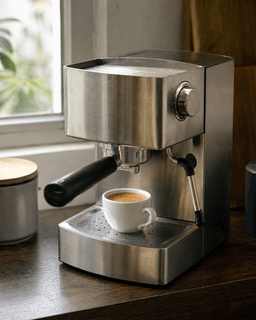 | 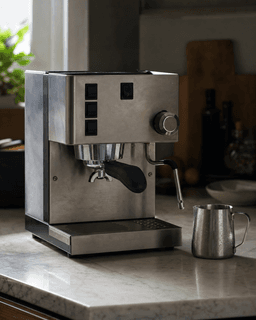 |
|---|---|---|
| Our score | 77Best | 75 |
| Type | Semi-automatic espresso machine | Semi-automatic |
| Built-in grinder | No | No |
| Pressure | 15 bar | 15 bar pump (9 bar at the puck) |
| Portafilter | 58mm commercial | 58 mm commercial |
| Water tank | 71 oz | 67 oz |
| Boiler type | — | Single boiler |
| PID control | — | No (aftermarket kits available) |
| Pre-infusion | — | Manual |
| Dimensions | — | 9.2 x 11.4 x 13.4 in |
| Warranty | — | 2 yr |
At a glance
Both machines exist to teach you the same fundamental lesson: espresso quality is mostly on you, not the machine. Neither has a PID out of the box, neither has automated pre-infusion, and both use a genuine 58mm commercial portafilter that opens up the full aftermarket. The real differences are boiler size, build heft, and price — the Silvia costs meaningfully more and gives you a bigger boiler and heavier-feeling components in return.
Where they actually differ
Boiler and thermal stability
The Silvia's boiler is larger than the Classic Pro's, which means it holds temperature more consistently across multiple shots and steaming sessions in a row. If your typical morning is one shot for yourself, this difference barely registers — both machines, properly temperature-surfed, produce excellent espresso. If you're regularly pulling shots and steaming milk for two or three people back to back, the Silvia's extra thermal mass shows up as fewer temperature dips deep into a session.
Build and componentry
The Silvia uses genuinely heavier-duty commercial-grade parts throughout — a substantial steam wand, a solid group head, and an overall feel that leans toward "small commercial machine" rather than "home appliance." The Classic Pro is well-built for its price and has an excellent long-term reputation, but it's a lighter, more compact machine by design, not because it's cheaply made.
Footprint
The Classic Pro is meaningfully smaller and lighter, an advantage if counter space is genuinely tight. The Silvia's larger boiler means a larger overall footprint, closer to what you'd expect from prosumer equipment.
Price and value
This is where the comparison usually gets decided. The Classic Pro typically runs several hundred dollars less than the Silvia at both MSRP and street price. That gap is large enough that most buyers should have a specific reason to pay it — bigger boiler, heavier components, personal preference for Rancilio's switch feel — rather than assuming the pricier machine is simply "better" across the board.
PID and pre-infusion
Neither machine ships with a PID or automated pre-infusion. Both rely on the same manual technique — temperature surfing and a controlled slow-start pull — to compensate. Aftermarket PID kits exist for both, at similar prices, so this isn't a real differentiator between them; it's a shared limitation of the whole "bare-bones enthusiast machine" tier.
Which should you buy
If you're newer to espresso and want the lowest-risk way to learn real technique on genuine 58mm commercial hardware, the Gaggia Classic Pro is the better starting point — you get the same core lessons for less money, and if the hobby doesn't stick, you haven't spent Silvia money finding that out.
If you already know you want to stick with this for years, plan to make multiple drinks regularly, or simply prefer the heft and feel of Rancilio's commercial-grade components, the Silvia is worth the premium. It's not a beginner tax — it's a legitimate, slightly more capable machine that costs more because the parts inside it are genuinely bigger and heavier duty.
Either way, budget for a separate grinder and, eventually, an aftermarket PID kit if temperature stability starts to bother you — that upgrade path is nearly identical on both machines, so it shouldn't be the deciding factor between them.
Frequently asked questions
Does either machine come with a PID from the factory?
No — both require an aftermarket PID kit if you want one, and both have well-documented, widely available kits from the same small pool of third-party manufacturers.
Which one is better for a total beginner?
The Gaggia Classic Pro, mostly because of price — it teaches the exact same fundamentals as the Silvia at a lower cost of entry, so if you're not sure espresso is a long-term hobby yet, it's the lower-risk starting point.
Is the Rancilio Silvia's bigger boiler actually noticeable in daily use?
Yes — it holds heat better across back-to-back shots and steaming sessions, which matters more if you're making multiple drinks in a row than if you're pulling one shot most mornings.
Do both use the same portafilter size?
Yes, both use a genuine 58mm commercial portafilter, so the same aftermarket baskets, bottomless portafilters, and tampers fit either machine without modification.
Which one holds its resale value better?
Both hold value reasonably well given their reputations and long production histories, though the Silvia's higher original price generally means a higher resale number in absolute dollars, not necessarily a better percentage retained.