Keurig K-Elite vs Keurig K-Classic
Buy the Keurig K-Elite if…
You drink two or more cups a day, want a genuine Strong Brew setting and a dedicated Iced mode, and don't want to refill the tank daily.
Buy the Keurig K-Classic if…
You make a cup or two a day, don't care about iced coffee or brew strength, and want the smallest possible investment in a K-Cup machine.
Side by side
| Specification | 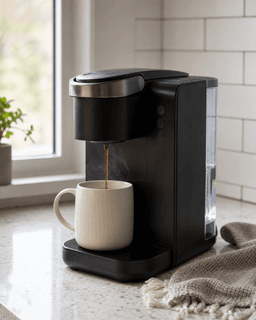 | 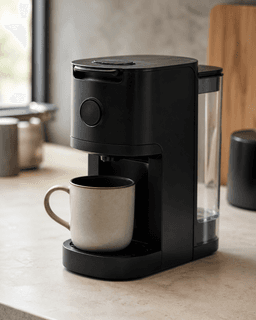 |
|---|---|---|
| Our score | 68Best | 63 |
| Pod system | Keurig K-Cup (2.0) | Keurig K-Cup (2.0) |
| Pressure | Not pressurized — pump-driven hot water through a pierced pod bar | Not pressurized — pump-driven hot water through a pierced pod bar |
| Water tank | 75 oz removable reservoirBest | 48 oz removable reservoir |
| Milk frother | None built-in | None |
| Cup sizes | 4 | 6 |
| Warranty | 1 yr limited | 1 yr limited |
Same brand, one real question
This comparison isn't Keurig against a rival brand — it's Keurig against itself, which makes it a cleaner test of value than almost anything else in this category. Both machines share the identical basic mechanism: a needle punctures a K-Cup, hot water gets forced through under low pressure, coffee drips out. The K-Elite costs $60-80 more than the K-Classic. The entire comparison comes down to whether that gap buys you anything you'll actually use, or just a nicer-looking box on the counter.
At a glance
The K-Elite adds three real things over the K-Classic: a 75-oz reservoir versus 48 oz, a Strong Brew setting versus none, and a dedicated Iced-coffee mode versus none. It also adds two cup sizes at the small and large end (4 oz and 12 oz) that the K-Classic doesn't offer, and a control panel that feels more deliberate to use. Everything else — the brewing chemistry, the pod format, the fundamental cup quality ceiling — is identical between them.
What the price premium actually buys
The Strong Brew setting
This is the most meaningful functional difference between the two machines. The K-Classic brews every pod at one fixed profile regardless of roast or strength, and owners of darker or bolder roasts consistently describe the result as thinner than they'd like. The K-Elite's Strong Brew setting slows the water flow and trims the volume slightly, giving grounds more contact time and producing a noticeably fuller cup. It's a real, repeatable difference, not a marketing label — if you drink dark roasts regularly, this alone can justify the upgrade.
The Iced setting
The K-Classic has no answer for iced coffee beyond brewing hot and pouring it over ice, which dilutes the drink as the ice melts. The K-Elite's Iced mode brews a smaller, more concentrated volume specifically sized to land at normal strength once poured over a full glass of ice. If iced coffee is a regular part of your routine — not just an occasional summer treat — this is a genuinely useful, non-gimmicky feature the K-Classic simply doesn't have.
Reservoir size
75 oz versus 48 oz sounds like an abstract spec until you live with it. In practice, that's the difference between refilling every other day and refilling daily, or in a two-person household, refilling daily versus refilling twice a day. If the refill ritual annoys you, this spec alone is worth more than it looks on paper.
Control panel and cup-size range
The K-Elite's physical buttons and clearer status lighting are a modest but real ergonomic upgrade over the K-Classic's simpler membrane switches. Its five cup sizes (4 through 12 oz) versus the K-Classic's three (6, 8, 10 oz) add flexibility at both ends — a small concentrated pull for stretching a specialty pod, and a full 12-oz mug that doesn't need a second cycle.
What stays exactly the same
Neither machine produces anything resembling espresso — both force hot water through a pod at essentially atmospheric pressure, and the "Elite" naming doesn't change that underlying mechanism at all. Pod cost is identical between the two, since both use the same K-Cup format at the same roughly 60-80 cents per pod. Maintenance is identical too: same needle-clearing, same reservoir rinsing, same 3-month descaling schedule. And build quality, while marginally nicer-feeling on the K-Elite's control panel, is fundamentally the same plastic-housed construction underneath — you're not buying a sturdier machine, just a better-equipped one.
Who actually needs the upgrade
The K-Elite earns its price premium for anyone drinking more than two cups a day, anyone who regularly wants iced coffee, and anyone who's been annoyed by a K-Classic's thin cup with darker roasts. It also makes sense for a household of two or more where the daily refill math on a 48-oz tank gets old fast.
The K-Classic remains the smarter buy for a single person making one or two cups a day, for a guest room or office desk where simplicity matters more than features, and for anyone who's honestly unsure whether they'd use Strong Brew or Iced mode often enough to justify the extra $60-80. A meaningful share of K-Classic owners go years without ever wishing for those features — and if that's you, the money is better spent on better K-Cup pods than on machine features you won't touch.
Which should you buy
Buy the Keurig K-Elite if you drink enough coffee that the bigger tank saves real daily friction, or if Strong Brew and Iced mode solve problems you actually have. Buy the Keurig K-Classic if you want the simplest, cheapest path into K-Cups and you're not confident you'll use the extras. Either way, you're getting the same fundamental cup of coffee — the decision is entirely about convenience features, not coffee quality ceiling, since neither machine changes what a K-Cup can taste like.
Frequently asked questions
Is the Keurig K-Elite actually worth $60-80 more than a K-Classic?
For heavier coffee drinkers or anyone who wants iced coffee done properly, yes — the bigger tank and dedicated Iced setting solve real, daily friction points. For someone making one cup a day with no interest in iced coffee, the extra cost buys convenience you may never use.
Does the K-Elite make noticeably better-tasting coffee than the K-Classic?
Somewhat. The K-Elite's Strong Brew setting produces a fuller-bodied cup than the K-Classic's single fixed brewing profile, which matters most with darker or bolder roasts — but neither machine changes the fundamental low-pressure drip mechanism both share.
What's the actual size difference between the two water tanks?
The K-Elite holds 75 oz versus the K-Classic's 48 oz — in daily terms, that's roughly two days between refills for the K-Elite versus one day, or less in a busier household, for the K-Classic.
Can I add a Strong Brew or Iced setting to a K-Classic later?
No. Those are physical hardware and firmware features built into the K-Elite's brewing mechanism, not something togglable on the K-Classic — if you want them, you need the K-Elite or a comparable higher-tier Keurig model.
Which one should a first-time Keurig buyer get?
If you're not sure whether you'll use Strong Brew or Iced mode, start with the K-Classic — you can always upgrade once you know what you actually miss, and a meaningful share of K-Classic owners never feel the need to.