On this page
A dirty grinder doesn't announce itself the way a dirty espresso machine does — there's no burnt smell, no visible scale. It just slowly makes your coffee taste stale and your dosing less accurate, because old coffee oil and stale grounds are hiding in places you don't look at daily. Here's the actual maintenance routine.
Weekly — burr brushing and chute clearing
Coffee oils and fine particles build up on and around the burrs even with daily use, and they go rancid faster than most people expect — stale grounds sitting on a burr surface for a week can noticeably dull the flavor of fresh beans ground right on top of them. Once a week, open the grinder per its manual (most designs let you remove the top burr or hopper for access) and use a stiff, dry brush — a dedicated grinder brush, a clean paintbrush, or even a dry toothbrush — to sweep loose grounds off the burr faces and out of the chute leading to the portafilter holder or dosing cup. Don't use water on the burrs directly; moisture plus fine coffee dust turns into a paste that's worse than what you started with.
Monthly — hopper and chamber
Remove the hopper (the bean container) and wash it in warm soapy water, then dry completely before reattaching — bean oils build up on the inside walls over weeks and can turn rancid, tainting fresh beans that sit against that residue. While it's off, vacuum out the grinding chamber with a small nozzle attachment or use compressed air to clear built-up chaff and fine dust from corners a brush can't easily reach.
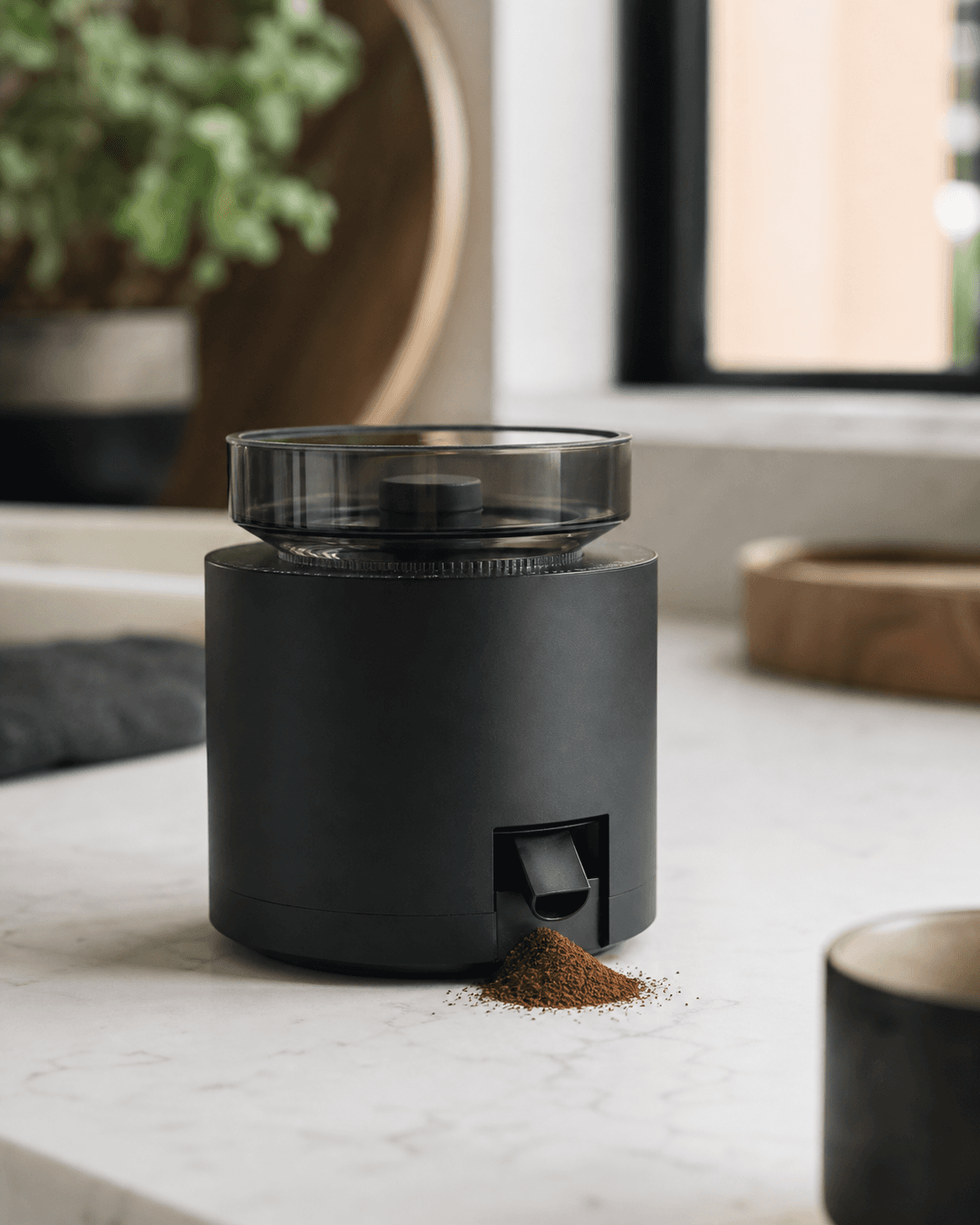
On flat-burr grinders like the Fellow Ode Gen 2, this is also a good time to pull and inspect the burrs themselves for wear or buildup in the fine grooves — the Ode's burr set is designed to be removable without tools, which makes this a five-minute job rather than a disassembly project.
Retention — how much coffee is hiding in your grinder
Retention is the coffee that stays trapped inside the grinder's chute and chamber between doses instead of falling into your cup or portafilter — it's a real number, not just a cleanliness issue, because retained grounds from your last dose (potentially stale, potentially a different bean) mix into your next one. Retention varies hugely by design: some conical burr grinders with longer chutes and corners for grounds to catch on retain multiple grams per dose, while flat-burr, single-dose-oriented designs like the Fellow Ode Gen 2 are engineered specifically to minimize this, often retaining well under half a gram thanks to a short, direct path from burrs to output and a flat-burr geometry that doesn't trap grounds the way conical designs can.
Low retention matters most if you're switching beans often (you don't want yesterday's dark roast contaminating today's light roast) or dosing precisely for espresso, where an extra half-gram of stale grounds thrown into an 18g dose is a meaningfully different recipe than intended.
Static — the annoying part
Freshly roasted coffee, especially lighter roasts still releasing CO2, builds up static charge as it's ground, causing fine particles to cling to the chute walls, the portafilter spout, or fly out and stick to the counter instead of landing in your dose. The common fix is RDT — Ross Droplet Technique — where you add a tiny amount of water to the beans before grinding, as little as one or two drops per dose, just enough to reduce the charge without meaningfully affecting the bean's moisture content or grind behavior. It's a small habit that noticeably cuts down on mess and improves dosing accuracy, especially with lighter roasts.
How often, realistically
Daily: nothing beyond normal use, though a quick glance at the chute for visible clumping doesn't hurt. Weekly: burr brushing and chute clearing. Monthly: hopper wash and chamber vacuum. Beyond that, a full burr inspection or replacement is more of an annual-to-biennial task depending on volume — burrs dull gradually over hundreds of pounds of coffee, not weeks.
Practical takeaway
- Brush burrs and clear the chute weekly — dry brush only, no water directly on the burrs.
- Wash the hopper and vacuum the chamber monthly.
- If retention matters to you (bean switching, precise espresso dosing), look specifically for low-retention flat-burr designs rather than assuming all grinders perform similarly.
- Use a drop or two of water on beans before grinding (RDT) if static is making a mess of your counter.
Frequently asked questions
Is the "grind rice through your grinder" trick safe?
Most grinder manufacturers actually advise against it — uncooked rice is harder than coffee and can chip or dull burrs, plus rice starch dust isn't necessarily easier to clean than coffee oil residue.
How much retention should I expect from a modern grinder?
It varies a lot by burr design — flat-burr grinders built around low retention, like the Fellow Ode Gen 2, can hold under half a gram between doses, while older or conical designs can retain several grams.
Does static really affect flavor, or just mess?
Mostly mess and dosing accuracy — static-clung grounds stick to the chute or hopper walls instead of falling into your portafilter, throwing off your intended dose more than it changes flavor directly.