On this page
Pour-over recipes talk a lot about grind size, ratio, and bloom time, and comparatively little about the kettle itself — which is strange, because the kettle is what actually delivers the water, and a wide-spout kettle can undo good technique before it even has a chance to matter.
The short answer
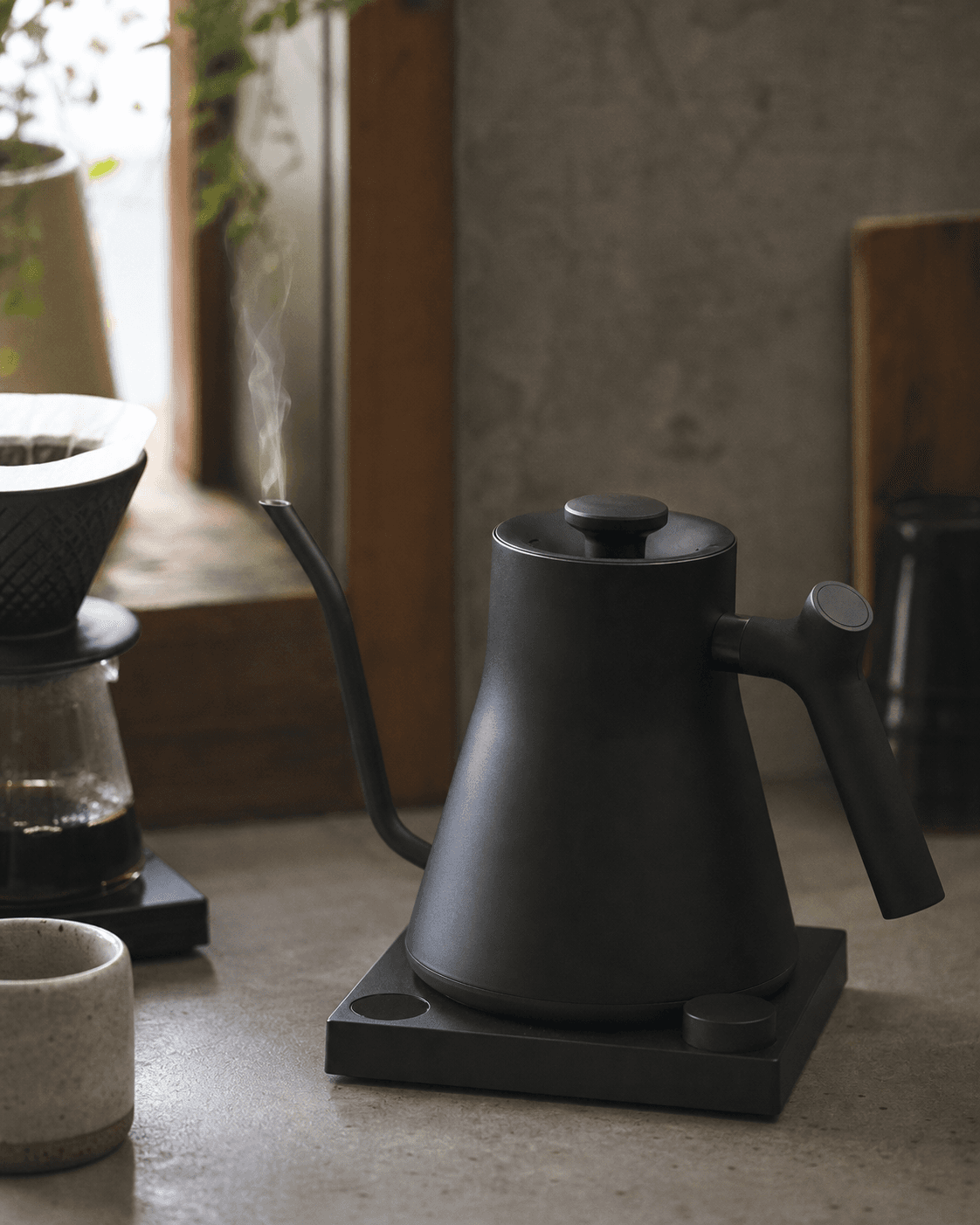
A gooseneck kettle has a long, narrow, curved spout instead of a short, wide one. That narrow diameter limits how fast water can flow even when you tilt the kettle aggressively, which gives you a genuinely controllable range between a slow trickle and a steady stream. A wide spout has almost no controllable middle ground — it goes from nothing to a splash very quickly — which makes the deliberate, paced pouring that pour-over technique depends on much harder to execute consistently.
Why pour rate and pattern actually matter
The bloom needs a gentle, even wetting
The first 30-45 seconds of a pour-over — the bloom — is meant to wet the coffee grounds gently and let trapped CO2 escape evenly, without disturbing or channeling through the coffee bed. That takes a thin, controlled trickle poured in a slow spiral over the grounds. A wide-spout kettle tends to dump water in an uneven blast that saturates part of the bed while leaving other spots dry, which produces uneven extraction from the very first step.
The main pour needs a steady, aimable stream
After the bloom, most pour-over methods call for a slower, steady pour in a spiral pattern, keeping the water level in the dripper roughly consistent and avoiding disturbing the coffee bed too aggressively. This requires the same kind of fine control as the bloom, just sustained over a longer pour — and it's exactly what a gooseneck spout is built to deliver, since its narrow bore keeps the flow rate in a manageable range across the tilt angles you're actually using.
Channeling — the failure mode a wide spout invites
When water hits the coffee bed unevenly or too forcefully, it can carve a path of least resistance through the grounds — channeling — pulling water (and extraction) disproportionately through that one channel while leaving other parts of the bed under-extracted. The result is a cup that tastes both bitter (over-extracted in the channel) and weak (under-extracted everywhere else) at the same time. A controlled, even pour is the main defense against this, and pour control starts with the kettle's spout, not just a steady hand.
Distance and angle control
A gooseneck's shape also lets you hold the kettle closer to the dripper and aim precisely at a specific spot, rather than hovering awkwardly to compensate for an unpredictable wide-spout stream. That precision matters especially with smaller drippers, where the target zone for the water is genuinely tight.
What temperature control adds on top
Spout shape solves flow rate and pattern; it doesn't solve water temperature, which is the other major variable in pour-over. An electric gooseneck kettle with a precision temperature dial (like the Fellow Stagg EKG's 1-degree adjustment from 135-212°F) lets you set a specific number rather than guessing "off the boil" — useful because lighter roasts generally want water closer to the boil, while darker roasts often extract better a few degrees cooler. Combine that temperature precision with a good gooseneck's pour control, and you've removed two of the biggest sources of day-to-day inconsistency in home pour-over.
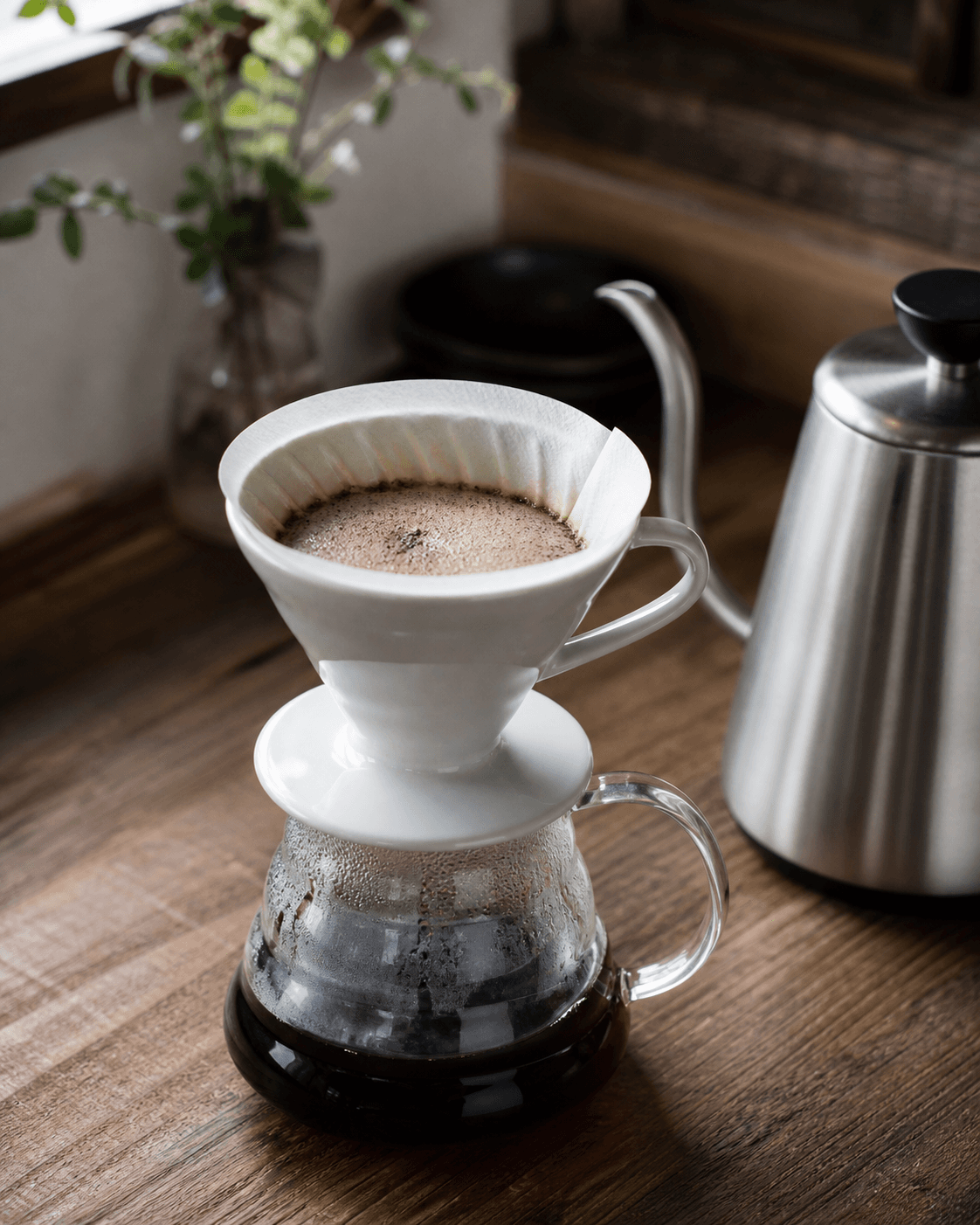
A stovetop gooseneck kettle, like a Hario V60 02 paired with a separate kettle, gets you the pour-control half of this without the built-in digital precision — you're managing temperature yourself, by timing off the boil or checking with a thermometer, which is a completely workable approach, just a slightly less repeatable one.
Practical takeaway
If you're using a dripper like the Hario V60 02 and pouring from a standard wide-spout kettle, the single highest-leverage upgrade you can make to your technique isn't a better grinder or fancier beans — it's switching to a gooseneck kettle. The shape does a lot of the technique work for you, turning "try to pour slowly and evenly" from a skill you have to fight for into something the kettle itself makes easy.
Start by practicing your bloom pour with just hot water and an empty dripper — get a feel for how little you need to tilt the kettle to get a thin trickle, and how the stream widens as you tilt further. That muscle memory transfers directly once you're pouring over actual coffee.
Frequently asked questions
Can I do pour-over without a gooseneck kettle?
Yes, but you'll fight the pour the whole time — a wide spout makes it hard to control both flow rate and where the water lands, which are two of the biggest variables in pour-over technique.
Is a stovetop gooseneck kettle just as good as an electric one?
For pour control, yes — the spout shape is what matters. Electric kettles add temperature precision on top, which a stovetop kettle can't do without a separate thermometer.
Does the gooseneck shape matter for anything besides coffee?
Yes — tea, especially delicate green or white tea, benefits from the same controlled, gentle pour, and the shape is handy anywhere you need a slow, aimable stream.