Best Coffee Grinders (2026)
Buy the wrong grinder and it doesn't matter how good your machine or your beans are — inconsistent particle size shows up in the cup as sourness, bitterness, or both in the same sip. Buy the right one and a mediocre machine starts punching above its price. That order of priority — grinder before machine, most of the time — is the single most useful thing we can tell a new buyer, and it's why this list exists on its own rather than buried in an espresso-machine guide.
We picked across a genuinely wide spread here: an entry-level electric grinder tuned specifically for espresso, a single-dose filter grinder that added an espresso option, a budget enthusiast favorite with a huge upgrade ecosystem, a prosumer Italian machine, and a premium hand grinder. Each earns its award for a different kind of buyer, not because it wins every category on paper.
Our top picks
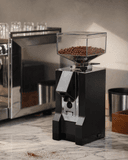 Best OverallEureka Mignon Specialita
Excellent
Our score: 81 / 100
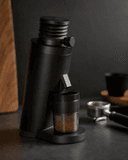 Best ValueDF64
Good
Our score: 75 / 100
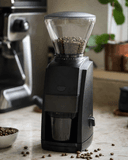 Best for a First Real GrinderBaratza Encore ESP
Good
Our score: 71 / 100
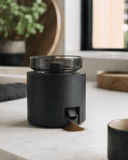 Best for Filter Coffee (With Espresso as a Bonus)Fellow Ode Gen 2
Good
Our score: 75 / 100
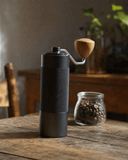 Best Hand GrinderComandante C40
Excellent
Our score: 80 / 100
Eureka Mignon Specialita
Excellent
Our score: 81 / 100
The Specialita is the grinder we'd point most people toward if budget weren't the deciding factor — stepless micrometric adjustment, genuinely excellent particle consistency, and daily-use polish that comes from decades of Eureka building commercial machines. It costs more than most of this list, and it earns every dollar in how little friction it adds to a daily espresso habit.
DF64
Good
Our score: 75 / 100
Dollar for dollar, nothing here grinds as well as the DF64 once you account for how much of an upgrade ecosystem exists around it. It asks a bit of patience and, often, a small extra purchase or two — a bellows, an aftermarket dial — but the ceiling for the money is the best in this comparison.
Baratza Encore ESP
Good
Our score: 71 / 100
If you're moving up from a built-in or blade-adjacent grinder and want the least amount of risk, the Encore ESP is the sensible choice. It's tuned specifically for espresso, backed by a company with a genuine decade-plus reliability reputation, and doesn't ask you to research aftermarket parts to get a good result on day one.
Fellow Ode Gen 2
Good
Our score: 75 / 100
Built first for pour-over and batch brew, the Ode Gen 2 is the cleanest, lowest-mess single-dose grinder here for filter drinkers. Its optional espresso burr set makes it flexible, but buyers whose main drink is espresso should budget for that upgrade rather than expect stock performance to match a dedicated espresso grinder.
Comandante C40
Excellent
Our score: 80 / 100
For anyone willing to crank by hand, the C40's manufacturing precision and years of refinement make it the grinder other hand grinders get compared to. It leans toward filter and pour-over out of the box, and it costs a real premium for a grinder with no motor — both worth knowing before you buy, neither enough to knock it off this list.
How we chose
We weighted grind consistency heaviest, since it's the single factor most responsible for whether a shot or a cup actually tastes balanced — more than machine choice, more than bean quality, in a lot of real-world cases. From there we looked at how wide a usable grind range each grinder covers, how well it's built to survive years of daily use, whether the price reflects real engineering rather than just a brand premium, and how much daily friction — retention, mess, adjustment fuss — a buyer should expect to live with.
We also tried to avoid crowning one grinder "best" across every use case, because that's not how this category actually works. A grinder built for daily multi-shot espresso and a grinder built for occasional single-dose pour-over are answering different questions, even when they're priced similarly.
What to look for
Burr type: conical vs. flat. Conical burrs (Baratza Encore ESP, 1Zpresso J-Max, Comandante C40) tend to run a little quieter and cooler, with slightly more forgiving particle distribution. Flat burrs (Fellow Ode Gen 2, DF64, Eureka Mignon Specialita) generally produce a marginally more uniform particle size at a given setting, which shows up as cleaner separation of flavors, especially noticeable in filter coffee. Neither is strictly better — they're different trade-offs, and burr quality and calibration matter more than the geometry alone.
Single-dose vs. hopper-fed. Single-dose grinders (Ode, DF64, both hand grinders here) are built around weighing out exactly what you need before each grind, with minimal retention between doses — ideal if you rotate beans often or care about exact recipe repeatability. Hopper-fed grinders (Encore ESP, Mignon Specialita) trade a little retention for the convenience of loading once and pulling multiple doses without reloading, which matters more than people expect on a busy multi-drink morning.
Stepped vs. stepless adjustment. Stepped grinders (Encore ESP, Ode Gen 2, Comandante C40) give you a repeatable number to return to, which is genuinely useful while you're still learning to dial in a new bag of beans. Stepless grinders (DF64, Mignon Specialita) trade that repeatability for finer resolution, letting you split hairs between two settings a stepped dial would force you to choose between.
Retention, and why it's not just about mess. A gram or two of retained grounds sounds trivial until you realize it means yesterday's stale coffee is contaminating today's fresh dose, especially right after you change beans or adjust the grind. If you drink the same bean at the same setting every day, retention matters less. If you rotate beans often, it's worth prioritizing.
Hand vs. electric. A quality hand grinder can match or beat a mid-tier electric grinder on pure grind consistency, and it wins clearly on retention and portability — but it costs you real time and physical effort per dose, every single time. Be honest with yourself about your actual morning routine before choosing a hand grinder as your only grinder.
Motor speed and heat. Lower-RPM motors (Baratza's ~450 RPM, Eureka's ~1,400 RPM with vibration assist) generally produce less frictional heat during grinding than high-speed motors, which matters more for delicate light roasts than for darker, more heat-tolerant roasts.
Frequently asked questions
Do I need to spend $500+ to get a genuinely good espresso grind at home?
No — the Baratza Encore ESP and DF64 both produce genuinely good espresso for well under half that, though a grinder like the Eureka Mignon Specialita removes daily friction points that budget grinders still ask you to tolerate.
Should I buy a grinder before or after my espresso machine?
Grinder first, if you're forced to choose one at a time — a great machine paired with a bad grinder will disappoint you more reliably than a modest machine paired with a great grinder.
Is a hand grinder actually practical as someone's only grinder?
For a lot of people, yes — especially anyone making one or two drinks a day who doesn't mind the extra minute of physical effort. It becomes less practical fast once you're making espresso for multiple people back to back.
What's the single biggest mistake people make buying a grinder?
Buying based on burr size alone. A well-calibrated 48mm conical burr can outperform a poorly matched 64mm flat burr — geometry, RPM, and manufacturing precision matter more than the number on the spec sheet.
How much does retention actually matter day to day?
Less than enthusiast forums make it sound, if you drink the same bean at a stable setting daily. It matters a lot more the moment you start rotating beans or chasing precise recipe repeatability.