Best Espresso Machines for Beginners (2026)
Your first espresso machine will teach you more than any machine you buy after it — for better or worse. The wrong first machine turns a fun hobby into a frustrating one; the right first machine builds real skill without punishing you for being new. We picked machines that forgive small mistakes while still making genuinely good espresso, rather than ones that dumb the process down so far you never actually learn anything.
None of these are toys. Every machine here can make espresso as good as what you'd get from a skilled home barista three years into the hobby — they just make it easier to get there.
Our top picks
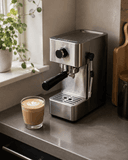 Best Overall for BeginnersBreville Bambino Plus
Good
Our score: 77 / 100
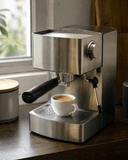 Best for Learning Real TechniqueGaggia Classic Pro
Good
Our score: 77 / 100
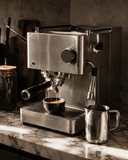 Best All-in-OneBreville Barista Pro
Good
Our score: 75 / 100
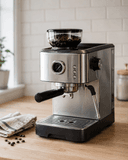 Best Value All-in-OneBreville Barista Express
Excellent
Our score: 81 / 100
Breville Bambino Plus
Good
Our score: 77 / 100
The Bambino Plus removes the two things that intimidate new espresso drinkers most — slow heat-up and steaming technique — without dumbing down the actual brewing process. ThermoJet heating means no ten-minute warm-up ritual, and the automatic milk texturing produces real microfoam on your very first try. You'll need to add a decent grinder, but that's true of almost every machine at this level, and the Bambino Plus's tiny footprint means it fits anywhere a first machine needs to go.
Gaggia Classic Pro
Good
Our score: 77 / 100
If you want your first machine to actually teach you skills that transfer to any espresso machine you'll ever use, the Classic Pro is the honest choice. Its 58 mm commercial portafilter, manual steam wand, and lack of any automation mean you'll learn dosing, tamping, and steaming the "real" way from day one — more demanding at first, but you'll graduate faster than on a fully automated machine.
Breville Barista Pro
Good
Our score: 75 / 100
For a beginner who doesn't want to shop for a grinder separately, the Barista Pro solves the whole problem in one box — integrated grinder, fast heating, and a digital display that shows extraction time so you can actually see what "too fast" or "too slow" looks like, rather than guessing.
Breville Barista Express
Excellent
Our score: 81 / 100
A slightly more traditional sibling to the Barista Pro — a boiler instead of ThermoJet, a dial interface instead of a digital display — but the same core value: grinder and machine in one purchase, at a friendlier price than the Pro.
We may earn a commission when you buy through links on our site, at no extra cost to you. Our scores and rankings are never influenced by commissions. Learn more.
How we chose
We evaluated each machine specifically through a beginner's eyes: how much can go wrong before the shot suffers, how quickly can someone with zero experience get a drinkable result, and how much does the machine teach versus automate away? We weighted forgiveness and learning value alongside raw espresso quality, because a beginner's first month matters more than a spec sheet.
What to look for
Built-in grinder or not. An integrated grinder removes a whole shopping decision and a whole compatibility question, at the cost of some grind-quality ceiling. If you're not ready to research grinders, an all-in-one is the easier start.
Automatic vs. manual steaming. Automatic milk texturing (like the Bambino Plus) gets you good results immediately. Manual wands (like the Gaggia or Silvia) take longer to learn but teach a skill that matters if you plan to get serious.
Basket size. 58 mm "commercial" baskets (Gaggia, Silvia) have a wider forgiveness window and a bigger accessory ecosystem. 54 mm baskets (all current Breville machines) are narrower but still entirely capable in skilled hands.
Heating time. Traditional boilers take 10–15 minutes to warm up; ThermoJet-style systems are ready in seconds. This matters more than people expect for whether you'll actually use the machine on a rushed weekday morning.
Frequently asked questions
Do I need a separate grinder as a beginner?
Only if you choose a bare machine like the Gaggia Classic Pro. If that sounds like one purchase too many right now, an all-in-one like the Bambino Plus (plus a basic grinder) or Barista Pro (grinder built in) removes that decision.
Is it okay to learn on a "serious" machine like the Gaggia Classic Pro?
Yes — many excellent home baristas started exactly there. It asks more of you on day one, but the skills you build transfer directly, and you likely won't outgrow it the way you might a more automated entry machine.
How much should a beginner budget in total, including a grinder if needed?
Realistically, $400–$900 all-in for a machine plus grinder if the machine doesn't include one, or $300–$700 for a genuinely good all-in-one. Going much cheaper on either the machine or the grinder tends to produce frustration rather than savings.
What's the single biggest beginner mistake?
Buying a great machine and pairing it with a cheap grinder, then blaming the machine. Grind consistency affects espresso more than almost anything else — don't let it be an afterthought.