Cuisinart DCC-3200 vs Ninja Programmable Brewer
Buy the Cuisinart 14-Cup Programmable DCC-3200 if…
You want the biggest carafe and the longest warranty in the mainstream tier, and you're fine with a basic regular/bold strength toggle instead of real brew-style switching.
Buy the Ninja Programmable Brewer if…
You want genuine brew-style flexibility (Classic, Rich, Over Ice) and a removable water reservoir, and you don't mind a smaller carafe and a shorter warranty.
Side by side
| Specification | 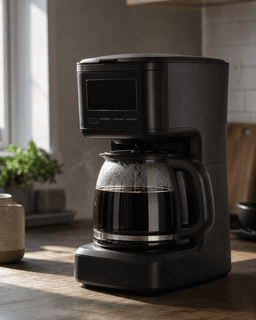 | 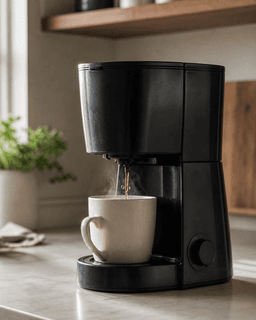 |
|---|---|---|
| Our score | 71Best | 68 |
| Carafe type | Glass, double-wall insulated | Glass |
| Capacity | — | — |
| Brew temperature | — | — |
| SCA certified | No | No |
| Programmable | Yes — 24-hour advance start, adjustable warming plate, self-clean cycle | Yes — 24-hour delay brew, auto-start |
| Bloom/pre-infusion | No dedicated bloom stage | No dedicated bloom stage, though the Rich setting slows flow to extend contact time |
| Footprint | Large — full-size 14-cup body, one of the bigger machines in this batch | Moderate — compact for a 12-cup glass-carafe machine |
| Warranty | — | — |
| Capacity (cups) | 14-cup (up to 60 oz) | 12-cup (43 oz) |
| Brew temperature (F) | Roughly 185-195°F — not officially published, not SCA-certified | Unknown exact figure — not published, not SCA-certified |
| Warranty (yr) | 3 yr limited | 1 yr limited |
Both machines show up on the same bestseller shelf, a few ranks apart
Walk down the coffee maker aisle at any big-box store and these two are probably within arm's reach of each other — similarly priced, similarly marketed as "programmable," similarly aimed at the buyer who wants a reliable pot of coffee without spending $200+ on anything SCA-certified. That similarity is exactly why they're worth comparing directly: neither one is the obviously better machine, and the right pick genuinely depends on which trade-offs matter more to your kitchen.
At a glance — where they actually differ
The headline difference is philosophy. Cuisinart bets on capacity and longevity — a 14-cup carafe, a 3-year warranty, a self-clean cycle — while treating brew customization as an afterthought (a basic regular/bold toggle and a 1-4 cup small-batch mode). Ninja bets the opposite way — a 12-cup carafe and a 1-year warranty, but three genuinely distinct brew styles (Classic, Rich, Over Ice) that change how the coffee is actually extracted, not just how much of it you make.
Neither is SCA-certified, so this isn't a comparison about which one produces objectively better coffee in a lab sense — it's about which convenience trade-offs fit your routine.
Brew customization
This is where Ninja pulls ahead decisively. Classic brews a standard cup at a normal flow rate. Rich slows the water flow to extend contact time with the grounds, producing a genuinely bolder, more developed cup without needing to add more coffee. Over Ice brews a concentrated batch specifically calibrated to be poured over a full glass of ice, so the finished drink doesn't taste diluted once the ice melts — a feature that solves a real, common problem (iced coffee tasting watery) that most drip machines simply ignore.
Cuisinart's brew strength selector is a straightforward regular/bold toggle that adjusts flow rate similarly, but it's a single lever rather than three distinct modes. Its 1-4 cup small-batch setting is a genuine advantage for anyone brewing partial pots regularly — it slows water flow to avoid under-extracting when there's less coffee in the basket, a detail Ninja doesn't specifically call out as a dedicated mode.
Carafe and hot-plate quality
Cuisinart's edge here is straightforward: a 14-cup double-wall insulated glass carafe versus Ninja's 12-cup single-wall glass carafe. The double-wall design reduces some heat loss compared to a standard glass carafe, though both still rely on a hot plate to keep the pot warm, meaning both will slowly cook coffee that sits for more than 30-45 minutes. Neither offers a thermal carafe option in these specific models — if that matters more to you than anything else in this comparison, the Zojirushi Fresh Brew Plus elsewhere in this guide is the machine to look at instead.
Build-wise, owner reports describe Ninja's carafe handle and some housing panels as feeling a bit lighter and less secure than Cuisinart's, particularly once the carafe is full and hot. Cuisinart's slightly more established manufacturing history (this basic chassis has been refined over many years) shows in a marginally more solid overall feel, though neither machine is aiming for a premium build in the first place.
Ease of use
Both machines are genuinely simple to operate day to day, but they solve different friction points. Ninja's removable water reservoir is the standout convenience — lifting the tank out and filling it directly under the tap at the sink is easier and less prone to spills than pouring water into Cuisinart's fixed, top-loading opening, especially before you're fully awake. Cuisinart counters with its self-clean cycle, a genuinely useful maintenance feature Ninja doesn't offer in the same automated form — running a vinegar-water mix through a dedicated cleaning setting versus manually running a descaling cycle through the regular brew function.
Both offer 24-hour delay-brew programming through a straightforward digital display, and both are reliable in owner reports about holding a set schedule without dropped settings.
Price and value
Cuisinart typically runs $80-100; Ninja typically runs $100-130. That price gap roughly tracks the trade-offs already discussed — Cuisinart's larger carafe, longer warranty, and self-clean cycle for less money, versus Ninja's brew-style flexibility and reservoir convenience for somewhat more. Neither is a bad value in its own right; the better buy depends entirely on which feature set you'll actually use.
Which should you buy
Buy the Cuisinart DCC-3200 if you're brewing for three or more people regularly, want the longest warranty available in this mainstream tier, and are fine with a simple strength toggle rather than genuinely different brew styles. It's the safer, more conventional choice, and the self-clean cycle is a real quality-of-life win over the long run.
Buy the Ninja Programmable Brewer if you actually want to vary how your coffee tastes depending on the day — a normal cup most mornings, something bolder occasionally, real iced coffee in summer — and you're comfortable with a smaller carafe and a shorter warranty in exchange for that flexibility. The removable reservoir is also worth factoring in if your kitchen layout makes filling a fixed tank annoying.
Neither machine is SCA-certified, so if cup quality itself — not just convenience — is your top priority, both the Bonavita BV1900TS and OXO Brew 9-Cup covered elsewhere in this guide are worth a look before you commit to either of these.
Frequently asked questions
Which one makes better coffee, the Cuisinart or the Ninja?
Neither is SCA-certified, and both land in a similar mainstream range for cup quality. The real difference isn't which one brews hotter — it's that Ninja's Rich and Over Ice settings let you meaningfully change the extraction, where Cuisinart only offers a basic strength toggle.
Which has the bigger carafe?
The Cuisinart DCC-3200 holds up to 14 cups (about 60 oz); the Ninja Programmable Brewer holds 12 cups (about 43 oz). That two-cup gap matters more than it sounds for a household of four or more.
Which one has the better warranty?
Cuisinart, by a wide margin — three years versus Ninja's standard one-year limited warranty. That's a real consideration if you expect either machine to see years of daily use.
Is the Ninja's Over Ice setting actually useful, or a gimmick?
It's genuinely useful if you drink iced coffee — it brews a stronger concentrate specifically sized to be poured over a full glass of ice, so the finished drink doesn't taste watered down once the ice melts. Cuisinart has no equivalent feature at all.
Which one is easier to live with day to day?
Both are straightforward, but Ninja's removable water reservoir makes refilling at the sink noticeably easier than Cuisinart's fixed top-loading tank, while Cuisinart's self-clean cycle is a genuine convenience Ninja doesn't offer in the same form.