Terminology
Coffee Roast Levels Explained: Light, Medium, and Dark
On this page
The short answer
Roast level describes how long and how hot green coffee beans were roasted before they became the brown beans you buy — and it's the single biggest factor in how a coffee tastes, often outweighing the difference between origins. Light roasts stop early, preserving more of the bean's original acidity and origin-specific character (think Volcanica's floral, citrusy Yirgacheffe). Dark roasts push further, developing more roast-driven flavors like smoke and caramelization while suppressing acidity (think Peet's Major Dickason's). Medium roasts sit in between, balancing origin character against roast sweetness (Stumptown's Hair Bender is a good medium-roast reference point).
None of these levels is objectively better — they're suited to different beans, brew methods, and palates.
What's actually happening to the bean
Green coffee beans are dense, grassy-smelling, and essentially undrinkable raw. Roasting applies heat that triggers a cascade of chemical reactions — the Maillard reaction (the same browning reaction responsible for seared meat and toasted bread) and caramelization of natural sugars, plus the breakdown of chlorogenic acids that contribute to perceived acidity. As roasting continues, the bean also loses moisture and becomes less dense, which is why a dark roast bean looks and feels lighter than the same volume of a light roast bean, despite both starting from identical green coffee.
Two audible markers happen along the way: "first crack," an audible popping sound as trapped moisture and gas expand and rupture the bean's structure, and "second crack," a quieter, higher-pitched crackling that happens later as the bean's cellular structure breaks down further. Where roasting stops relative to these two cracks defines the light-medium-dark spectrum.
Light roast
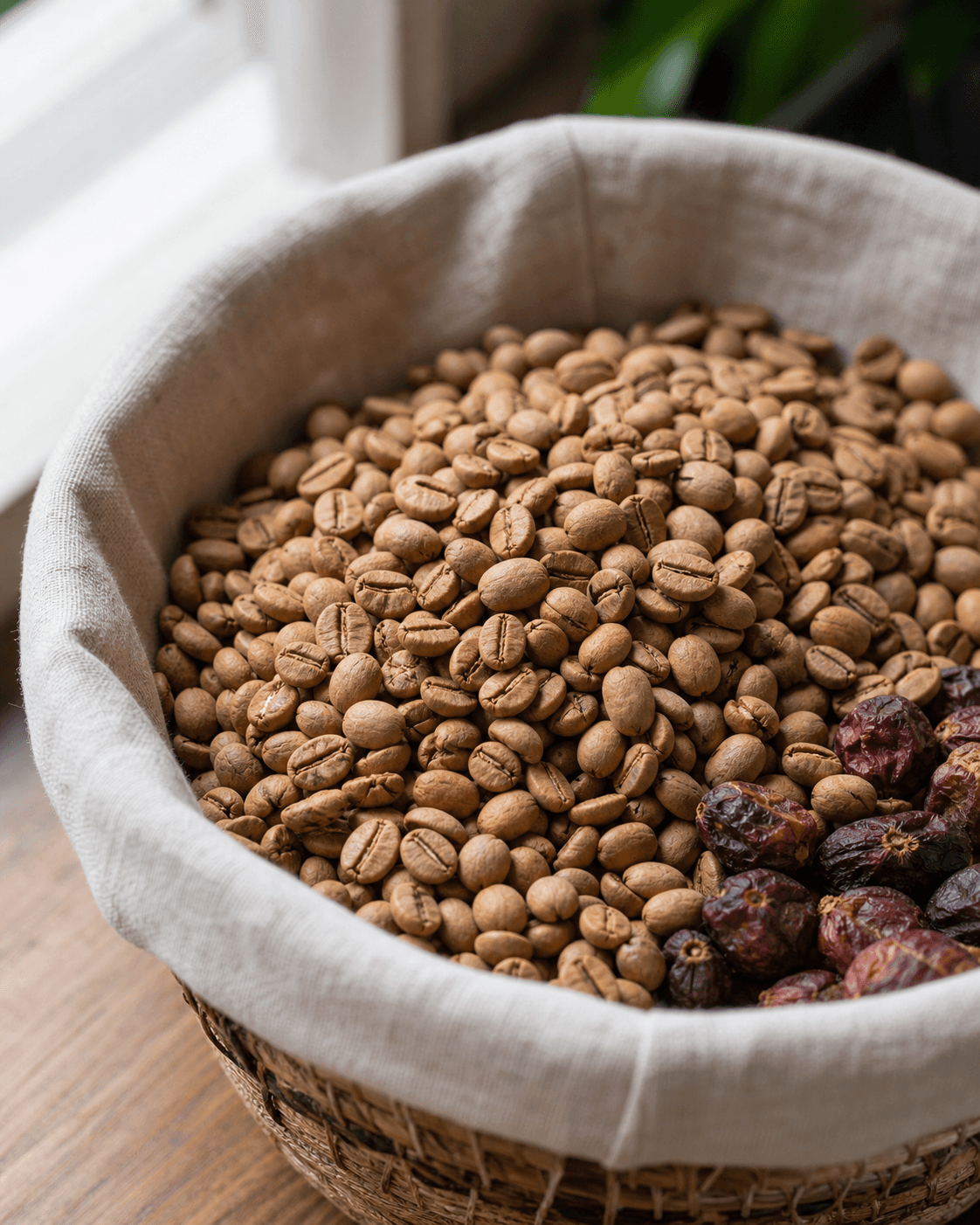
Stopped at or shortly after first crack. The bean stays a light brown color with no surface oil. Acidity is at its highest, origin character (the specific flavors tied to where the bean was grown) is most preserved, and body tends to be lighter. Volcanica's Ethiopian Yirgacheffe is a clear example — its floral, citrus, almost tea-like character depends on stopping the roast early enough to avoid cooking those delicate aromatic compounds away.
Medium roast
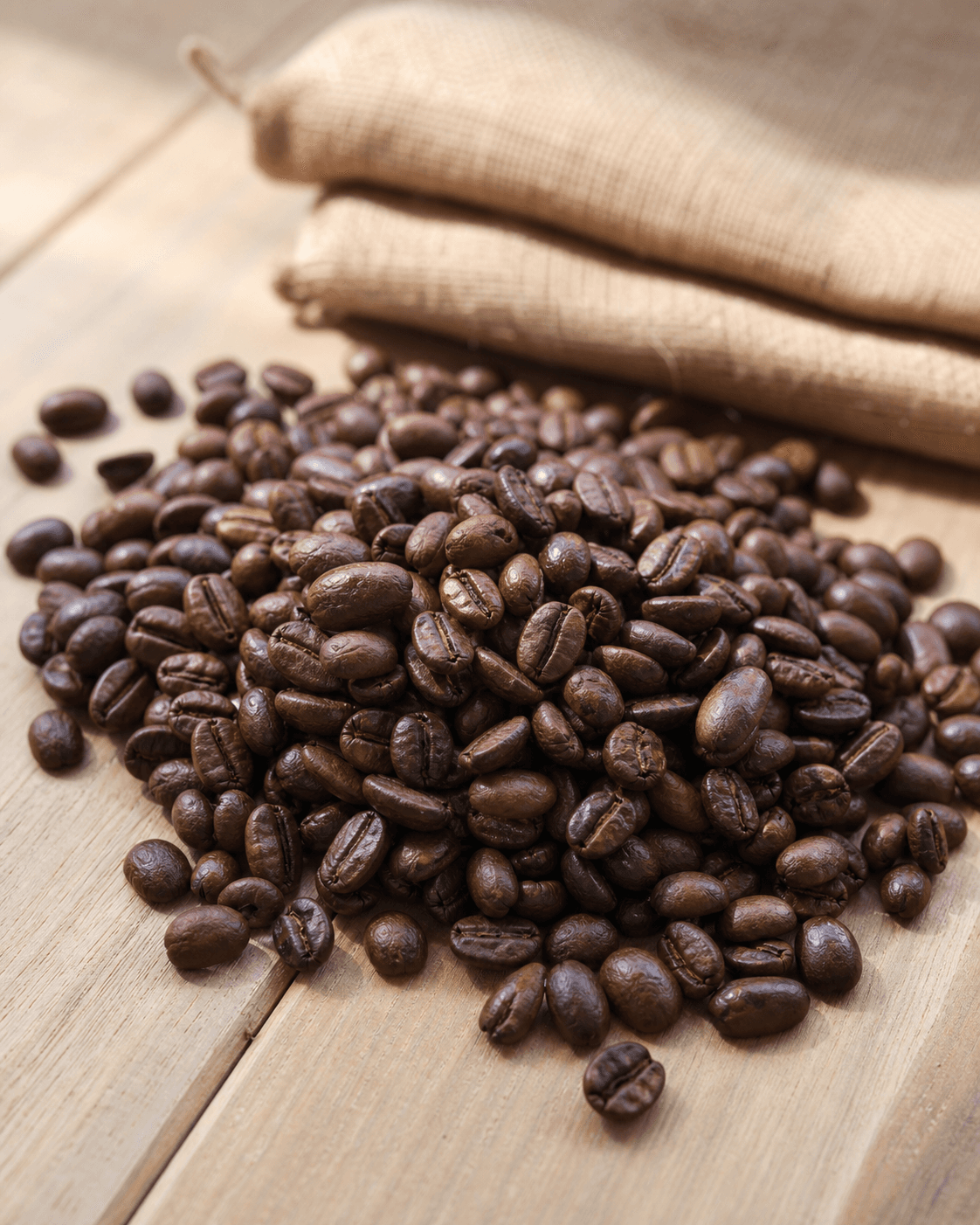
Roasting continues somewhat past first crack, developing more sweetness and body while still preserving a meaningful amount of the origin's original character. This is often described as the most "balanced" roast level, and it's a common landing spot for blends trying to showcase multiple origins without letting any one flavor lane dominate — Stumptown's Hair Bender, blending Latin American, Ethiopian, and Indonesian components, is roasted to a medium specifically to keep all three visible.
Dark roast
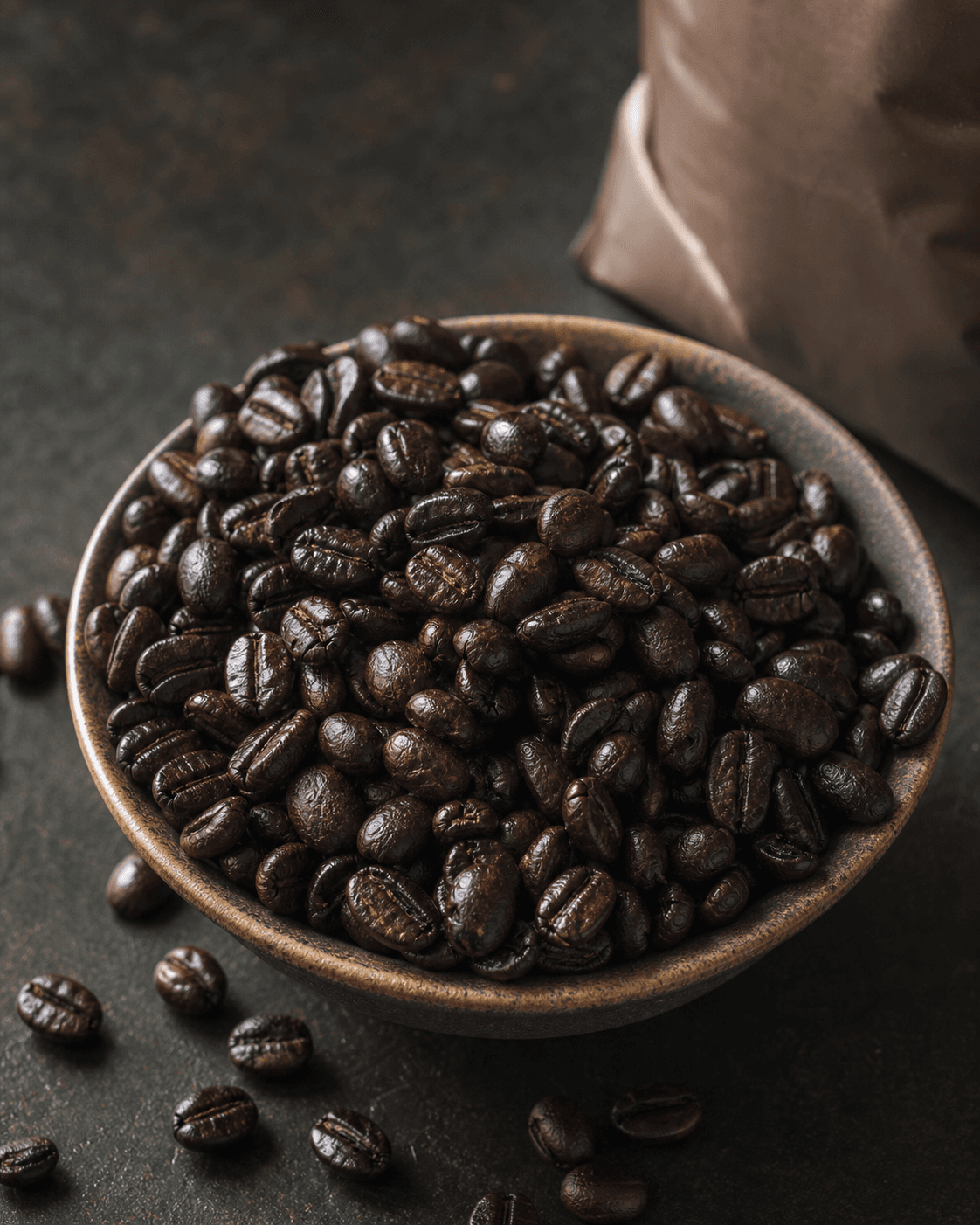
Pushed close to or into second crack. The bean's surface takes on a visible oily sheen as internal oils migrate outward under sustained heat, and much of the origin-specific acidity and delicate flavor gets replaced by roast-driven flavors — smoke, char, bittersweet caramelization. Peet's Major Dickason's Blend is a textbook dark roast: low acid, heavy body, and a flavor profile that reflects the roasting process more than the specific beans underneath it.
Common misconceptions worth clearing up
"Dark roast means stronger coffee." Strength, in the caffeine sense, isn't primarily determined by roast level — bean species (arabica versus robusta) and brew ratio matter far more. "Strong" as a flavor descriptor for dark roast really means bolder and more bitter, not more caffeinated.
"Light roast is under-cooked or unfinished." Light roasting is a deliberate choice to preserve acidity and origin character, not a shortcut or a mistake. A well-executed light roast is just as intentional as a well-executed dark roast — it's simply optimized for a different result.
"All medium roasts taste the same." Roast level is one variable among several — origin, processing method, and blend composition all still shape the final flavor heavily within the medium-roast range. Two medium roasts can taste completely different if one is a washed Central American single origin and the other is a multi-origin blend.
Practical takeaway: matching roast to brew method
Light roasts generally shine in pour-over and drip, where a paper filter and controlled extraction can showcase their brighter, more delicate character without it getting muddied. Dark roasts tend to perform best in French press, cold brew, and heavier drip brewing, where their low acidity and heavier body survive dilution and longer extraction times well. Medium roasts are the most broadly versatile, handling drip, pour-over, and even espresso reasonably, which is part of why medium-roast blends are common recommendations for someone who only wants to keep one bag of coffee in the house.
If a coffee is tasting flat or one-dimensional no matter how you brew it, check the roast level before blaming the origin — a heavily dark-roasted bean simply won't show much origin character, regardless of how good the farm behind it is.
Frequently asked questions
Does a darker roast always mean more caffeine?
No — this is one of the most persistent myths in coffee. Roasting actually burns off a small amount of caffeine over time, so if anything, a light roast has marginally more caffeine by weight than a dark roast of the same bean. The bigger factor is that dark-roasted beans are less dense, so if you measure coffee by volume (scoops) rather than weight, you might use fewer beans and get less caffeine — the roast level itself isn't adding caffeine.
Is a "medium roast" the same across every brand?
Not exactly — roast level is a spectrum, not a regulated standard, so one brand's medium can lean closer to what another brand calls medium-dark. Look at the tasting notes and the actual bean color description rather than relying on the label alone.
Which roast level is best for beginners?
Medium roast is generally the safest starting point — it's forgiving of brewing mistakes and offers a balance of origin character and roast sweetness without the sharp acidity of a light roast or the heavy bitterness a dark roast can carry.
Can the same bean be roasted to different levels?
Yes — roast level is a choice the roaster makes, not a fixed trait of the bean, though some origins are more commonly roasted a certain way because it suits their natural characteristics. Ethiopian Yirgacheffe is almost always roasted light to medium to preserve its floral character, for example.