Researched
Wacaco Minipresso Review: Real Espresso Pressure, No Battery Required
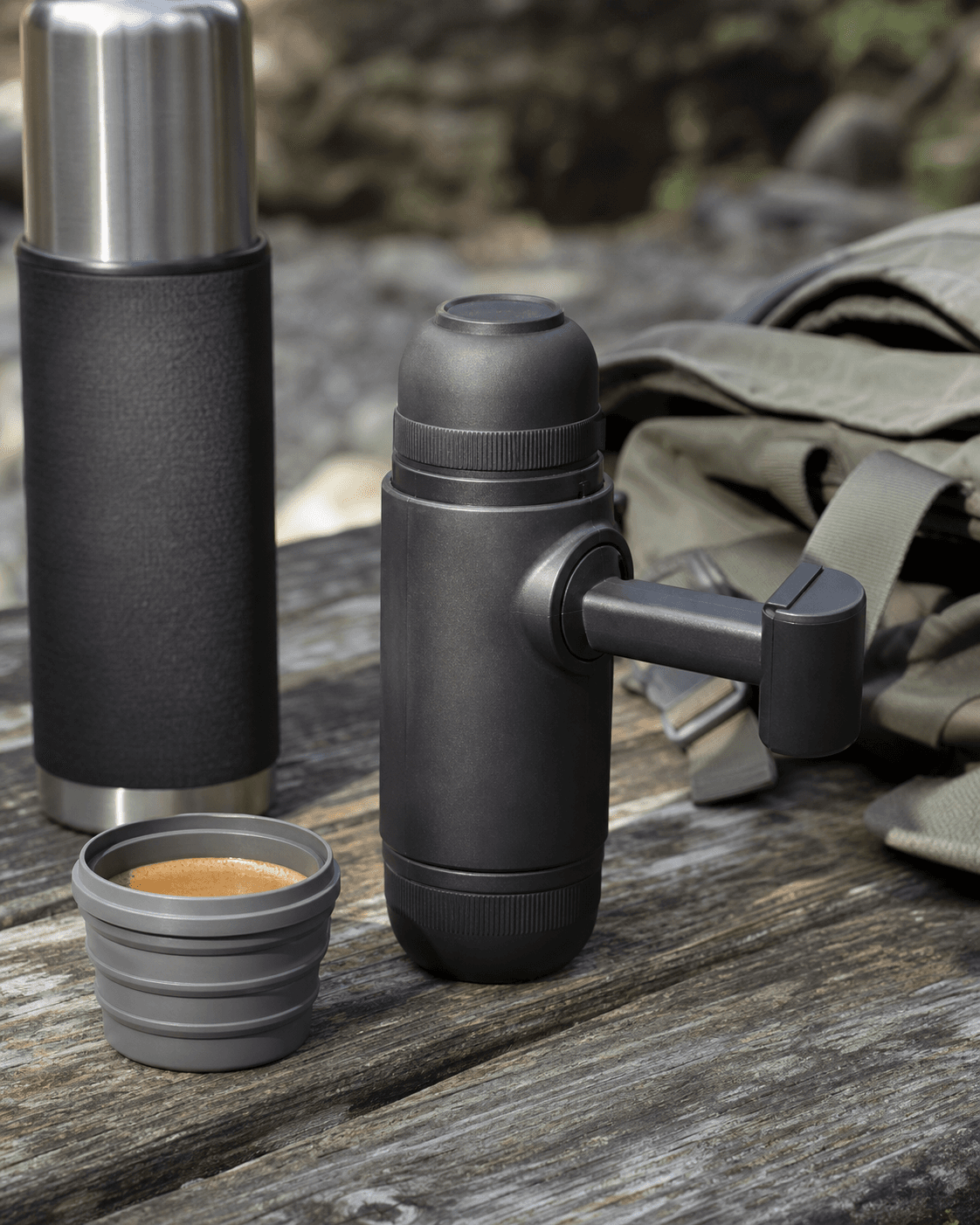
The Minipresso is the smallest, dumbest-simple way to get actual pump-pressure espresso outside your kitchen. It won't replace a real machine, and your forearm will know it's working, but nothing else this size does what it does.
On this page
The short version
I've pulled shots out of a Minipresso on a trailhead picnic table, in the back of a car with the door open for elbow room, and once, badly, standing up on a moving train. It works in all of those places, which is more than you can say for basically anything else that makes espresso. It's also, undeniably, a workout — you're the pump, and a lackluster arm gives you a lackluster shot.
This isn't espresso that competes with a countertop machine. It's espresso that exists in places no machine could ever go, made by a device the size of a large flashlight that needs nothing but hot water and ground coffee to work.
Who it's for — and who should skip it
Good fit for hikers, campers, van-lifers, or frequent travelers who already have a way to get hot water — a camp stove, a hotel kettle, a thermos — and want real (if imperfect) espresso instead of instant coffee or nothing. Also a fair pick for someone who wants the cheapest legitimate entry point into portable espresso and doesn't mind the extra arm effort compared to Wacaco's own pricier Nanopresso.
Skip it if you want consistency without technique — the shot quality here depends heavily on your pumping rhythm and how well you've dosed and tamped, and a bad pump session gives you a genuinely bad, under-extracted shot. Skip it too if you don't already have a reliable hot water source when traveling; this device makes espresso from hot water, it doesn't make hot water.
Build & materials
The body is a mix of hard plastic and metal components around the piston assembly — light at 12.5 ounces, small enough to close a fist around. It doesn't feel fragile despite the size; the piston mechanism has a reassuring resistance to it rather than a loose, toy-like give. That said, it's still a device with fine tolerances and small parts, and dropping it on concrete isn't something you want to test.
The water chamber and coffee basket are both small, sized for a single shot's worth of water (about 70 mL) and a single dose of ground coffee. There's no reservoir for multiple shots — every cup starts from a fully disassembled, refilled state.
Core performance
The pump mechanism
You fill the water chamber with hot water, load a portafilter-style basket with ground coffee (fine, closer to espresso grind than drip), screw the assembly together, and pump a piston by hand to force hot water through the grounds under pressure. The pump action itself is short strokes, repeated — not unlike using a bike pump, but scaled down and finer. It takes a few uses to find a rhythm that produces steady pressure instead of surges and dead spots.
Achievable pressure and what it means for the shot
Wacaco rates the Minipresso up to 8 bar, which sounds close to the 9 bar a real espresso machine holds — but the comparison is misleading. A real machine holds that pressure automatically and consistently for the full shot. Here, pressure rises and falls with each pump stroke, and hitting anywhere close to peak rating depends on your grind, dose, and how hard and steadily you're pumping. In practice, expect something closer to a strong, concentrated pour than a textbook espresso pull — you'll get some crema on a good attempt, thinner or absent crema on a rushed one.
Shot quality realism versus a real machine
Be honest with yourself about what this is: it's the best espresso-adjacent drink you can make with something that fits in a coat pocket, not a replacement for a countertop machine's consistency. Temperature stability is also working against you — you're pouring hot water from an external source, and by the time it's loaded, pumped, and extracted, you've lost some heat versus a machine that maintains boiler temperature throughout. The result is closer to a strong, short pour-over than a café-quality shot, though a well-dialed attempt with fresh, correctly ground coffee gets surprisingly close.
Portability & durability for travel
This is genuinely the category leader on raw size — smaller and lighter than the Nanopresso, easily tucked into a jacket pocket, a bike bag side pouch, or the top of a daypack without you noticing the weight. It's held up well across rough handling in outdoor use in owner reports, and the fully manual mechanism means there's no battery to worry about dying at altitude or in the cold, which is a real advantage over any electric alternative.
Daily use & ease of use
The learning curve is real but short — most people get a feel for pump rhythm within a handful of uses. What doesn't get easier is the arm effort itself; pulling a shot takes deliberate, sustained pumping for close to a minute, and it's noticeably more physical than pressing a button. Cleanup after each shot means disassembling the basket and water chamber, knocking out the spent puck, and rinsing the small parts — a few extra minutes you don't spend with a pod machine, but manageable at a campsite sink or even a water bottle rinse in the field.
How it compares
Against the Wacaco Nanopresso, the Minipresso is smaller, lighter, and cheaper, but the Nanopresso's redesigned pump is easier on your hand and reaches meaningfully higher pressure, which shows up as better crema and a more balanced shot. If size is your top priority, Minipresso wins. If shot quality matters more and you don't mind a bit more bulk and cost, Nanopresso is the better buy — see our full head-to-head for the details. Against a simple pour-over dripper for travel, the Minipresso is heavier and more work but produces something genuinely closer to espresso rather than filter coffee, which matters if that's specifically what you're craving on the road.
Value
At $60 to $70, this sits at a fair price for what it does — there's not much else on the market that gives you real pump-generated pressure in a package this small for less. The main value question isn't the Minipresso against other products, it's the Minipresso against the Nanopresso: paying a bit more up front for the Nanopresso's better ergonomics often pays off in fewer disappointing shots over time.
Known issues
The most consistent complaint is arm fatigue and pump inconsistency, especially for buyers who didn't realize going in how physical the process is. A smaller set of owners report the small parts being easy to misplace when cleaning in the field — nothing that breaks the device, just an annoyance worth planning around by keeping the pieces in a small bag.
Verdict
The Minipresso does something nothing else this size or price does — real pump-pressure espresso with zero battery dependency, anywhere you can get hot water. Shot quality won't fool anyone who drinks café espresso daily, and your arm will feel the process. But for what it is — the smallest legitimate portable espresso maker you can buy — it earns its spot in a travel bag.
What we like
- No battery, no charging, works anywhere you can get hot water
- Genuinely pocketable in a jacket or the outside pouch of a pack
- Surprisingly durable for how light and small it is
What we don't
- Requires real arm effort and consistent technique to hit good pressure
- Tiny water capacity means one shot at a time, no more
- Cleanup involves rinsing several small parts after every use
Specifications
| Type | Manual pump |
|---|---|
| Pressure | Up to 8 bar |
| Weight | About 12.5 oz (354 g) |
| Water capacity | About 2.4 oz (70 mL) |
| Power source | None — manual hand pump |
| Warranty | 1 yr limited |
Frequently asked questions
Does the Wacaco Minipresso need batteries or a power outlet?
No. It runs entirely on a manual hand pump — you supply the pressure by pumping a piston, which is why it works on a trail, a plane, or anywhere else you'd never plug something in.
How much pressure can the Minipresso actually generate?
Wacaco rates it up to 8 bar, but that's a peak figure you get through consistent, deliberate pumping — it's not a sustained 9-bar pull like a real espresso machine holds automatically. Inconsistent pumping gives you inconsistent, often lower, pressure.
Do I need hot water already made to use the Minipresso?
Yes — you fill the water chamber with hot water you've brought from elsewhere (a thermos, a kettle at a campsite, hot water from a coffee shop) and load ground coffee separately. It doesn't heat water itself.
Is the Minipresso worth it if I already have the Nanopresso?
Generally no — the Nanopresso does everything the Minipresso does with a more ergonomic pump and higher achievable pressure. The Minipresso mainly makes sense as the cheaper, smaller entry point if you haven't bought either yet.