Researched
Wacaco Nanopresso Review: The Portable Espresso Maker Worth the Upgrade
Wacaco took the Minipresso's idea and fixed the two things people actually complained about — the pump feel and the pressure ceiling. If you're going to own one portable espresso maker, this is the one to own.
On this page
The short version
If the Minipresso is proof of concept, the Nanopresso is the refined version that actually feels good to use daily. Same core idea — no battery, no power cord, a manual piston pump forcing hot water through ground coffee — but Wacaco reworked the pump geometry so it takes less effort per stroke and reaches meaningfully higher pressure at the top end. I've watched people hand a Minipresso to a friend and get a grimace at the arm effort; hand them a Nanopresso and the reaction's usually closer to mild surprise that it's not that bad.
It's still not a countertop espresso machine shrunk down. It's the best version yet of a fundamentally different category — genuinely portable, pump-pressure espresso, made by hand.
Who it's for — and who should skip it
Best fit for anyone serious enough about portable espresso to want the nicer of Wacaco's two flagship manual machines — frequent campers, van dwellers, hotel-room coffee snobs, or commuters who want something better than instant without hauling a full setup. Also the better pick if you think you'll eventually want accessories — the NS pod adapter or a larger water tank — since the ecosystem is built around this model more than the Minipresso.
Skip it if the Minipresso's lower price and smaller size already cover what you need — you're not likely to notice the upgrade if you only use a portable espresso maker a few times a year. Skip it too if you want consistency without any technique investment at all; even with the improved pump, this still rewards a dialed-in grind, dose, and pump rhythm, and punishes sloppy technique with a sour or bitter shot.
Build & materials
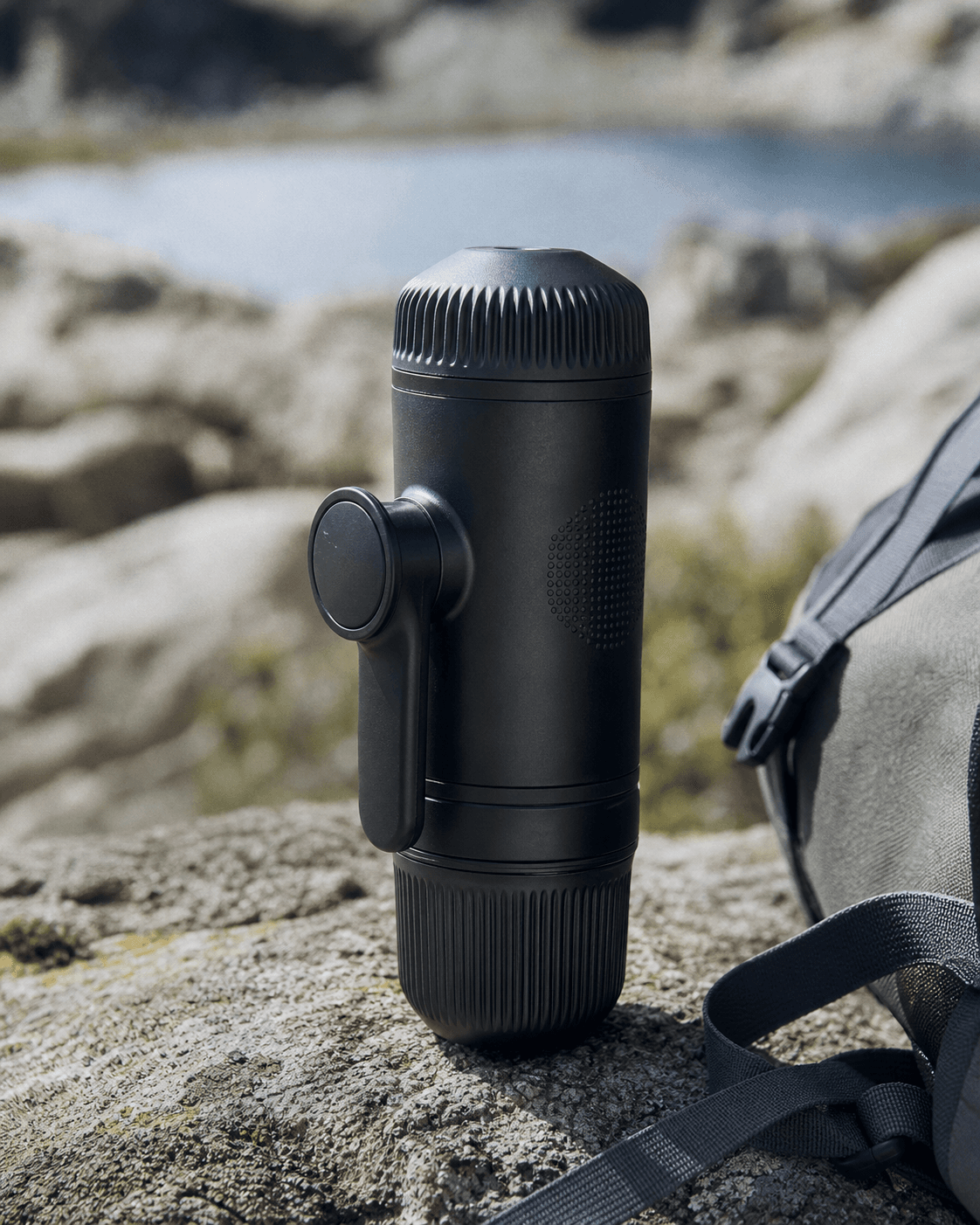
At 12.7 ounces it's barely heavier than the Minipresso, but it feels more substantial in hand — slightly larger body, a piston mechanism with a smoother, more controlled resistance through the stroke. The materials are a similar mix of hard plastic housing around metal internals, and Wacaco's build quality here has a good reputation for surviving years of travel abuse without the piston seal failing, which is the part most likely to wear on any manual pump device over time.
The water tank, at about 80 mL standard, is a touch larger than the Minipresso's and — notably — swappable for larger accessory tanks Wacaco sells separately, which is a real advantage if you regularly want more than one shot's worth of water loaded without a full refill cycle.
Core performance
The redesigned pump mechanism
This is the single biggest upgrade over the Minipresso. The piston has a different internal geometry that requires less force per pump stroke to build pressure, which matters more than it sounds — less arm fatigue means more consistent, evenly-paced pumping through the whole shot, and consistent pumping is directly tied to consistent extraction. Where the Minipresso can feel like a small workout, the Nanopresso feels more like operating a normal kitchen tool.
Achievable pressure and shot realism
Rated up to 18 bar, more than double the Minipresso's ceiling, though — same caveat as always with manual pump devices — that's a peak figure dependent on your technique, not a sustained hold like an electric machine's pump provides automatically. What the higher ceiling buys you in practice is more headroom: even a slightly imperfect pump session on the Nanopresso can land in a pressure range that produces visible, reasonably persistent crema, where the same imperfect session on a Minipresso might fall short of crema entirely. It's not magic — grind size and dose still matter enormously — but the machine gives you more room for error.
Shot quality versus a real machine
Compared honestly to a countertop machine with a proper boiler and PID, this is still a step down — temperature stability is limited by however hot your carried water was to begin with, and there's no pre-infusion stage to speak of. But compared to other truly portable options, it's the closest thing to an actual espresso shot you'll get from something that fits in a jacket pocket. Fresh beans, a correct fine grind, and a level tamp make a bigger difference here than on a machine that compensates for user error automatically — this device has no automatic anything, so your technique shows up directly in the cup.
Portability & durability for travel
Slightly bulkier and heavier than the Minipresso, but still solidly pocketable and well within "clips onto a pack" territory. The accessory ecosystem — larger tanks, an NS pod adapter, a protective case — extends what it can do on longer trips without meaningfully compromising the core portability. Owner reports over multiple years of regular travel use are generally positive on long-term durability, with the piston seal being the part most likely to eventually need replacing, same as any manual pump design.
Daily use & ease of use
The lighter pump action makes this noticeably more pleasant for daily or near-daily use than the Minipresso — you're less likely to skip making a shot because you don't feel like the arm workout. Cleanup follows the same routine as any Wacaco device: disassemble, knock out the puck, rinse the small parts. A few extra minutes versus a pod machine, entirely manageable on the road.
How it compares
Against the Wacaco Minipresso, the Nanopresso costs more and weighs slightly more, but the pump ergonomics and pressure ceiling are enough of an upgrade that most people who try both end up preferring the Nanopresso for regular use — see our full comparison for the detailed breakdown. Against carrying a simple travel pour-over setup instead, the Nanopresso is more work per cup but delivers something genuinely closer to espresso, which is the whole reason to own one of these instead of a lighter, simpler dripper.
Value
At $70 to $90 depending on configuration, it costs meaningfully more than the Minipresso, but the improvement in daily usability — less arm fatigue, higher pressure headroom, real accessory support — justifies the gap for anyone who'll actually use this regularly rather than a couple of times a year. If you're deciding between the two Wacaco models and you're not extremely price-sensitive, this is the one to buy.
Known issues
The most repeated criticism is still the learning curve — even with the improved pump, dialing in grind size and dose takes a handful of attempts, and sour or bitter first shots are common before people find their rhythm. A smaller number of long-term owners report the piston seal eventually needing replacement after a couple years of heavy field use, which is a wear item rather than a defect but worth knowing about if you're rough on gear.
Verdict
The Nanopresso takes everything that made the Minipresso worth owning and fixes the friction points — a pump that doesn't tire your arm out and a pressure ceiling that gives sloppy technique more room to still produce a decent shot. It's not cheap for what's fundamentally a hand-powered device, and it's still not going to replace a real machine's consistency. But among portable espresso makers, this is the one most people should actually buy.
What we like
- Noticeably better pump ergonomics than the Minipresso — easier on the hand
- Higher achievable pressure gets you closer to real crema
- Accessory ecosystem, extra tanks, NS pod adapter, adds real flexibility
What we don't
- Costs more and is a bit bulkier than the Minipresso
- Still entirely dependent on you carrying hot water separately
- Real learning curve before shots stop tasting sour or bitter
Specifications
| Type | Manual pump |
|---|---|
| Pressure | Up to 18 bar |
| Weight | About 12.7 oz (360 g) |
| Water capacity | About 2.7 oz (80 mL) |
| Power source | None — manual hand pump |
| Warranty | 1 yr limited |
Frequently asked questions
How is the Nanopresso different from the Minipresso?
The Nanopresso uses a redesigned pump that's easier to operate and can generate higher peak pressure — up to 18 bar versus the Minipresso's 8 — and it's built to accept a wider range of accessories, including an NS pod adapter and larger water tanks sold separately.
Can the Nanopresso use coffee pods instead of ground coffee?
Not out of the box — the standard Nanopresso is a ground-coffee device. Wacaco sells a separate NS adapter accessory that lets it accept Nespresso-compatible pods if you'd rather not carry loose grounds while traveling.
Do I need to tamp the coffee in the Nanopresso?
A light, even tamp helps — you want a level, moderately packed puck, not loose grounds and not a hard press like a full-size machine basket. Uneven tamping is one of the more common reasons for a sour or weak shot on a manual pump machine.
How much pressure does the Nanopresso really deliver during use?
Up to 18 bar is the rated peak, but real-world pressure depends on your pump technique, grind size, and dose — most attentive users land somewhere well under that ceiling on a typical shot, which is still plenty to produce visible crema with fresh, correctly ground coffee.