Best Blenders (2026)
Most blender shopping mistakes come from picking based on watts alone. Watts matter, but jar shape, blade geometry, and what you're actually blending — smoothies for one versus soup for six — matter just as much, and they're the reason a $500 blender and a $100 blender can both be the right answer depending on who's asking.
We picked three blenders that cover the range most people actually shop in: a long-haul workhorse, a strong everyday value pick, and a single-serve option for anyone blending mostly for themselves. None of these are exotic — they're the blenders that keep showing up in kitchens for a reason.
Our top picks
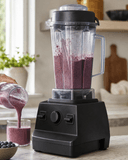 Best OverallVitamix 5200
Good
Our score: 77 / 100
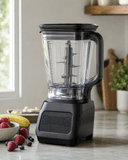 Best ValueNinja Professional Plus
Fair
Our score: 66 / 100
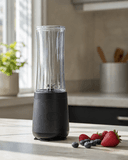 Best for Single ServingsNutriBullet Pro
Fair
Our score: 61 / 100
Vitamix 5200
Good
Our score: 77 / 100
The 5200 is the blender other blenders get compared to, and it earns that spot the unglamorous way — a motor with real headroom, a jar that resists years of turmeric stains, and a 7-year warranty from a company that actually honors it. It's loud and has zero digital features, but if you blend often and want something that's still working in a decade, this is the safe bet.
Ninja Professional Plus
Fair
Our score: 66 / 100
For about a fifth of the Vitamix's price, the Professional Plus crushes ice cleanly, holds 72 oz — more than the Vitamix 5200's jar — and cleans up in a dishwasher. It won't last a decade of daily abuse, but for smoothies and frozen drinks, most people won't notice the gap in day-to-day use.
NutriBullet Pro
Fair
Our score: 61 / 100
If you're blending one smoothie for one person most days, the NutriBullet Pro's cup-based design skips the pitcher entirely — blend, unscrew, drink, rinse. It's not a general-purpose blender, but for its actual job it's fast and about as low-maintenance as blending gets.
How we chose
We looked at three things that actually predict how happy you'll be with a blender a year in: motor headroom (does it choke on ice or frozen fruit at full load), jar practicality (capacity versus your actual household size, plus material durability), and total cost of ownership (warranty length, part replaceability, and how the brand handles failures). We deliberately avoided ranking purely on peak wattage, since blade geometry and jar shape affect real-world blending as much as raw power — a well-designed 900W motor can outperform a poorly shaped 1200W one on ice.
We also weighed noise honestly, since it's the complaint that surprises the most first-time buyers. Every blender capable of crushing ice quickly is loud — there's no quiet way to spin blades at the RPM needed to pulverize ice cubes — so "quiet" wasn't a criterion we could reward without ignoring physics.
What to look for
Motor power isn't the whole story. A 1200W motor with poor blade geometry can underperform a well-designed 900W setup on ice and frozen fruit. Look for reviews or demos that show ice-crushing specifically, not just a wattage number on the box.
Jar size should match your household, not your ambition. A 72 oz jar is great for a family smoothie batch and annoying to clean for a single 10 oz serving. Buying capacity you don't need just means more surface area to wash every day.
Jar material affects both durability and what you can blend. BPA-free Tritan plastic (used on most mid-range blenders) resists cracking and staining well but can't go from freezer to hot-soup blending the way a glass jar handles thermal swings — though glass jars are heavier and more prone to shattering if dropped. Check what you're actually getting.
Speed count matters less than the range between settings. Ten dial settings sound nice, but what matters is whether there's a real difference between "low" and "high" — some cheaper blenders have three speeds that all feel roughly the same.
Warranty length is a decent proxy for how long the manufacturer expects the motor to last. A 7-year warranty (Vitamix) signals different engineering assumptions than a 1-year warranty (most budget blenders) — that's not automatically a dealbreaker, it just tells you what kind of purchase you're making.
Noise is universal at the high end of performance. Don't shop for "quiet and powerful" as if it's a normal combination — it mostly isn't, in this price range. If noise is a hard constraint, look specifically at blenders marketed with sound-dampening enclosures (a different, pricier tier than what's covered here), and expect to pay for it.
Frequently asked questions
Is a more expensive blender always worth it?
Only if you blend often enough to benefit from the durability — occasional users rarely notice the difference a premium motor makes in the first year or two.
Do I need a blender with presets?
No — presets are convenience, not capability. A manual speed dial with real range does the same job, just with slightly more attention from you.
Why are all these blenders so loud?
Crushing ice requires high blade-tip speed, and high speed produces noise as a byproduct — there's no way around this at the performance level these blenders operate at.
What's the single biggest mistake people make buying a blender?
Buying based on wattage alone and ignoring jar size relative to how many people they're actually blending for — a 72 oz jar for one person is as much of a mismatch as a 24 oz cup for a family of five.