Best Espresso Machines (2026)
There isn't one best espresso machine — there's a best machine for what you actually do every morning, and that changes depending on whether you're starting from zero, already own a grinder, or have decided you're never buying a pod machine again. I've spent this whole batch of reviews working through the current lineup, and the picks below aren't the five most expensive or most hyped machines — they're the five that answer a specific, real buying question better than the alternatives. If you want the short version: buy the Breville Barista Express if you're starting from scratch, buy a Gaggia Classic Pro or Rancilio Silvia if you already own a grinder and want to learn real technique, buy the Breville Dual Boiler if you've outgrown a single-boiler machine, buy the De'Longhi La Specialista Arte if you want one box that does grinding and dosing for you, and buy the Flair 58 if you want the most direct, hands-on shot possible and don't mind the ritual. Every pick below has its own full review linked from this guide — read the specific one before you buy, because the blurb here is the summary, not the whole case.
Our top picks
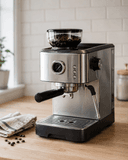 Best OverallBreville Barista Express
Excellent
Our score: 81 / 100
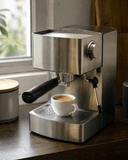 Best for LearningGaggia Classic Pro
Good
Our score: 77 / 100
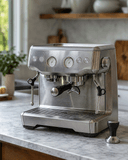 Best SplurgeBreville Dual Boiler
Excellent
Our score: 80 / 100
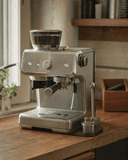 Best All-in-One PremiumDe'Longhi La Specialista Arte
Good
Our score: 73 / 100
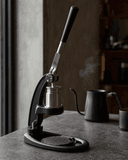 Best ManualFlair 58
Fair
Our score: 66 / 100
Breville Barista Express
Excellent
Our score: 81 / 100
The all-in-one that made this category accessible in the first place — built-in grinder, integrated tamping, and a steam wand good enough to learn latte art on. It's not the best machine at any single thing, but it's the machine most people should actually buy first.
We may earn a commission when you buy through links on our site, at no extra cost to you. Our scores and rankings are never influenced by commissions. Learn more.
Gaggia Classic Pro
Good
Our score: 77 / 100
A commercial 58mm portafilter and a real three-way solenoid valve for well under $500, paired with the total absence of hand-holding. No PID, no pre-infusion — every variable is yours to manage, which is exactly how you learn to actually pull a good shot instead of trusting a machine to do it.
Breville Dual Boiler
Excellent
Our score: 80 / 100
The machine you buy once you've identified a specific limitation in something cheaper — usually the inability to brew and steam at the same time. True dual boilers, adjustable PID, and a 58mm commercial portafilter make this the closest thing to commercial gear in a home footprint.
De'Longhi La Specialista Arte
Good
Our score: 73 / 100
The built-in grinder actually weighs your dose and stops itself, which fixes the single biggest inconsistency in cheaper all-in-ones. You give up the 58mm aftermarket ecosystem for it, but if you don't want to own a separate grinder, this is the smartest premium all-in-one available.
Flair 58
Fair
Our score: 66 / 100
No boiler, no plug, no PID — just a spring lever and your own hands controlling the entire pressure curve. It's the best shot you can pull yourself, and the least convenient machine on this list. Buy it because you want the ritual, not because you want to save time.
How we chose
Every machine on this list has its own dedicated review on this site, researched against publicly available specs, official documentation, and the pattern of complaints and praise that shows up consistently across owner communities — we mark every review's testing tier honestly rather than implying hands-on lab testing we haven't done. For this flagship guide specifically, we picked five machines that don't overlap in use case: a true all-in-one beginner machine, a bare-bones learning machine, a prosumer splurge, a premium all-in-one with smarter automation, and a completely manual option. We deliberately left out several good machines — Breville Barista Pro, Breville Bambino Plus, Rancilio Silvia, Gaggia Classic Evo Pro, and both super-automatics — not because they're weak, but because each is better represented in one of our narrower guides (Under $500, Super-Automatic, Manual/Lever) where it's competing against its true peers rather than padding out a "best overall" list with a sixth or seventh similar option.
What to look for
Portafilter size matters more than most buyers realize. A 58mm commercial portafilter (Gaggia Classic line, Rancilio Silvia, Breville Dual Boiler) opens up a huge aftermarket of precision baskets, bottomless portafilters, and upgraded tampers. Proprietary sizes like De'Longhi's 54mm limit you to that brand's own accessories — fine if you're not planning to tinker, limiting if you are.
PID control is about consistency, not magic. A PID holds boiler temperature to a tight setpoint instead of letting it cycle within a range on a basic thermostat. Machines without one (Gaggia Classic Pro, Gaggia Classic Evo Pro out of the box) rely on a technique called temperature surfing to compensate. It's learnable, but it's one more thing to manage.
Built-in grinders are a convenience trade-off, not a free upgrade. A built-in grinder saves counter space and a separate purchase, but it's rarely as good as a standalone burr grinder in the same price bracket, and it locks you into that grinder's quality ceiling. The La Specialista Arte's weight-based dosing is the best version of this trade-off currently available.
Dual boiler versus single boiler decides whether you can brew and steam at the same time. Single-boiler machines (everything under roughly $1,000 in this category) make you choose one or the other, or accept a temperature compromise doing both. True dual boilers remove that trade-off entirely, at a real price premium.
Manual/lever machines are a genuinely different category, not a "harder" version of a pump machine. They demand more from you on every single shot in exchange for total control over the pressure curve. Don't buy one assuming it's just a quirky pump machine — it isn't.
Frequently asked questions
What's the single best beginner espresso machine right now?
The Breville Barista Express, for most people — it bundles a grinder, tamping guidance, and a capable steam wand into one machine at a price that doesn't require also buying a separate grinder on day one.
Do I need to spend prosumer money to get "real" espresso at home?
No — a Gaggia Classic Pro paired with a decent grinder produces genuinely excellent espresso for a fraction of the Dual Boiler's price. Prosumer machines solve specific limitations, not a general quality gap.
Is a manual lever machine like the Flair 58 actually worth considering for a first machine?
Only if you're specifically drawn to the hands-on ritual and don't mind a longer per-shot process — it's not a beginner-friendly shortcut, and it requires a separate grinder and kettle on top of the machine cost.
How much should I expect to spend total, including a grinder?
Budget the machine price plus $150-300 for a decent grinder unless you're buying an all-in-one like the Barista Express or La Specialista Arte that includes one — trying to run a good machine through a cheap blade grinder wastes most of what you paid for the machine.
Are super-automatic machines worth considering for this "best overall" list?
They're excellent for a specific buyer who prioritizes zero-effort milk drinks over ultimate espresso quality or any hands-on control — see our dedicated Best Super-Automatic guide for picks, since they're solving a different problem than the machines here.