Researched
AeroPress Original Review: Still the Fastest Good Cup You Can Make
A plastic tube and a plunger that out-brew devices costing five times as much. The real limitation isn't quality — it's that it only makes one cup at a time.
On this page
Alan Adler didn't set out to build a coffee maker
He built Aerobie flying discs. The AeroPress came out of an argument with his own coffee maker — he thought drip coffee tasted bitter and took too long, so in 2005 he applied the same air-pressure thinking from his sporting goods to a coffee cylinder and a plunger. Twenty years later, the thing hasn't changed shape, hasn't gained a companion app, and is still the device competition baristas reach for when they need to make a stranger's palate happy in under two minutes. That's a strange kind of longevity for a $39 piece of plastic, and it's earned.
The pitch is simple: full immersion brewing (like a French press) combined with a quick push of air pressure through a paper filter (unlike a French press). You get body and extraction closer to immersion methods, but a cup that pours as clean as a pour-over because the paper catches the fines. It sounds like a gimmick until you taste it side by side with your regular method.
Who it's for — and who should skip it
Buy this if you make one or two cups a day, travel a lot, or hate cleaning brew gear. It's the single best coffee device for a dorm room, an office desk, a camper van, or carry-on luggage — it's shatterproof, it packs flat-ish, and it doesn't need a kettle with a gooseneck spout to work well.
Skip it if you regularly brew for a full table. There's no multi-cup AeroPress — every serving is its own two-minute cycle, and by the third round you're basically running a small assembly line. If you host brunch for six, a drip machine or a Chemex will save you real time. It's also not the move if you want a display-piece brewer; there's no version of the AeroPress that looks expensive on a shelf. It looks like a bike pump, because functionally, it kind of is one.
Borderline case: if you want one device that also nails cold brew concentrate and does a passable espresso-style shot for a Cortado, the AeroPress genuinely does both reasonably well — that versatility is part of why it's stuck around.
Build and materials
It's polypropylene plastic — the chamber, the plunger, the cap that holds the filter in place. No glass, no metal beyond the tiny rubber gasket seal on the plunger tip. That gasket is the only true wear part; it dries out and loses seal tension after a year or two of daily use, and a replacement costs a few dollars.
The plastic itself is tougher than it looks. Drop it and it bounces. Freeze it in a cold car overnight and it doesn't crack. The trade-off is the tactile experience — it doesn't feel premium, and next to a $70 stainless dripper, it reads like the cheapest thing on the counter. That's a fair criticism if aesthetics matter to your kitchen. It's a non-issue if you just want coffee.
How it brews
Extraction method
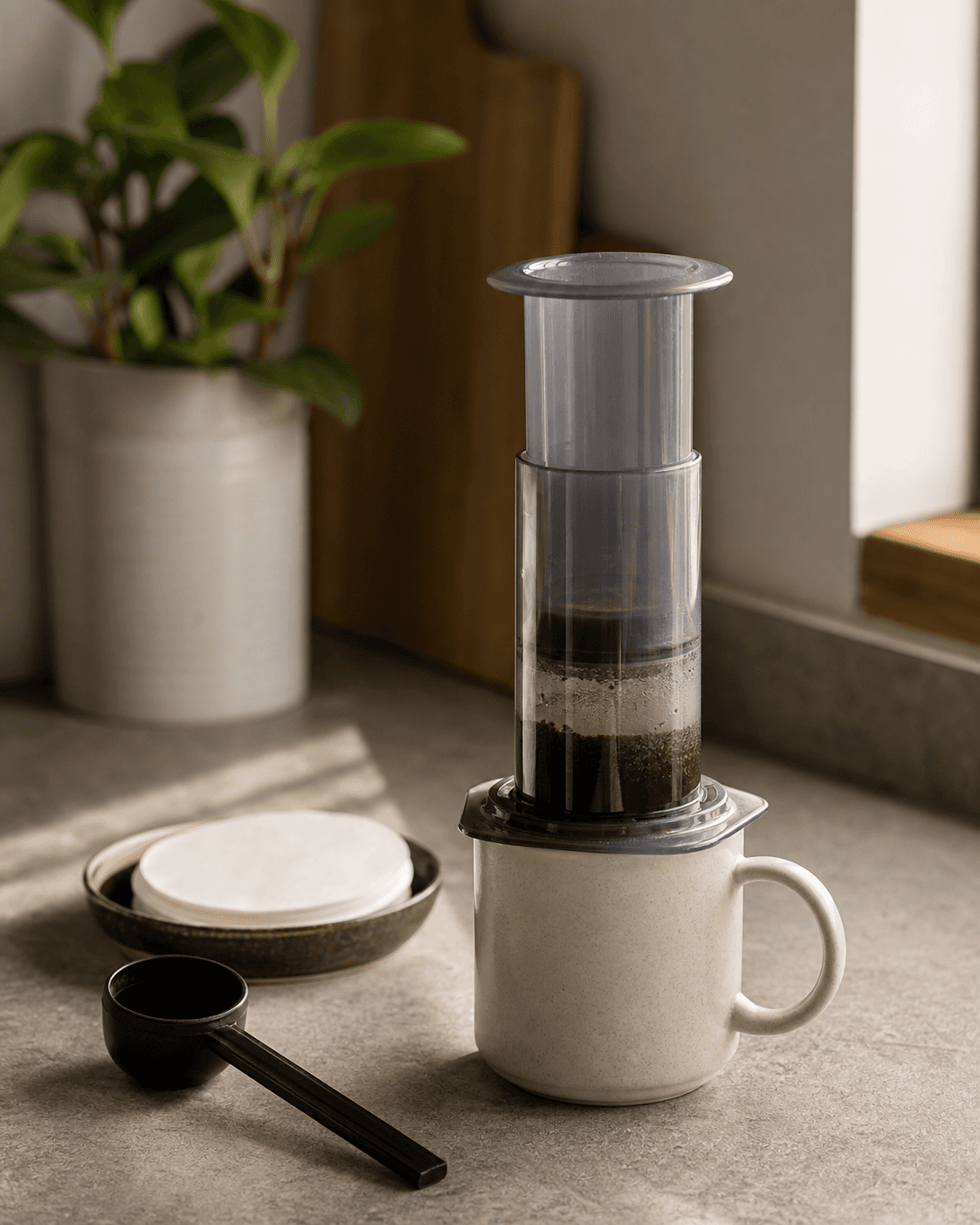
The AeroPress combines steep time with mechanical pressure. You add grounds and hot water to the chamber, stir, let it sit anywhere from 30 seconds to two minutes depending on the recipe, then press the plunger down through the filter. That downward push does two things: it forces water through the coffee bed quickly (so there's less time for over-extraction), and it filters out virtually all sediment. The result sits somewhere between a French press and a pour-over — more body than a V60, less grit than a Chambord.
Filter type and what it does to the cup
The paper micro-filter is thinner than a Chemex filter but denser than a typical V60 filter. It strips oils less aggressively than a metal mesh would, so the cup reads cleaner and brighter than French press coffee, but it still carries a bit more body than a bare paper pour-over because the steep time is doing real extraction work before the paper ever gets involved. If you want a heavier, more French-press-like cup, the aftermarket metal disc filters let oils and fine sediment through — worth the $8 if you already know you like that style.
Technique required
This is the part that surprises new buyers: results vary a lot by recipe, and the "one right way" doesn't exist. Grind size, water temp, steep time, and press speed all move the needle, and the community has landed on dozens of named recipes (the original "inverted method," James Hoffmann's recipe, the "Jeremy" method) that all produce meaningfully different cups. That's a feature for hobbyists and mildly annoying for someone who just wants a repeatable Tuesday-morning cup — pick one recipe, write it on a sticky note, and stop experimenting once you find one you like.
Living with it day to day
Water just off the boil (about 175-185°F works better than full boil, since a plastic chamber and short steep time punish over-extraction from water that's too hot), a medium-fine grind, 30-second bloom, total brew time under two minutes including press. That's the whole ritual. No warm-up, no pre-heating a carafe, no waiting on a pump to reach pressure. It's the fastest good cup in this entire batch of reviews, full stop.
The one habit you have to build: press slowly. Rushing the plunge over-extracts and can blow past the coffee bed unevenly, giving you a harsher, more bitter cup. A controlled 20-30 second press produces noticeably better results than muscling it down in five seconds.
Cleanup and durability
Unscrew the cap, push the plunger the rest of the way, and the spent coffee puck ejects straight into the trash or compost — no scraping, no bashing a filter basket against the sink. Rinse the two plastic pieces and you're done in under 15 seconds. This is, without exaggeration, the easiest brew method to clean of anything in this batch, including the drip machines.
Durability is a non-issue for the plastic body. The gasket seal is the only part that ages, and it's a cheap, obvious swap when it starts leaking around the edges during the press.
How it compares
Vs. the Hario V60: the V60 makes a cleaner, brighter, more "tea-like" cup and rewards technique, but it's fussier — pour rate and pattern matter, and a bad pour gives you a genuinely bad cup. The AeroPress is far more forgiving and faster; the V60 has a slightly higher ceiling if you're willing to practice.
Vs. the Bodum Chambord French press: the Chambord gives you more body and brews multiple cups at once, but cleanup is a real chore (disassembling the plunger mesh, dealing with grounds in the beaker) and the cup carries more sediment. The AeroPress trades multi-cup convenience for a cleaner cup and near-instant cleanup.
Vs. drip machines like the Moccamaster: no comparison on convenience for a full pot, but for a single serving the AeroPress is faster from a cold start (a drip machine needs to heat a full tank) and arguably more consistent cup to cup, since you control every variable directly instead of trusting a heating element.
Value
At $39, this is close to the best dollar-for-dollar coffee gear you can buy — cheaper than a decent bag of beans lasts, and it will outlive several bags-worth of use before anything needs replacing. The recurring cost is filters, and even buying the name-brand packs, you're looking at a couple of cents per cup. There's no serious argument against the value here; the only reason to spend more on a different manual brewer is preference, not necessity.
Known issues
The main complaint in owner reviews is the single-serving limitation — genuinely the only structural gripe, and it's not a defect, just a design choice. Some owners report the plunger seal loosening faster if the AeroPress lives somewhere with big temperature swings (like a car or an unheated cabin). A small number of buyers dislike the mild plastic taste on a brand-new unit — it fades after a few washes and doesn't show up again.
Verdict
The AeroPress earns its scores by being unreasonably good at the thing it does and honest about what it doesn't. Brew quality lands at an 8 — excellent for the effort involved, just shy of a dedicated pour-over's ceiling. Ease of use and cleanup are both near-perfect. Value is the standout number: at this price, nothing else in the category competes. If you make coffee for yourself most mornings and don't want a project, this is still the easiest recommendation in specialty coffee gear.
What we like
- Brews in under two minutes with almost no room for user error
- Produces a remarkably clean cup with very little sediment
- Cleanup takes about ten seconds — no scrubbing, no soaking, no basket to scrape
- Nearly unbreakable plastic body that survives a backpack or a suitcase
What we don't
- Makes one serving at a time — coffee for four people means four separate cycles
- Feels like a five-dollar gadget in the hand, not a forty-dollar one
- Filters are a proprietary shape, so you're locked into AeroPress-branded ones or cutting your own
Specifications
| Type | Immersion + pressure (manual press) |
|---|---|
| Material | Polypropylene plastic (BPA-free) |
| Capacity (oz) | 8 oz per brew cycle |
| Filter type | Paper micro-filter (reusable metal filters available aftermarket) |
| Ease of cleaning | Excellent — rinse and eject the puck |
| Warranty (yr) | Unknown |
Frequently asked questions
Is the AeroPress espresso?
No — a hand press can't get anywhere near the 9 bars of pressure real espresso needs. What you get is a concentrated, espresso-adjacent shot people call 'aeropresso,' which is good on its own terms but isn't a substitute for a machine.
Standard or inverted method — which is better?
Inverted gives you more control over steep time, since the coffee sits in water before you flip and press, and most competitive brewers use it that way. Standard is faster and carries zero risk of a mid-flip spill. Try both for a week and you'll know which one's yours.
How long do the filters last, and can I reuse them?
They're single-use, but a pack of 350 runs about six or seven dollars, so the cost per cup is close to nothing. A reusable stainless steel filter, sold separately, lasts indefinitely if you'd rather skip paper entirely.
Does the AeroPress wear out over time?
The rubber seal on the plunger is the one part that ages — it loses its grip after a couple years of daily use and needs replacing. AeroPress sells spares for a few dollars, and swapping one takes under a minute.
Keep reading
- Bialetti Moka Express Review: Ninety Years On, Still the Cheapest Way to a Strong Cup
Good
Our score: 75 / 100
- Bodum Chambord Review: The French Press Everyone Pictures When You Say 'French Press'
Good
Our score: 77 / 100
- Fellow Stagg X Review: A Pour-Over Dripper With Training Wheels That Actually Work
Excellent
Our score: 81 / 100
- Chemex 6-Cup Review: The Coffee Maker That's Also in a Design Museum
Good
Our score: 78 / 100