Researched
Lavazza Super Crema Review: The Espresso Bean That's Basically Impossible to Beat on Price
An unglamorous, extremely consistent espresso blend that costs a fraction of specialty coffee and does its actual job — building crema — as well as almost anything at ten times the price per pound.
On this page
The short version
There's a version of coffee snobbery that says anything this cheap, this available, and this corporate can't be good. Pull a shot with it and see for yourself — Super Crema builds a thick, hazelnut-sweet crema about as reliably as anything at four times the price. It isn't trying to impress a cupping panel. It's trying to make good espresso at home without the theatrics, and it does.
Buy it if you own an espresso machine and want a dependable, affordable daily bean without shopping around every few weeks. Skip it if you're brewing exclusively drip or pour-over — this blend is built for a pressurized portafilter, and it shows.
Where it comes from, and what "Lavazza" actually means here
Lavazza is a large, family-founded Italian coffee company based in Turin, in business since 1895, and Super Crema is one of its flagship whole-bean retail blends aimed squarely at home espresso drinkers. This isn't a boutique small-batch product — it's produced at industrial scale, sourced through Lavazza's long-standing commercial supply relationships across South America and Southeast Asia rather than named farms or direct-trade relationships. That's a real tradeoff versus something like Volcanica's single-origin Yirgacheffe, but it's also exactly why the per-pound price is a fraction of specialty coffee.
The blend itself is a mix of arabica and robusta — commonly cited around a 60/40 split, though Lavazza doesn't publish an exact figure for this specific product — which is a very traditional Italian espresso-blend approach. Robusta contributes crema, body, and caffeine; arabica contributes sweetness and aromatic complexity.
Roast profile: medium-dark, built for pressure
Super Crema is roasted to a medium-dark level, developed enough to bring out caramelized sugars and support crema formation, but not pushed as hard as a true dark roast like Peet's or Death Wish. That middle-ground roast is deliberate — too light and the robusta's harsher notes show through unbalanced; too dark and you lose the honey and dried-fruit sweetness that's part of the blend's signature.
Aroma
Dry, it has a noticeably sweet, nutty smell — hazelnut and a light honeyed note, without the smokiness of a true dark roast. It's more inviting straight out of the bag than I expected from a mass-market blend.
Acidity
Low to medium. Not flat the way Peet's is, but nowhere near the brightness of Volcanica's Yirgacheffe or even Stumptown's Hair Bender. It reads as balanced rather than tart, which is exactly what you want in an espresso base — too much acidity gets harsh and sour once concentrated through pressure extraction.
Body
Full and syrupy, with the robusta component doing real work here — this is built to hold up under 9 bars of pressure and still come out feeling substantial rather than watery.
Finish
Medium length, with a lingering honeyed sweetness and a faint woody note at the very end. Cleaner than Death Wish's finish, less complex than Hair Bender's.
Brewing it: this is an espresso bean, full stop
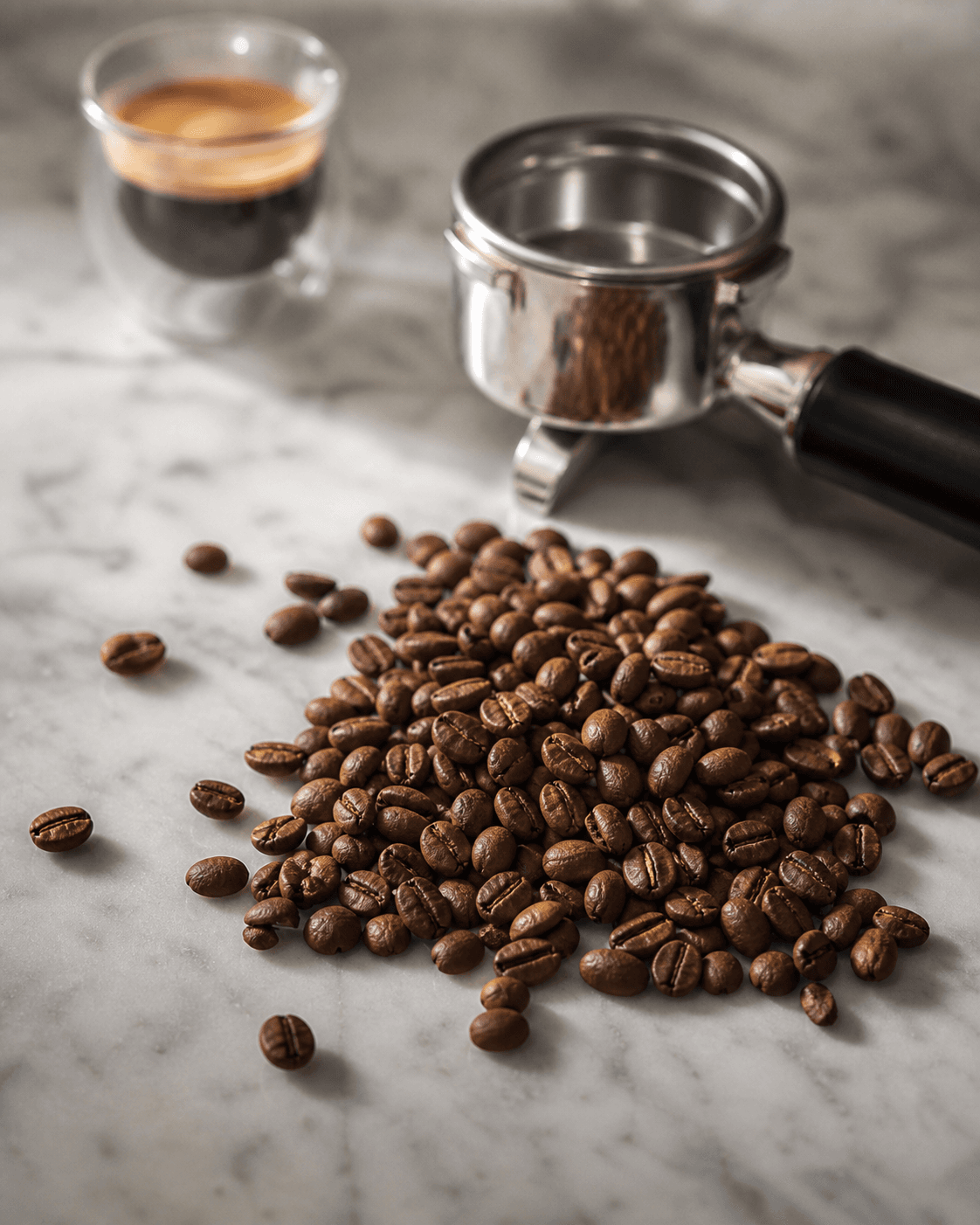
Espresso is the job this blend was built for, and it's genuinely good at it — a properly dosed and tamped shot builds a thick, reddish-brown crema that holds together longer than you'd expect from a bean at this price point. It also performs well in moka pots, which makes sense given Lavazza's home-Italian-market roots — this is closer to what a lot of Italian households actually brew day to day than a V60.
Drip and pour-over are the weaker use cases. It'll make a perfectly drinkable cup, but through a paper filter without pressure, the blend's sweetness and body come across flatter and less interesting than a bean actually roasted with filter brewing in mind, like Stumptown's Hair Bender.
Freshness and sourcing reality
This is the least traceable coffee in the batch, and it's worth being upfront about that. Lavazza sources at massive industrial scale, and while the company publishes broad sustainability commitments, you're not getting farm-level or even country-specific origin transparency the way you would from Volcanica or even Stumptown. The 2.2-pound bag size also works against freshness for casual drinkers — if you're not pulling shots daily, you can be working through beans for a month or two after opening, well past their flavor peak. Reseal tightly and consider portioning it if you don't go through coffee quickly.
Value per pound — this is the whole pitch
At roughly $6.40 per pound, Super Crema costs a quarter of what Peet's runs and well under a third of every specialty bean in this batch. For anyone brewing espresso regularly, that's an enormous cost advantage, and the quality doesn't fall off a cliff to get there — this isn't a case of "cheap and it shows." It's the single best value in this lineup by a wide margin, provided espresso or moka pot is actually how you're brewing it.
How it compares to Stumptown and Death Wish
Against Stumptown Hair Bender, Lavazza is cheaper, more purpose-built for espresso, and less complex. Hair Bender is the better all-around bean if you also brew drip or pour-over and want one bag that does everything reasonably well; Lavazza wins decisively if espresso is 90%+ of your brewing.
Against Death Wish Coffee, both blend in robusta, but for different reasons — Lavazza for crema and balance, Death Wish for raw caffeine and bold body. Lavazza is the better espresso bean by a clear margin; Death Wish is the better choice if caffeine content specifically is what you're optimizing for.
Known gripes
The most common criticism, fair enough, is the lack of sourcing transparency — you're buying a corporate commercial blend, not a story about a specific farm. Some drinkers also find the robusta component too present for their taste if they're used to 100% arabica specialty coffee, and the large bag size can lead to staleness if your household doesn't drink much coffee.
Verdict
Super Crema doesn't need to justify itself with a sourcing story or a rare varietal — it does one job, building good espresso at home, better than almost anything else at this price. If that's your use case, this is close to the easiest recommendation in the entire batch.
What we like
- Exceptional value per pound compared to nearly every specialty option on the market
- Purpose-built for espresso, producing thick, stable crema with minimal fuss
- Widely available and consistent — same profile bag after bag
What we don't
- Less traceable sourcing than specialty single-origin or small-batch blends
- Not roasted with pour-over or light-roast drinkers in mind — expect a heavier, less nuanced cup for those methods
- The large 2.2 lb bag can go stale before you finish it if you don't brew espresso daily
Specifications
| Origin | Blend — South America and Southeast Asia |
|---|---|
| Process | Mixed (blend, arabica/robusta) |
| Roast level | Medium-Dark |
| Tasting notes | Hazelnut, honey, dried fruit, mild woody note |
| Roasted to order | No |
| Bag size (oz) | 35.2 |
| Price per lb (USD) | 6.4 |
Frequently asked questions
Why is Super Crema so much cheaper per pound than specialty beans?
It's produced at industrial scale by one of the largest coffee companies in the world, sourced through long-term commercial contracts rather than small-farm direct trade — that scale is exactly what drives the price down, not lower quality control.
Is it good for drip coffee or pour-over?
It works, but it isn't optimized for those methods — the roast and blend are built around espresso extraction, so through a paper filter it can taste a bit flat compared to a bean actually roasted for drip.
Does the robusta component make it taste bad?
No — robusta here is used deliberately in a roughly 60/40 arabica-to-robusta style blend specifically to build the thick, stable crema espresso drinkers want, and it's balanced well enough that it doesn't read as harsh.
How should I store the big bag to keep it fresh?
Reseal it tightly after each use and keep it away from light and heat — at 2.2 pounds, most home users take a while to get through it, so an airtight canister helps more here than with a smaller 12-ounce bag.
Keep reading
- Volcanica Ethiopian Yirgacheffe Review: Roasted-to-Order Freshness You Can Actually Taste
Good
Our score: 76 / 100
- Death Wish Coffee Review: Is 'The World's Strongest Coffee' More Than a Gimmick?
Poor
Our score: 54 / 100
- Stumptown Hair Bender Review: The Blend That Made Third-Wave Coffee Mainstream
Good
Our score: 74 / 100
- Peet's Major Dickason's Blend Review: The Dark Roast That Started It All
Fair
Our score: 67 / 100