Researched
Stumptown Hair Bender Review: The Blend That Made Third-Wave Coffee Mainstream
A genuinely well-balanced, complex blend that earns its reputation and its price tag — brighter and more interesting than most coffee sold as a 'blend.'
On this page
The short version
Most blends exist to hide their components — average out the rough edges of cheap beans into something inoffensive. Hair Bender does the opposite: it's built so you can still taste the Ethiopian component fighting for attention under the Latin American body. That tension is the whole point, and it mostly works.
Buy it if you want a versatile, well-balanced coffee that's interesting without demanding you learn pour-over technique to appreciate it. Skip it if acidity bothers your stomach, or if you just want the cheapest reliable dark roast on the shelf — this isn't competing on price.
Where it sits in Stumptown's lineup, and the third-wave story
Stumptown Coffee Roasters started in Portland in the late 1990s and became one of the names most associated with pushing American coffee culture toward "third wave" values — traceability, lighter roasting, origin transparency. Hair Bender, one of its earliest and still best-known blends, was built to be an entry point: approachable enough for a drip-coffee drinker, complex enough to hold a specialty-coffee fan's attention.
The blend typically combines washed Latin American beans (Colombia and similar origins turn up often) for a stable, chocolatey backbone, an Ethiopian component for its signature floral and citrus lift, and an Indonesian component — commonly Sumatran — for earthy weight and body. That's an unusually ambitious combination for a blend meant to be sold at scale; most blends stick to one flavor lane. Hair Bender tries to hold three at once.
Roast profile: medium, and it shows
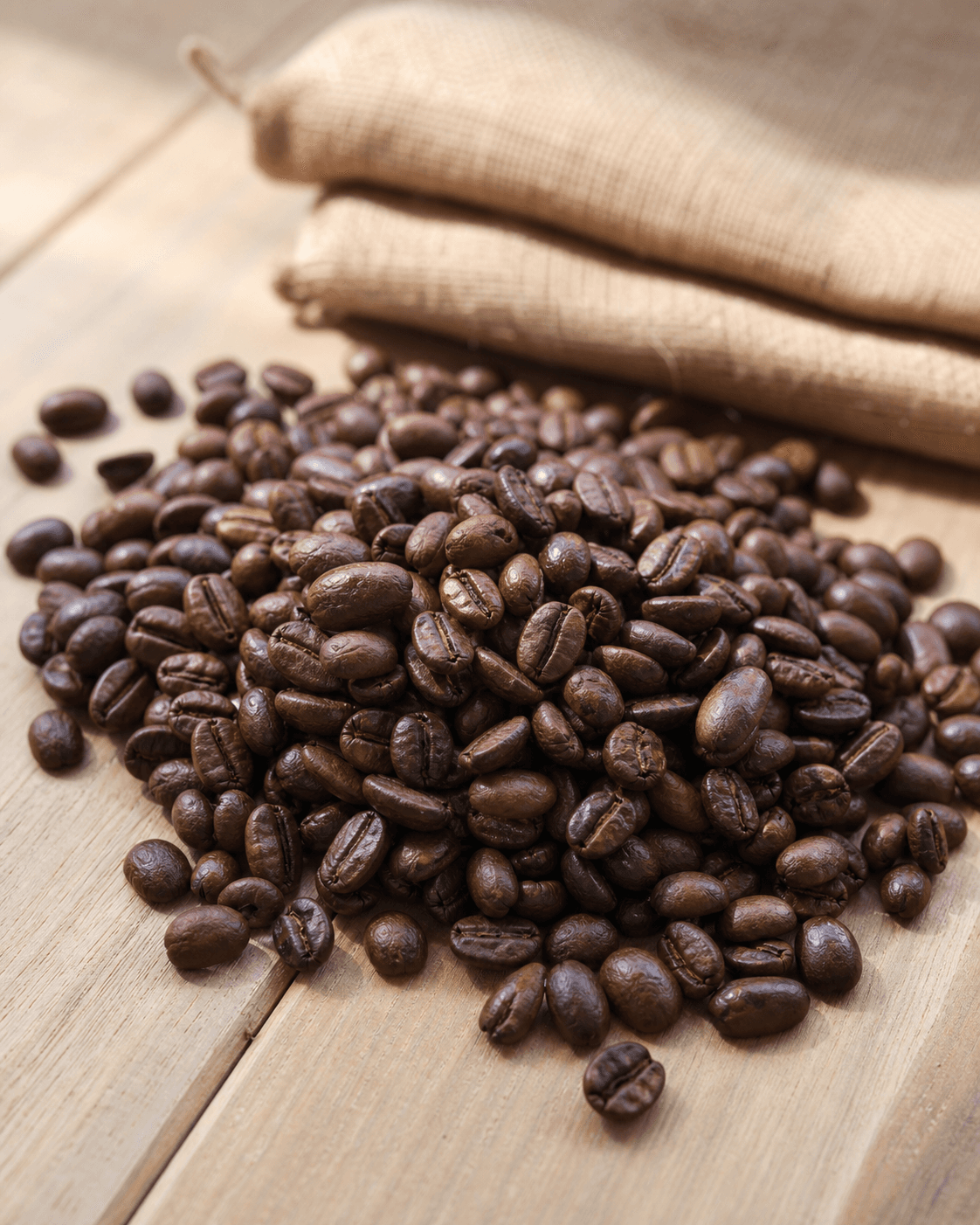
This is roasted to a genuine medium — well past first crack but stopped before the beans push toward the oily, flattened character of a dark roast like Peet's Major Dickason's. That restraint is what lets the Ethiopian component's brightness survive at all. Roast much darker and you'd lose the citrus notes entirely, ending up with something closer to a generic dark blend.
Aroma
Dry, it smells noticeably more complex than a straightforward dark roast — citrus zest and milk chocolate up front, with a faint jammy, almost berry-like note that's characteristic of good Ethiopian components. It's the most aromatically interesting bean in this batch of reviews next to Volcanica's single-origin Yirgacheffe.
Acidity
Medium-bright. Not sharp the way a light-roast single origin can be, but distinctly livelier than Lifeboost or Peet's. If you've found other blends flat and boring, this is likely the fix — if you've found other coffees too acidic for comfort, this probably isn't your bean.
Body
Medium, syrupy without being heavy — the Indonesian component adds weight without pushing it into the thick, oily territory of a dark roast blend.
Finish
Clean, moderately long, with the citrus note fading into a lingering chocolate sweetness. Noticeably more dynamic than the single-note finishes on flatter blends.
Brewing it: the most versatile bean in this lineup
This is genuinely one of the more flexible beans here. Drip and pour-over let the citrus and floral notes shine, since a paper filter keeps the cup clean and doesn't muddy the brighter top notes. French press works fine too, though it thickens the body and mutes some of the brightness.
Where it stands out is espresso — Hair Bender has enough body and sweetness to hold up under pressure extraction while keeping some acidity to cut through milk in a latte, which is why you'll see it recommended as a specialty espresso option even though it isn't marketed as an espresso-specific roast the way Lavazza Super Crema is. It won't out-crema a true espresso blend, but it's more interesting in the cup.
Freshness and sourcing
Stumptown prints a roast date on its bags, and as a specialty brand sold largely through retailers with faster turnover than mass grocery distribution, you're more likely to get a bag that's genuinely recent than with a supermarket dark roast. That said, Stumptown doesn't publish exact percentages of each origin component or named farms for Hair Bender specifically — you know the broad regions, not the granular traceability you'd get from a single-origin specialty brand like Volcanica.
Value per pound
At roughly $23 per pound, this sits mid-pack for specialty coffee — pricier than Peet's ($17/lb) or Lavazza by a wide margin ($6.40/lb for the espresso blend), cheaper than Lifeboost's low-acid single origin ($25/lb), and close to Death Wish ($23/lb). Given the complexity in the cup and the versatility across brew methods, I think it's one of the better values in this batch — you're not just paying for a marketing story, you're getting a genuinely more interesting cup for the money.
How it compares to Peet's and Lavazza
Against Peet's Major Dickason's, this is the more dynamic, more "specialty" choice — brighter, more layered, less predictable in a good way. Peet's wins on price and low-acid comfort; Hair Bender wins on flavor complexity and versatility.
Against Lavazza Super Crema, the comparison is really about intended use. Lavazza is purpose-built for espresso at a much lower price point; Hair Bender is a general-purpose specialty blend that happens to work well for espresso too. If espresso is 100% of your use case and price matters, Lavazza is hard to beat on value. If you want one bag that does drip, pour-over, and espresso all reasonably well, Hair Bender is the better single choice.
Known gripes
The most common criticism is inconsistency — because the exact blend ratio shifts with harvest and availability, some bags lean more toward the earthy Indonesian side and others lean brighter, which can be jarring if you're expecting an identical cup every time. It's also priced well above mainstream dark roasts, which some buyers feel isn't justified for what's still, at the end of the day, a blend rather than a rare single origin.
Verdict
Hair Bender earns its reputation as one of the more genuinely well-constructed blends on the market — it's complex without being fussy, and versatile enough to be the one bag in your cabinet that handles drip, pour-over, and espresso without complaint. It costs more than a grocery-store dark roast, but the extra dollars buy real, tastable complexity rather than just a nicer bag design.
What we like
- Genuinely complex for a blend — the Ethiopian component keeps a floral, citrusy top note alive
- Roast date printed on every bag, and turnover in specialty retail tends to be fast
- Versatile enough to work well as both drip coffee and espresso
What we don't
- Priced meaningfully above grocery-store dark roasts for a smaller bag
- Batch-to-batch variation is real — the exact origin mix shifts with harvest availability
- Not the gentlest option if you're sensitive to acidity; it's brighter than most blends on this list
Specifications
| Origin | Blend — Latin America, East Africa, Indonesia |
|---|---|
| Process | Mixed (blend, washed and natural components) |
| Roast level | Medium |
| Tasting notes | Bright citrus, milk chocolate, floral, balanced sweetness |
| Roasted to order | No |
| Bag size (oz) | 12 |
| Price per lb (USD) | 23 |
Frequently asked questions
What makes Hair Bender different from a typical grocery-store blend?
Mostly the components — it combines washed Latin American beans for body, an Ethiopian component for florals and brightness, and an Indonesian component for weight and earthiness, roasted to a medium level that keeps all three visible rather than roasting them into sameness.
Is Hair Bender good for espresso?
Yes, it's actually one of the more common specialty-blend recommendations for espresso — it has enough body to pull a solid shot while keeping some brightness that cuts through milk.
Does the recipe change over time?
The general concept stays consistent, but Stumptown sources against harvest availability, so the exact origin percentages can shift bag to bag more than a mass-market blend that prioritizes absolute uniformity.
Is it worth the price over a grocery-store dark roast?
If you care about tasting distinct origin character within a blend — florals, citrus, layered sweetness — yes. If you mainly want a reliable, low-acid daily cup, a cheaper dark roast will get you there for less money.
Keep reading
- Volcanica Ethiopian Yirgacheffe Review: Roasted-to-Order Freshness You Can Actually Taste
Good
Our score: 76 / 100
- Lavazza Super Crema Review: The Espresso Bean That's Basically Impossible to Beat on Price
Fair
Our score: 69 / 100
- Death Wish Coffee Review: Is 'The World's Strongest Coffee' More Than a Gimmick?
Poor
Our score: 54 / 100
- Peet's Major Dickason's Blend Review: The Dark Roast That Started It All
Fair
Our score: 67 / 100