Researched
Peet's Major Dickason's Blend Review: The Dark Roast That Started It All
The blend that basically invented the American dark-roast category, and it still tastes like it knows what it's doing — even if it's not chasing complexity anymore.
On this page
The short version
Major Dickason's Blend has been on shelves since 1969, which in coffee-marketing years makes it roughly ancient. Most "classic" dark roasts you'll find at a grocery store today are, in some indirect way, trying to be this. That's either a point in its favor or a reason to expect something a little stuck in its era — it's honestly a bit of both.
Buy it if you want a reliable, no-surprises dark roast you can grab at any supermarket without planning ahead. Skip it if you're after single-origin character or bright, distinct tasting notes — dark roasting this heavy flattens most of that out on purpose.
Where this blend sits in Peet's lineup, and why it matters
Alfred Peet opened his original Berkeley coffee shop in 1966 and is widely credited as a formative influence on the founders of a certain much larger Seattle coffee chain — dark-roast American coffee culture arguably starts somewhere near this man. Major Dickason's Blend, introduced a few years later, became the flagship expression of that dark-roast philosophy: a blend of beans from Latin America, East Africa, and Indonesia, roasted hard enough that origin character takes a back seat to roast character.
That history matters for how you should read this coffee. It's not trying to showcase a specific farm or varietal. It's a house style — heavy, low-acid, chocolate-forward — built for consistency across huge production volume, sold in grocery stores nationwide and Peet's own retail locations.
Roast profile: dark, and unapologetic about it
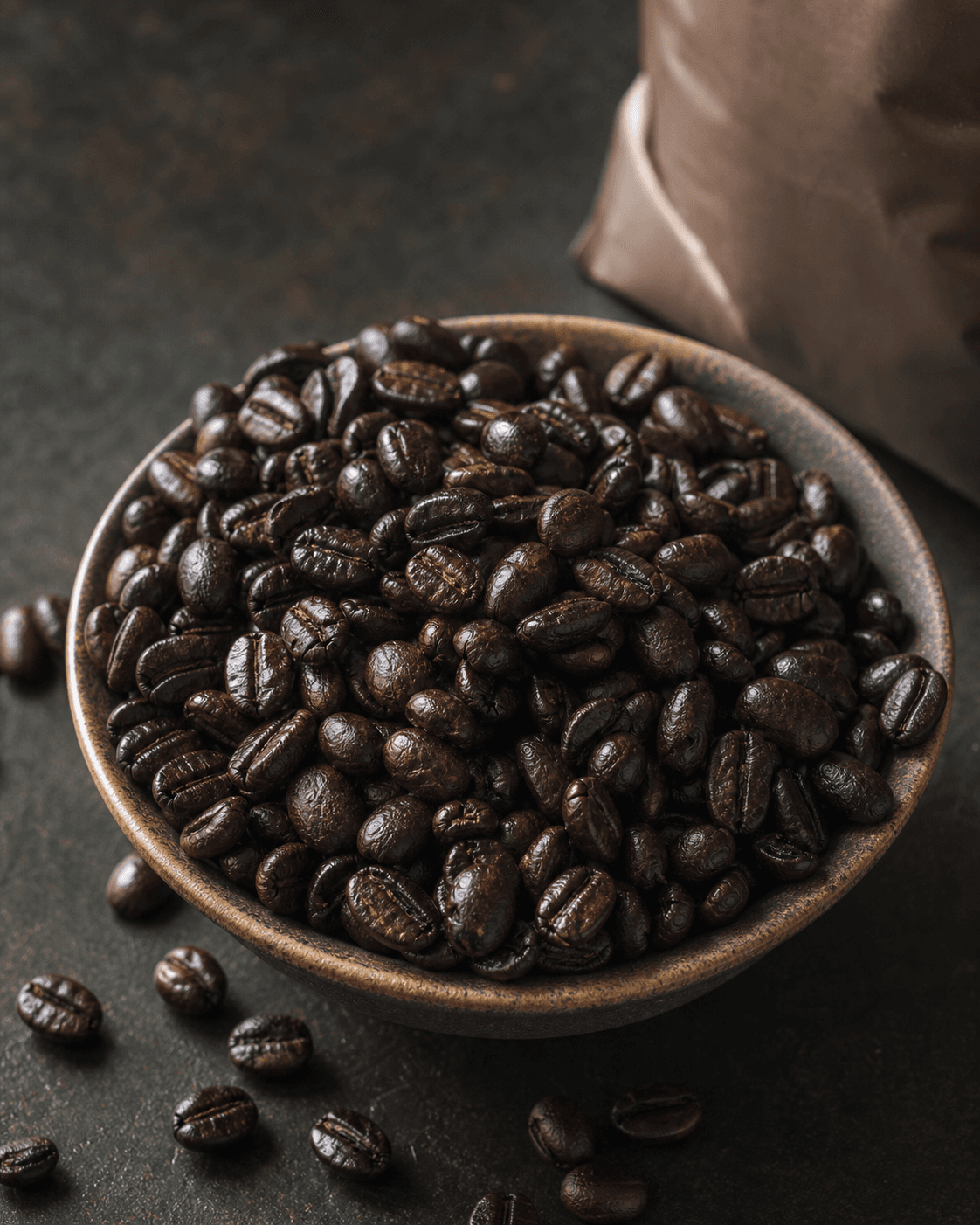
This is a genuinely dark roast — beans pushed well past first crack, closer to second crack, with visible oil sheen on the surface of the whole bean. Compare that to Stumptown's Hair Bender, a medium roast that keeps more origin character intact, or Volcanica's Yirgacheffe, roasted light enough to preserve delicate florals. Major Dickason's takes the opposite approach on purpose: heavy development that converts most of the bean's original acidity and lighter flavor compounds into roast-derived flavors — smoke, char, caramelized sugar.
Aroma
Smoky and rich dry, with a heavier, almost cocoa-powder density to it. There's little of the fruity or floral lift you'd get from a lighter roast — what aroma there is reads as roast-driven rather than origin-driven.
Acidity
Very low. This is one of the flattest, least tangy coffees in this batch of reviews — by design. If bright acidity turns you off coffee entirely, this is closer to what you're looking for than Lifeboost's medium roast, which still carries a little washed-process brightness underneath.
Body
Heavy and full, verging on syrupy when brewed at standard drip strength. It has real weight on the tongue, more than a medium roast typically delivers.
Finish
Long, with a persistent bittersweet, almost molasses-like note that lingers well after the sip. There's a mild smokiness in the aftertaste that some people love and others find heavy-handed after the third cup.
Brewing it: forgiving, but not universally
Drip coffee makers handle this blend well, which is presumably most of how it's actually consumed given its grocery-store ubiquity. French press suits it too — the heavier body plays well with the fuller-immersion method. Cold brew is arguably where it shines brightest: the low acidity and bold roast character survive dilution and ice far better than a delicate light roast would, which is why it shows up on cold-brew recommendation lists more than you'd expect from a supermarket blend.
Espresso is a mixed bag. It'll pull a shot with real body, but dark-roast oils can build up faster in a grinder and machine group head, and the flavor skews toward straightforwardly bitter-sweet rather than nuanced. It's a fine milk-drink base — a heavy dark roast holds up under steamed milk — but it's not aiming for the complexity an espresso-specific specialty blend chases.
Freshness and sourcing reality
This is where the grocery-store distribution model works against it. Unlike Volcanica, which roasts to order and ships fast, or even Lifeboost's direct-to-consumer model, a bag of Major Dickason's off a supermarket shelf has been through a longer, less transparent supply chain — warehouse, distributor, store shelf — before it reaches you. Peet's does print roast or "best by" dating on bags, so check it, but you're not getting the freshness guarantee that comes with a specialty roaster shipping direct.
Peet's doesn't publish detailed farm-level sourcing for this blend the way single-origin specialty brands do; you're getting broad regional sourcing (Latin America, East Africa, Indonesia) rather than named farms or cooperatives.
Value per pound
At around $17 per pound, this is one of the cheaper coffees in this lineup, and it's genuinely a fair price for what you get — a competently made, consistent dark roast at a fraction of what a specialty single-origin like Volcanica ($18/lb) or a boutique blend like Stumptown's Hair Bender ($23/lb) will run you. If your priority is a reliable everyday cup without a shipping wait, the value case here is strong.
How it compares to Death Wish and Stumptown
Against Death Wish Coffee, both are dark roasts marketed on being "more" than a normal coffee — Death Wish on caffeine content, Major Dickason's on heritage and consistency. Flavor-wise, Major Dickason's is the more balanced of the two; Death Wish's robusta component brings a rougher, more bitter edge that Major Dickason's doesn't have.
Against Stumptown Hair Bender, this is the more old-school, less adventurous choice. Hair Bender is doing more with its Ethiopian and Indonesian components — brighter, more layered, more "specialty coffee" in the modern sense. Major Dickason's isn't trying to compete on that axis. It's playing a different, older game: familiarity and consistency at grocery-store price and availability.
Known gripes
The most common complaint is that it can taste over-roasted or slightly burnt, especially if you brew it too strong or let it sit on a hot plate — dark roasts are less forgiving of that treatment than medium roasts. Some longtime fans also feel the blend has drifted slightly over the decades as sourcing availability changed, though Peet's has never publicly detailed any recipe changes. And because it's sold everywhere, freshness varies more by which store and how long it sat there than by anything Peet's does at the roastery.
Verdict
This isn't a coffee chasing relevance in third-wave coffee culture, and it doesn't need to. It's a well-made, historically significant dark roast blend that does exactly what it's always done: low acid, heavy body, chocolate and smoke, available at the store down the street for under $15 a bag. If you want that, buy it with confidence. If you want to taste where the beans actually came from, look elsewhere in this lineup.
What we like
- Consistent, recognizable flavor bag after bag, year after year
- Widely available in grocery stores — no shipping wait or minimum order
- Heavy body and low acidity make it forgiving for drip, French press, and cold brew alike
What we don't
- Dark roast character dominates the origin beans — you're tasting roast, not terroir
- Grocery-store supply chain means you can't verify how long a bag sat before you bought it
- Can taste flat or slightly burnt if brewed hot and strong without dilution
Specifications
| Origin | Blend — Latin America, East Africa, Indonesia |
|---|---|
| Process | Mixed (blend, primarily washed) |
| Roast level | Dark |
| Tasting notes | Dark chocolate, molasses, earthy, low acidity |
| Roasted to order | No |
| Bag size (oz) | 12 |
| Price per lb (USD) | 17 |
Frequently asked questions
Why is it named Major Dickason's Blend?
It's named after Robert Major Dickason, a longtime Peet's customer — company lore says founder Alfred Peet developed the blend and named it for him. It dates back to 1969, making it one of Peet's oldest recipes.
Is this the same coffee Peet's has always sold?
The core recipe has stayed remarkably consistent since the late 1960s, though sourcing details shift with harvest availability year to year — Peet's doesn't publish an exact origin percentage breakdown.
Does it work for cold brew?
Yes, and it's one of the more common recommendations for cold brew precisely because the dark roast and heavy body hold up well against dilution and ice.
Is there a decaf version?
Peet's does offer a decaf version of Major Dickason's Blend, processed separately using a water-based decaffeination method — it's a distinct product from the caffeinated blend reviewed here.
Keep reading
- Volcanica Ethiopian Yirgacheffe Review: Roasted-to-Order Freshness You Can Actually Taste
Good
Our score: 76 / 100
- Lavazza Super Crema Review: The Espresso Bean That's Basically Impossible to Beat on Price
Fair
Our score: 69 / 100
- Death Wish Coffee Review: Is 'The World's Strongest Coffee' More Than a Gimmick?
Poor
Our score: 54 / 100
- Stumptown Hair Bender Review: The Blend That Made Third-Wave Coffee Mainstream
Good
Our score: 74 / 100