Researched
Volcanica Ethiopian Yirgacheffe Review: Roasted-to-Order Freshness You Can Actually Taste
Bright, floral, and genuinely fresh thanks to a real roast-to-order model — best suited to pour-over drinkers who want their coffee to taste like a specific place.
On this page
The short version
Most coffee in a grocery store tastes like "coffee" — a single, roast-dominated flavor regardless of what farm it came from. Good Yirgacheffe tastes like a place. This one, roasted after you order it rather than months before, gets that specific floral, citrusy character across about as well as a mail-order bean can.
Buy it if you want a pour-over or drip coffee that actually tastes different from every dark roast on a supermarket shelf, and you don't mind bright acidity. Skip it if you're espresso-focused, sensitive to acidity, or you just want a dependable, unremarkable daily cup — this bean has opinions, and they're loud ones.
Where these beans come from
Yirgacheffe is a specific growing region in Ethiopia's Gedeo Zone, long considered one of the country's most prestigious coffee-growing areas, known for high elevation (often above 1,700 meters), heirloom Ethiopian varietals not really grown anywhere else at scale, and a reputation for intensely floral, citrusy cups when washed-processed. Volcanica sources this as a single origin rather than blending it, and processes it washed — cherries pulped and fermented before drying — which is the traditional method for showcasing Yirgacheffe's brighter, cleaner side (as opposed to natural-processed Ethiopian coffees, which trend more toward berry and wine-like notes).
Volcanica, based in Georgia, built its business model around small-batch, roast-to-order specialty coffee sold direct-to-consumer — a meaningfully different supply chain from Peet's or Lavazza's mass retail distribution.
Roast profile: light-medium, chosen to protect the origin
This is roasted lighter than every other coffee in this batch except arguably comparable to nothing else here — it's stopped at or just past first crack, well before the bean develops much roast-driven flavor. That's a deliberate choice: heavier roasting would cook away exactly the floral and citrus compounds that make Yirgacheffe worth seeking out in the first place. Compare that to Stumptown Hair Bender, which roasts to a medium in order to balance three origins at once, or Peet's Major Dickason's, roasted dark specifically to suppress origin character.
Aroma
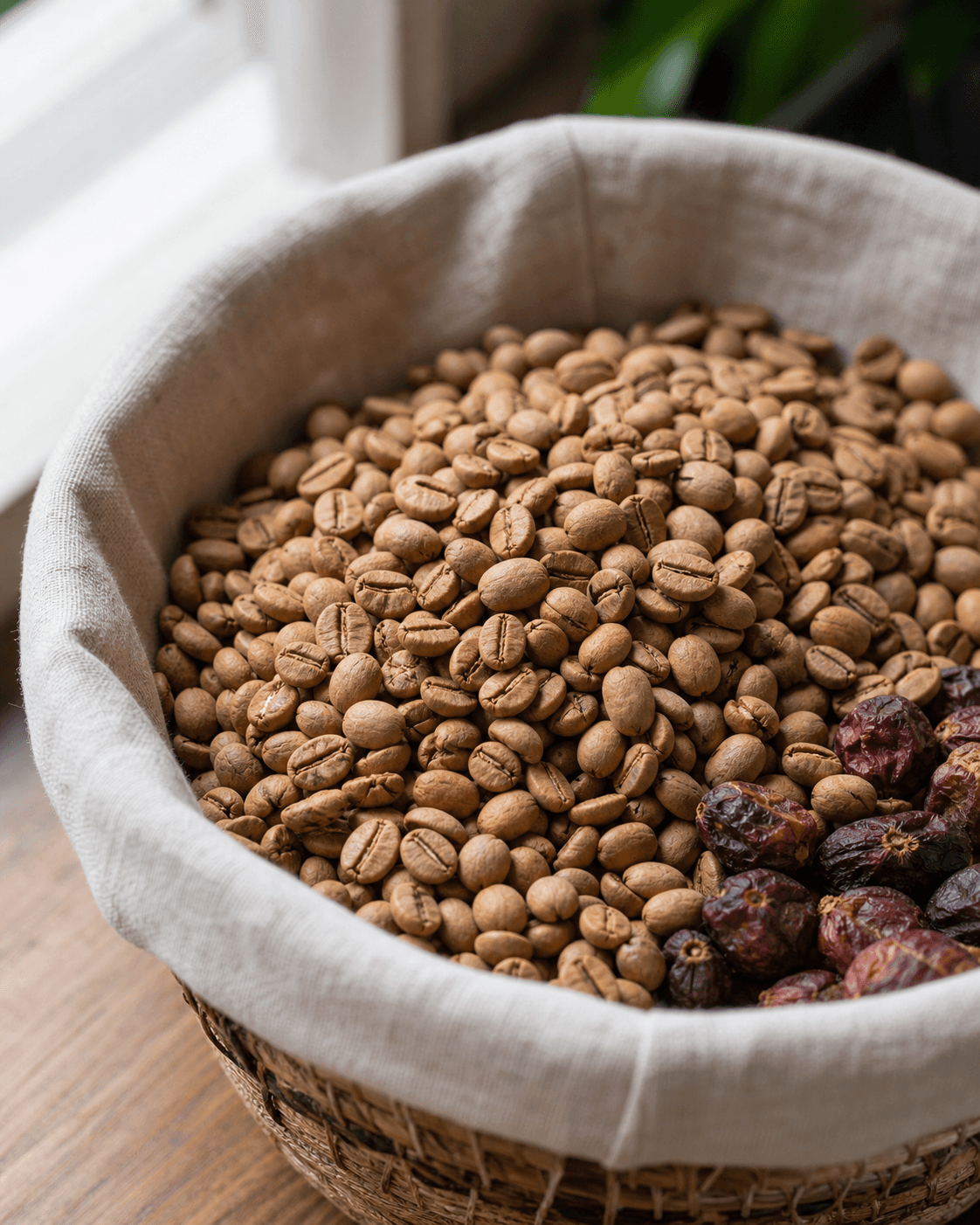
Dry, this is the most aromatically distinct bean in the entire lineup — jasmine and citrus blossom, with a bergamot-like note that's genuinely reminiscent of Earl Grey tea. It smells almost more like a tea shop than a coffee bag, which is exactly the reputation Yirgacheffe has built over decades.
Acidity
Bright, and this is the honest caveat: if you've found other coffees in this batch too acidic, this one will likely be too much. It's a clean, citrusy acidity rather than a sour or vinegary one, but it's front and center, not a background note.
Body
Light and tea-like — noticeably thinner than every other bean here, including the medium roasts. That's typical and expected for a light-roast washed Ethiopian; it's not a flaw, it's the style.
Finish
Bright and relatively short, with the citrus and floral notes fading cleanly rather than lingering into bitterness. No smokiness, no heaviness — a world apart from Death Wish's finish, for instance.
Brewing it: pour-over is the natural home
Pour-over methods (V60, Chemex, similar) let this bean show its best side — a paper filter keeps the cup clean, and the slower, more controlled extraction of pour-over suits a bean with this much aromatic delicacy. Drip coffee makers work fine too, though you lose some precision compared to manual pour-over. French press will thicken the body and can muddy some of the floral clarity, since the metal mesh lets more oils and fine particles through than paper does.
Espresso is where this bean struggles. The light roast doesn't develop the body or the compounds that build stable crema, and the floral notes that make this coffee special tend to get lost or turn sour under high-pressure extraction and through steamed milk. If your main use case is espresso, Lavazza Super Crema or Stumptown Hair Bender will serve you far better.
Freshness — the actual selling point
This is genuinely where Volcanica differentiates itself. Roasting to order means your beans are typically roasted within a day or two of shipping, rather than sitting in a distribution warehouse for weeks like a grocery-store bag might. For a light roast especially, that matters — light roasts lose their more delicate aromatic compounds faster than dark roasts, so freshness has an outsized impact on how much of that jasmine-and-citrus character actually survives to your cup. This is a real, verifiable advantage over Peet's grocery-store supply chain and even over Lifeboost, which doesn't publish an exact roast-to-ship window.
Value per pound
At roughly $18 per pound for a 16-ounce bag, this sits mid-pack for specialty coffee — cheaper than Lifeboost ($25/lb) or Stumptown Hair Bender ($23/lb), and far pricier than Lavazza's mass-market espresso blend ($6.40/lb). Given the roast-to-order freshness and the genuinely distinct origin character, I think it's a fair, if not cheap, price — you're paying for traceability and a real single-origin story, not just a brand name.
How it compares to Lifeboost and Stumptown
Against Lifeboost's Medium Roast, this is close to the polar opposite approach — Lifeboost smooths everything out for a gentle, low-acid cup; Volcanica leans hard into origin character and bright acidity. If your stomach can't handle bright coffee, Lifeboost is the better pick, full stop. If you want to actually taste where your coffee is from, Volcanica wins clearly.
Against Stumptown Hair Bender, Volcanica is more singular and intense in its flavor identity, since it isn't blended down with other origins the way Hair Bender's Ethiopian component is. Hair Bender is more versatile across brew methods and gentler on acidity; Volcanica is more distinctive if pour-over is your primary method and floral, citrus-forward coffee is what you're after.
Known gripes
The most common complaint is acidity — some buyers find Yirgacheffe's brightness genuinely too sharp for daily drinking, especially first thing in the morning on an empty stomach. It's also a bean that punishes an imprecise grind or brew method more than a forgiving dark roast would; get the grind wrong and you can end up with a sour, thin cup instead of the intended bright, floral one.
Verdict
If you want a coffee that actually tastes like a specific place rather than a generic roast profile, and you're brewing pour-over or drip, this is one of the more distinctive and genuinely fresh options you'll find shipped to your door. It's not for acid-sensitive drinkers or espresso setups — for those, look elsewhere in this lineup.
What we like
- Roasted to order, so freshness is genuinely better than almost anything sold through retail
- Distinct, vivid floral and citrus character that clearly reflects its specific origin
- Larger 16-ounce bag gives you more coffee per order than most specialty competitors
What we don't
- Bright acidity that some drinkers, especially anyone sensitive to it, will find too sharp
- Delicate flavors are easy to muddy with the wrong grind or brew method
- Not a fit for espresso or milk-based drinks — the light roast doesn't build body or crema well
Specifications
| Origin | Ethiopia, Yirgacheffe region (single-origin) |
|---|---|
| Process | Washed |
| Roast level | Light-Medium |
| Tasting notes | Floral (jasmine), bergamot/citrus, tea-like body, bright acidity |
| Roasted to order | Yes |
| Bag size (oz) | 16 |
| Price per lb (USD) | 18 |
Frequently asked questions
What does "roasted to order" actually mean, and does it matter?
It means Volcanica roasts your beans after you place the order rather than roasting large batches in advance to sit in a warehouse — it matters because coffee starts losing its more delicate aromatics within a couple of weeks of roasting, and light roasts like this one are more sensitive to that decline than dark roasts.
Why is Yirgacheffe coffee so floral compared to other origins?
A combination of the region's high elevation, specific heirloom coffee varietals, and careful washed processing — Yirgacheffe has built its reputation on exactly this floral, citrusy, almost tea-like profile for decades.
Can I use this for espresso?
You can, but I wouldn't recommend it as your main use case — the light roast doesn't build the body or crema that espresso benefits from, and you'll lose a lot of the floral character under pressure and through milk.
How should I brew it to get the best result?
Pour-over or a clean drip method with a paper filter shows this coffee at its best — the paper filters out oils and sediment that would otherwise dull the more delicate floral and citrus notes.
Keep reading
- Lavazza Super Crema Review: The Espresso Bean That's Basically Impossible to Beat on Price
Fair
Our score: 69 / 100
- Death Wish Coffee Review: Is 'The World's Strongest Coffee' More Than a Gimmick?
Poor
Our score: 54 / 100
- Stumptown Hair Bender Review: The Blend That Made Third-Wave Coffee Mainstream
Good
Our score: 74 / 100
- Peet's Major Dickason's Blend Review: The Dark Roast That Started It All
Fair
Our score: 67 / 100