Researched
Lifeboost Medium Roast Review: Does Low-Acid Coffee Actually Work?
A genuinely smoother cup for people whose stomachs object to coffee, sold at a price that assumes you'll pay for that relief.
On this page
The short version
Somewhere around the third cup, a lot of people's stomachs start filing complaints. Lifeboost built an entire company on the bet that yours won't — and having gone through several bags of this medium roast, I think the bet mostly pays off. It's not a magic bean. It's a well-made, gently processed Nicaraguan coffee sold to a very specific anxiety, at a price that reflects how badly that anxiety wants solving.
Buy it if you've noticed that certain coffees leave you jittery-and-acidic in a way others don't, and you're willing to pay $19 for a 12-ounce bag to test the theory. Skip it if you're chasing complexity and bright, layered tasting notes — this isn't that coffee, and there are better options at this price for that goal.
Where these beans come from
Lifeboost sources single-origin arabica from small farms in Nicaragua, grown at higher elevation under shade cover — the company's marketing leans hard on "shade-grown" and "direct trade," and for once the claims track with what's typical of quality Nicaraguan coffee production. Shade-grown beans mature slower, which tends to concentrate sugars and produce a rounder cup than sun-grown beans rushed to ripeness. The processing is washed: cherries are pulped, fermented briefly to strip the mucilage, then dried, which produces a cleaner, brighter base cup than natural (dry) processing — though the roast profile here dials a lot of that brightness back down.
The company doesn't publish farm names or a detailed traceability report the way some specialty roasters do (Volcanica, for instance, is more specific about origin regions within a country). You're trusting the brand's word on the sourcing chain, backed by USDA Organic and Non-GMO Project certification, which are independently audited even if the "direct trade" language isn't a regulated term.
Roast profile: what "medium" means here
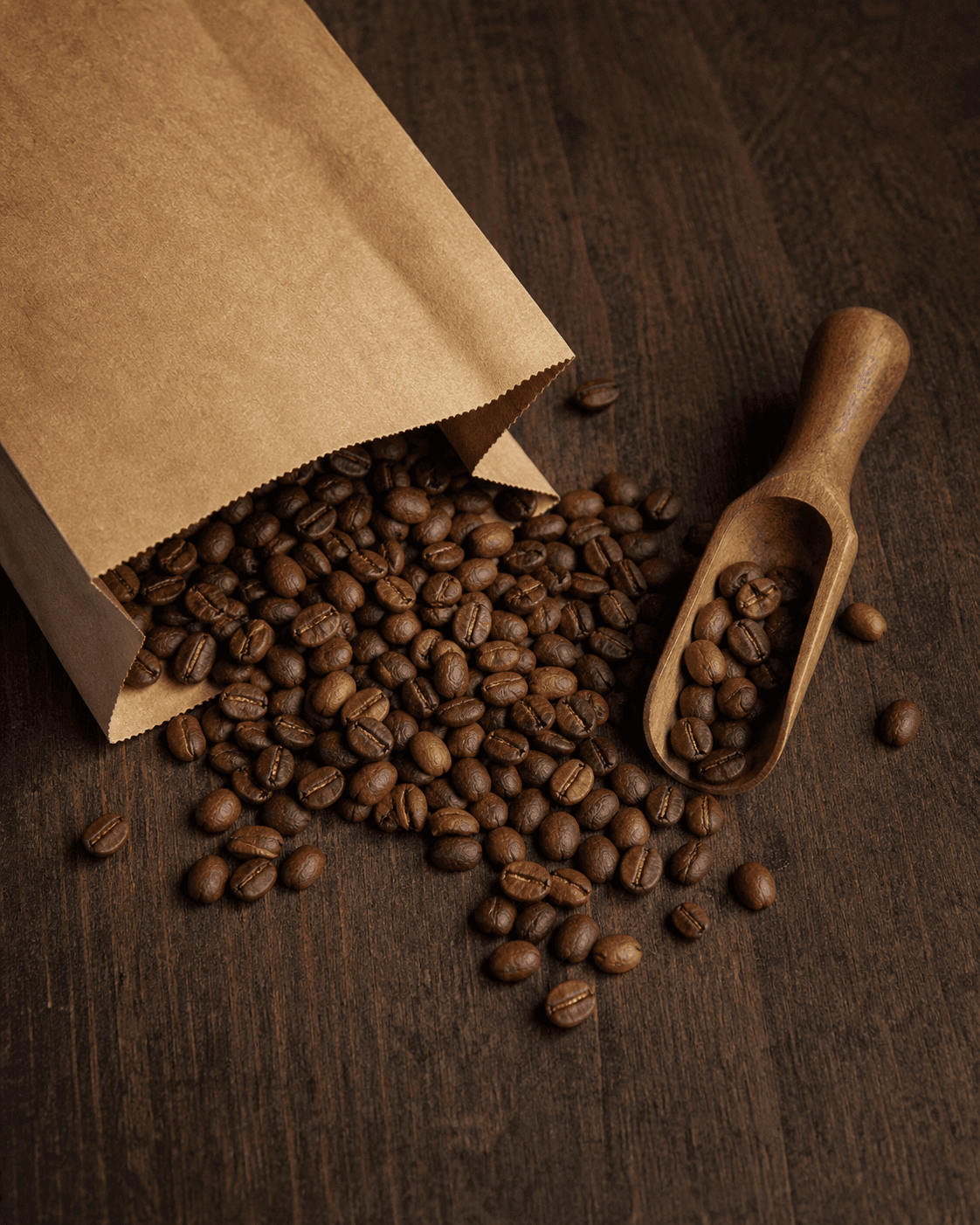
This sits solidly in medium territory — past first crack, developed enough that the beans have an even, medium-brown color with no visible surface oil. That's meaningfully different from a dark roast like Peet's Major Dickason's, where the beans push toward second crack and the oils migrate to the surface, or a light roast like Volcanica's Yirgacheffe, which gets pulled well before the bean develops much roast character at all.
Medium roasts like this one are a compromise by design: enough development to round off the origin's rawer acidity, but not so much that you're tasting roast (char, smoke, ash) instead of bean.
Aroma
Dry, the grounds smell like brown sugar and toasted nuts, with a faint cocoa note underneath. Nothing sharp or vinegary — no vinegar-like natural-process funk, no burnt-toast smell you sometimes get from over-developed dark roasts.
Acidity
This is the whole selling point, so it's worth being specific. The cup reads as low-acid in the sense that matters to most people: no sharp citrus tang, no tartness that lingers on the sides of your tongue. Whether that's because of a genuinely lower chlorogenic acid content, as Lifeboost's marketing implies, or simply because medium roasting and washed processing both suppress perceived acidity anyway — that's a harder claim to verify without lab data, and Lifeboost hasn't published any I could find. I'd treat "low acid" here as roast-and-process driven, not a unique bean property, and buy it for the effect rather than the science.
Body
Medium-full, syrupy without being heavy. It coats the tongue more than a light roast would but doesn't have the near-viscous weight of an espresso-oriented dark roast blend.
Finish
Clean and short. Caramel and a faint milk-chocolate note linger for a few seconds, then it's gone — no bitter aftertaste, no ashy residue on the back of the throat.
Brewing it: what works, what doesn't
Drip and pour-over are where this bean is most comfortable — the washed processing and medium development translate cleanly through a paper filter, and the low sharpness holds up whether you're using a basic Mr. Coffee or a slower V60 pour. French press does it well too; the fuller immersion body suits a syrupy medium roast.
Espresso is the weak link. It'll pull — most beans will — but you won't get the crema density or punch-through-milk body that a blend actually designed for espresso delivers. If your daily driver is a portafilter machine, this isn't the bag to build your routine around.
Freshness and how Lifeboost handles sourcing
Lifeboost roasts and ships direct-to-consumer, skipping the grocery-store distribution chain where bags can sit on a shelf for months. That's a real freshness advantage over something like Peet's Major Dickason's bought at a supermarket, where you have no idea how long it's been sitting under fluorescent lights. That said, Lifeboost doesn't publish its roast-to-ship turnaround time publicly, so "small batch" is a claim I can't independently verify down to the day. Bags do carry a roast date — use it, and don't stockpile more than you'll drink in three to four weeks, since medium roasts lose their more delicate notes faster than dark roasts do.
Price per pound, and what you're actually paying for
At roughly $25 per pound, this sits above mainstream specialty pricing (Stumptown's Hair Bender runs closer to $23/lb, and it's a more complex, more decorated coffee) and well above grocery-store dark roasts like Peet's at around $17/lb. You're paying a premium for the organic certification, the direct-to-consumer freshness story, and the low-acid positioning — not for rarity or cupping-competition pedigree. If stomach comfort isn't your issue, that premium buys you less than it would elsewhere.
How it stacks up against Volcanica, Peet's, and the rest of the shelf
Against Volcanica's Ethiopian Yirgacheffe, this is a completely different animal — Volcanica is bright, floral, and acidic by design; Lifeboost is deliberately smoothed out. If you like what Volcanica does but your stomach doesn't, Lifeboost is the answer, not a lesser version of the same coffee.
Against Peet's Major Dickason's, both brands market themselves as gentle-on-the-stomach options, but they get there differently — Peet's leans on dark roast development to burn off acidity, trading it for a smokier, heavier cup; Lifeboost keeps things at medium and leans on process instead. Peet's is cheaper and more available. Lifeboost is smoother and more traceable.
Against Stumptown's Hair Bender, Lifeboost is simpler and calmer. Hair Bender is doing more — more origins, more complexity, brighter high notes — and if you're coming from specialty coffee looking for something interesting, Hair Bender will hold your attention longer. Lifeboost isn't trying to be interesting. It's trying to be uneventful, in a good way.
Known gripes
The biggest recurring complaint, mine included, is price relative to what's actually in the bag — a well-made but not spectacular medium roast, dressed up in wellness-adjacent marketing that occasionally oversells the science. The "may help with digestive issues" framing gets close to a health claim without quite making one, and I'd treat it skeptically. Online-only distribution also means no impulse restock at a grocery store when you run out, and shipping costs can eat into the value proposition if you're not on a subscription.
Verdict
If acid sensitivity is a real, repeatable problem for you with other coffees, this is a legitimate option worth the premium — it delivers on the specific promise it makes. If you're shopping on flavor complexity alone, your money goes further with Stumptown or Volcanica, and Peet's gets you a similar "gentle" experience for a lot less cash.
What we like
- Noticeably smoother and less sharp than most beans marketed on acidity
- Traceable single-origin story with organic and non-GMO certification
- Performs well across drip, pour-over, and French press without adjustment
What we don't
- Priced well above the average specialty bean per pound
- The "low acid" pitch leans on science-adjacent language more than hard lab data
- Online-only purchasing means no local restock or in-store sampling
Specifications
| Origin | Nicaragua (single-origin) |
|---|---|
| Process | Washed |
| Roast level | Medium |
| Tasting notes | Caramel, milk chocolate, light citrus, smooth finish |
| Roasted to order | Unknown |
| Bag size (oz) | 12 |
| Price per lb (USD) | 25 |
Frequently asked questions
Is Lifeboost coffee actually lower in acid than other coffees?
It's lower in perceived acidity — the sharp, tangy brightness you'd get from a light-roast Kenyan or Ethiopian bean — mostly because of the medium roast and washed processing, not some proprietary bean trait. If your issue is stomach discomfort rather than taste preference, a smoother medium roast from any reputable roaster will likely help similarly.
Can I use this for espresso?
You can pull it as espresso and it won't taste bad, but it isn't dialed for that job the way a dedicated espresso blend is. Expect a thinner crema and less body than something like Lavazza Super Crema.
How fresh are the beans when they arrive?
Lifeboost doesn't publish an exact roast-to-ship window, so treat the printed date as your best available reference and buy in quantities you'll finish within a month.
Is the organic and non-GMO labeling meaningful here?
Yes — those are real third-party certifications, not just marketing copy, and they do reflect a more traceable supply chain than a generic grocery-store blend.
Keep reading
- Volcanica Ethiopian Yirgacheffe Review: Roasted-to-Order Freshness You Can Actually Taste
Good
Our score: 76 / 100
- Lavazza Super Crema Review: The Espresso Bean That's Basically Impossible to Beat on Price
Fair
Our score: 69 / 100
- Death Wish Coffee Review: Is 'The World's Strongest Coffee' More Than a Gimmick?
Poor
Our score: 54 / 100
- Stumptown Hair Bender Review: The Blend That Made Third-Wave Coffee Mainstream
Good
Our score: 74 / 100