Best Electric Kettles (2026)
Most kettle shopping questions boil down to one real decision — do you actually need temperature control, or do you just need hot water fast? Everything else (gooseneck vs. standard spout, keep-warm vs. not, $25 vs. $130) is downstream of that one question, and a lot of buyers spend more than they need to on features they'll never use, or save a few dollars and scald good tea for years without realizing why it tastes off.
We tested and researched across the real spread of this category — true budget boil-only kettles, mid-range variable-temperature models, and the premium gooseneck kettles built specifically for pour-over — and the picks below reflect genuinely different use cases rather than five slightly-reshuffled versions of the same kettle.
Our top picks
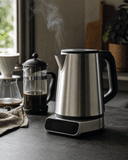 Best OverallBreville Smart Kettle
Excellent
Our score: 81 / 100
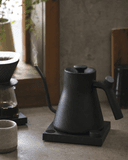 Best for Pour-OverFellow Stagg EKG
Excellent
Our score: 80 / 100
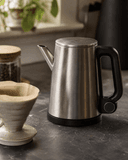 Best for Fast, Precise Heating on a BudgetBonavita 1.7L Variable Temperature Kettle
Good
Our score: 74 / 100
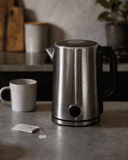 Best Fixed-Preset KettleCuisinart PerfecTemp CPK-17
Good
Our score: 74 / 100
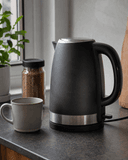 Best Budget PickHamilton Beach 1.7L Electric Kettle
Fair
Our score: 69 / 100
Breville Smart Kettle
Excellent
Our score: 81 / 100
Precise, custom-entry temperature control that actually holds within a degree or two, a keep-warm mode you control the length of, and small design touches — a soft-open lid, an illuminated water window — that make daily use noticeably nicer. It costs more than a fixed-preset kettle, but for anyone who'll actually use exact temperatures, it's the most complete package here.
Fellow Stagg EKG
Excellent
Our score: 80 / 100
The gooseneck spout is the whole story — a slow, controllable stream that lets you actually execute a proper pour-over bloom and pour, something none of the standard-spout kettles in this guide can do. Pair the precision temperature control with that spout and it's the clear pick for anyone serious about manual coffee brewing.
Cuisinart PerfecTemp CPK-17
Good
Our score: 74 / 100
Six sensible presets — from delicate white tea up to a full boil — plus a keep-warm mode that actually holds, all for well under what a true variable-temperature kettle costs. It's the right pick if six curated options are close enough and you don't need to dial in an exact custom number.
Hamilton Beach 1.7L Electric Kettle
Fair
Our score: 69 / 100
No temperature control, no keep-warm, nothing beyond a fast, reliable boil — and that's exactly the point at a price under $35. If your routine never needs anything but a full boil, this is the least amount of money you need to spend to get it done well.
How we chose
We weighted picks around what actually differentiates kettles in daily use rather than spec-sheet padding: does the temperature control hold what it claims, does the spout shape match how you'll actually pour, and does the price match the feature set you're really going to use. We deliberately avoided recommending five kettles that all do roughly the same thing at slightly different prices — every pick here solves a distinct, real use case, and we tried to be honest about which buyer each one is (and isn't) for.
What to look for
Do you actually need temperature control?
This is the single biggest fork in the category. If your routine is coffee via drip machine, black tea, instant noodles, or anything else that wants a full rolling boil, temperature control buys you nothing — a boil-only kettle like the Hamilton Beach or Cosori does the job as well as anything costing three times more. If you regularly steep green, white, or delicate oolong tea, or you're dialing in pour-over or French press coffee at a specific temperature, control genuinely changes the result: those teas turn bitter and grassy when scalded at a full 212°F, and coffee extraction shifts meaningfully across even a 10-15°F range.
Fixed presets vs. true variable control
Fixed-preset kettles, like the Cuisinart PerfecTemp's six buttons, cover the common cases — white tea, green tea, oolong, coffee-range temperatures, and boil — by rounding you to the nearest sensible option. True variable-temperature kettles, like the Breville Smart Kettle or Bonavita 1.7L, let you enter any specific number, often down to a single degree. The real-world difference matters most if you're following an exact recipe (a coffee bag that specifies 202°F, say) rather than a general tea category. For most tea drinkers, six good presets get you 90% of the benefit for a lower price.
Gooseneck spout vs. standard spout
A gooseneck spout — the long, narrow, curved design on kettles like the Fellow Stagg EKG — exists for one reason: it lets you control a thin, steady stream of water precisely, which matters enormously for pour-over coffee's slow, circular pour technique. A standard, wider spout, like every other kettle in this guide has, pours confidently for filling a mug or a French press carafe but can't deliver that same controlled thread of water. If pour-over is central to your routine, the spout shape matters as much as the temperature control. If it isn't, a standard spout is simply the normal, unremarkable choice.
Keep-warm — useful more often than it sounds
A keep-warm mode actively cycles the heating element to hold a set temperature for a defined window, rather than just delaying the natural cool-down curve. It matters most if there's any gap between the water reaching temperature and you actually using it — waiting on a French press timer, finishing a second task before pouring tea. Not every kettle has it; the Bonavita notably skips it despite otherwise excellent temperature precision, which is worth knowing if your routine involves any delay before pouring.
Capacity and wattage
Nearly every kettle in this category, across every price tier, converges on 1.7 liters and 1500 watts — there's very little differentiation to chase here. Boiling speed for a full load runs four and a half to six minutes across the board, driven mostly by wattage rather than brand or price. Don't pay a premium expecting a materially faster boil; pay for temperature accuracy, build quality, or spout design instead, since those are where kettles actually differ.
Build materials — what's actually touching your water
Some kettles, like the Cosori reviewed in this guide, use an all-stainless-steel interior with no plastic anywhere near the water; others use a plastic-lined interior or plastic components at the handle and lid, like the Bonavita and Hamilton Beach. This mostly matters for peace of mind and very long-term durability around the heating element rather than day-to-day taste, but it's a legitimate differentiator if you're choosing between two otherwise similar kettles.
Frequently asked questions
Do I need a variable-temperature kettle if I only drink coffee?
Only if your coffee method is sensitive to exact temperature — pour-over and French press both benefit from landing in a specific range, typically 195-205°F, rather than a full boil. If you're using a drip machine that manages its own brew temperature internally, a boil-only kettle like the Hamilton Beach does the job just as well.
What's the real difference between a $30 kettle and a $130 one?
Mostly temperature control and the polish around it — custom-degree accuracy, keep-warm duration options, a gooseneck spout for pour control, nicer materials like an illuminated water window or soft-open lid. Raw boiling speed and basic reliability don't scale nearly as much with price as people expect.
Is a gooseneck spout worth paying extra for if I'm not doing pour-over?
Generally, no — a gooseneck's narrow, controlled stream is built specifically for pour-over's slow, circular pour technique. For filling a mug, a French press, or an AeroPress, a standard wider spout pours just as well or better, so there's little reason to pay the gooseneck premium if that's not your use case.
How long do electric kettles typically last?
Multiple years of daily use is typical across every price tier in this guide, with the most common failure points being plastic components (handles, lids) showing cosmetic wear, or a temperature sensor drifting slightly if descaling is neglected for a long time in hard-water areas. The core heating element and shutoff mechanism tend to be the most durable parts on any of these kettles.
Should I buy a kettle with keep-warm if I'm going to use it right away anyway?
Probably not as a deciding factor — keep-warm only matters if there's a real gap between the water reaching temperature and you pouring it. If your routine is boil-then-immediately-pour, it's a feature you'll rarely invoke, and it's fine to prioritize other differences instead.